
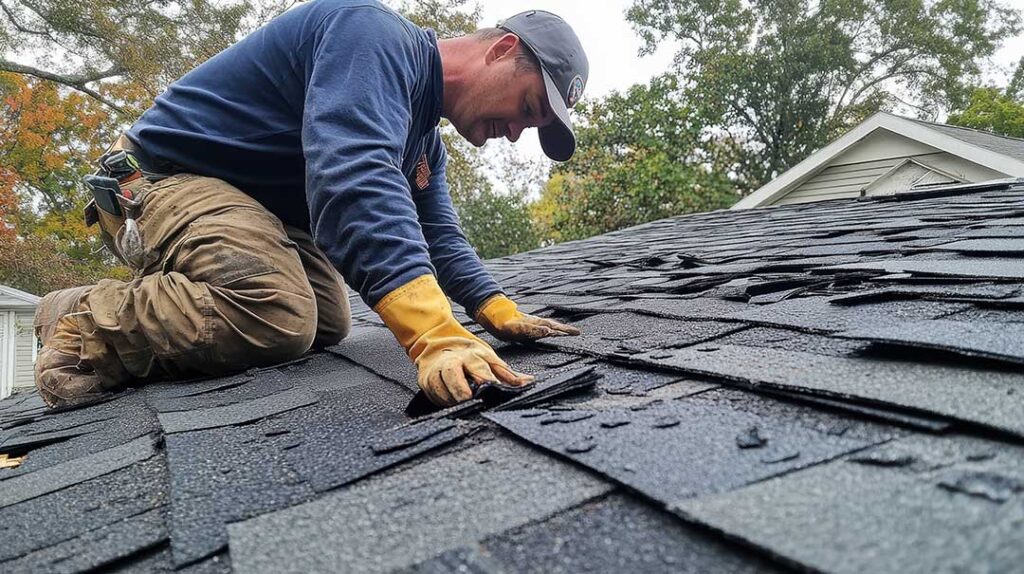
Why does roof drainage matter in Ithaca?
Effective roof drainage moves rain and melting snow away from the roof, walls, foundation, walkways, and neighboring property. In Ithaca, seasonal freeze-thaw cycles, heavy rain, leaf fall, and snow accumulation can expose weak drainage systems quickly.
A roof may be properly shingled and still develop problems if water is allowed to overflow, collect near the foundation, or back up beneath roof edges. Good drainage is not just a gutter issue. It includes the roof’s slope, valleys, flashing, gutters, downspouts, discharge points, and the ground around the building.
New York property maintenance requirements generally expect roof drainage components to remain in good repair and free of obstructions. Roof water should also be directed in a way that does not create a nuisance or damage surrounding property.
What are the main parts of a roof drainage system?
A complete drainage system has several connected parts:
- Roof slopes direct water toward eaves, valleys, gutters, or internal drains.
- Valleys collect water where two roof sections meet and can carry some of the highest flow during storms.
- Gutters catch water along the roof edge.
- Downspouts carry water from the gutters to the ground or an approved drainage location.
- Extensions, splash blocks, or underground outlets move discharge away from the foundation.
- Flashing protects joints around walls, chimneys, dormers, and roof-to-wall transitions.
- Emergency drainage on some low-slope roofs provides a secondary path if primary drains become blocked.
Every part must work together. A large gutter is not enough if the downspout is undersized, disconnected, or releasing water beside the foundation.
How should gutters and downspouts be arranged?
Gutters should have a consistent slope toward downspouts and should not sag between attachment points. Sagging creates low spots where sediment and ice can collect, reducing capacity before a storm.
Downspouts should be positioned where they can handle the amount of water collected by the roof section. Long gutter runs, large roof areas, steep slopes, and valleys may require additional outlets. Water from a valley should not be allowed to strike a small section of gutter with no nearby downspout.
Downspout discharge should generally be directed several feet away from the foundation, provided the site allows it. The outlet should not empty onto a walkway, stair, neighboring property, or area where water can freeze and create a hazard.
Underground drainage can be useful, but buried pipes require careful planning. They can clog, freeze, settle, or discharge in an unsuitable location. Any underground outlet should remain accessible enough to inspect and maintain.
How often should roof drainage be cleaned?
Most homes benefit from inspecting gutters and downspouts at least twice each year: once after spring debris has fallen and again after autumn leaves have accumulated. Additional checks may be needed after major storms or if trees overhang the roof.
Cleaning is warranted when gutters contain:
- Leaves, twigs, roof granules, or moss
- Standing water after rainfall
- Mud or compacted debris
- Ice buildup caused by restricted flow
- Plants growing in the channel
A hose test can reveal disconnected joints, blocked downspouts, and water escaping behind the gutter. During freezing weather, avoid climbing onto icy roofs or gutters. A ground-level inspection with binoculars is safer than attempting to examine hazardous areas.
What drainage problems are common during Ithaca winters?
Winter creates several competing drainage problems. Snow may block gutters, ice may form at the eaves, and repeated freezing and thawing can open small cracks in seams or downspouts. Heavy snow sliding from a steep roof can also bend gutters or tear away hangers.
Ice dams are more closely related to uneven roof temperatures than to drainage alone. Heat escaping into the attic can melt snow on warmer roof sections. The water may refreeze near colder eaves, creating a dam that forces water beneath roofing materials.
Useful preventive measures include:
- Keeping attic insulation reasonably continuous
- Maintaining adequate attic ventilation
- Sealing air leaks around ceiling penetrations
- Keeping gutters and downspouts clear before winter
- Avoiding excessive indoor heat escaping into the attic
- Watching for repeated ice buildup in the same roof area
Removing snow or ice from a roof can be dangerous and may damage roofing materials. Roof work during icy conditions should not be attempted without appropriate safety equipment and experience.
Where should roof water go?
The safest discharge point depends on the property’s slope, soil, foundation, paved surfaces, and existing drainage. Water should move away from the building without causing erosion or concentrating runoff against another structure.
A downspout may discharge onto a splash block, planted area, gravel strip, dry well, or approved underground system. The correct option depends on site conditions. A flat lot with dense soil may need a different arrangement than a sloped lot with rapid surface runoff.
Roof water should not be connected casually to a sanitary sewer. Local stormwater rules may also restrict certain discharges to public systems or surface waters. Changes involving underground piping, shared drainage, major grading, or substantial site work may require review under applicable local and state requirements.
Do roof valleys need special attention?
Yes. Valleys collect runoff from two roof planes, so they experience concentrated water flow. They are also vulnerable to leaves, pine needles, snow accumulation, and poorly installed flashing.

During inspections, look for:
- Rusted, split, lifted, or displaced valley materials
- Exposed fasteners
- Loose roofing near the valley edges
- Water stains on ceilings or upper walls
- Debris trapped beneath overlapping roof materials
- Gutter overflow directly below the valley
Valley problems may appear as interior leaks some distance from the actual entry point. Water can travel along sheathing, rafters, insulation, or framing before becoming visible.
What are signs that drainage is failing?
Some warning signs appear outside, while others show up indoors:
- Water spilling over the gutter during ordinary rain
- Dark streaks or staining below the roof edge
- Rot at fascia boards or eaves
- Peeling paint near upper walls
- Damp basement walls or musty odors
- Soil erosion below downspouts
- Puddles that remain near the foundation
- Loose gutter sections after snow or wind
- Water stains around valleys, chimneys, or roof-to-wall joints
- Sagging gutters or downspouts that separate during storms
A single overflow during an unusually intense storm does not always prove a design defect. Repeated overflow during moderate rain is more meaningful and should be investigated.
Can roof drainage be improved without replacing the roof?
Often, yes. Improvements may include cleaning and realigning gutters, adding a downspout, repairing seams, extending outlets, correcting a valley discharge problem, or improving the grade near the foundation.
However, drainage repairs should not conceal a larger roof defect. If water is entering through damaged flashing, deteriorated roofing, failed underlayment, or a poorly designed low-slope section, redirecting water alone may not solve the problem.
A practical maintenance record can help. Note where overflow occurs, whether it happens during light or heavy rain, which downspouts discharge poorly, and whether the issue appears only during snowmelt. Patterns are often more useful than a single visual inspection.
How can homeowners check drainage safely?
From the ground, inspect roof edges, gutters, downspouts, discharge points, foundation walls, and nearby soil. Look for sagging, rust, gaps, blockage, erosion, and water stains.
Do not walk on a wet, icy, or snow-covered roof. Avoid ladders placed on slippery ground or near overhead hazards. Any condition involving unstable roofing, significant ice, electrical lines, structural damage, or difficult roof access warrants specialized safety precautions rather than an improvised inspection.
Good roof drainage is a continuous path: water should leave the roof, enter a functioning gutter or drain, travel through a clear outlet, and disperse away from the building without creating a new problem.
