
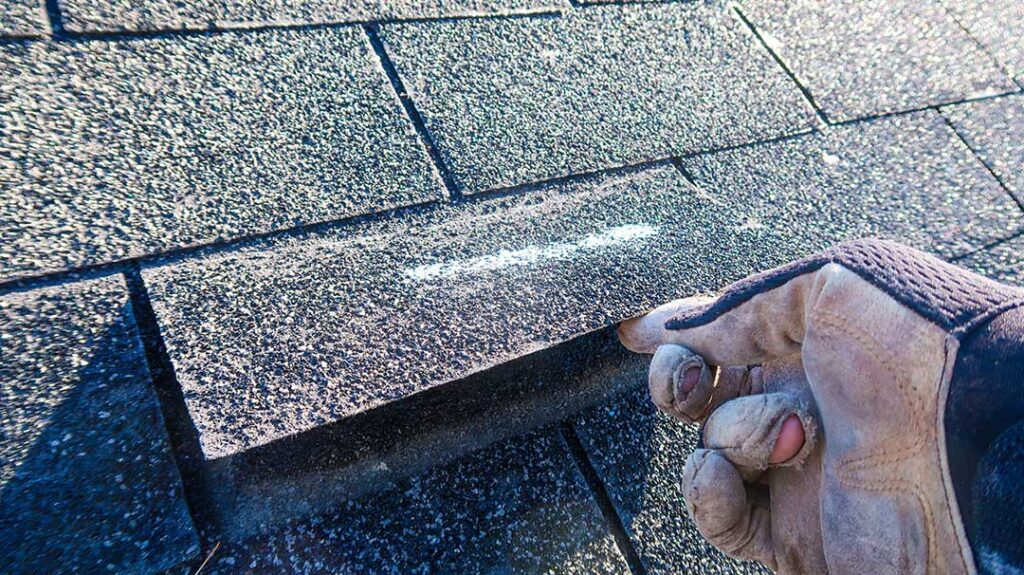
Is it safe for a homeowner to walk on a roof?
Walking on a roof is never risk-free. A person can slip, step through a weak area, lose balance near an edge, or damage roofing materials without realizing it. For many inspections and maintenance tasks, viewing the roof from the ground, attic, or a properly positioned ladder is safer than stepping onto the surface.
In Ithaca, NY, changing weather adds several local concerns. Snow, freezing rain, damp leaves, moss, and shaded ice can make a roof dangerously slick. Older homes may also have aging decking beneath the shingles, especially where past leaks have gone unnoticed.
If roof access is necessary, the safest approach is to inspect conditions carefully, use suitable equipment, and avoid walking on the roof during questionable weather.
When should you stay off the roof?
Do not walk on a roof that is wet, icy, snow-covered, frosted, or visibly deteriorated. Even a light film of moisture can reduce traction, and a roof that appears dry may still be slippery in shaded areas.
Stay off the roof if:
- Wind is strong enough to affect balance or move a ladder.
- Rain, freezing rain, snow, or fog reduces visibility.
- Shingles are curled, loose, cracked, blistered, or missing.
- The roof has soft spots, sagging areas, exposed decking, or signs of water damage.
- Moss or algae covers walking surfaces.
- You are carrying bulky tools, equipment, or materials.
- You feel unsteady at heights or cannot maintain three points of contact.
A roof should also be avoided after a major storm until hazards such as fallen branches, damaged electrical lines, broken skylights, and unstable roofing materials have been assessed from a safe location.
What kind of roof is safest to walk on?
Low-slope roofs with a dry, stable surface are generally easier to navigate than steep roofs, but “flat” does not mean safe. Low-slope roofs may contain hidden skylights, fragile covers, drainage openings, or soft areas caused by trapped moisture.
Steep roofs are substantially more hazardous. A small loss of footing can quickly become a slide toward the eave. Roof pitch can also be difficult to judge from the ground, particularly on older homes with multiple roof sections.
Some roofing materials are especially unsuitable for casual foot traffic:
- Asphalt shingles can be damaged by repeated pressure, especially in warm weather.
- Wood shakes may split or become brittle with age.
- Slate can break underfoot and create sharp edges.
- Metal roofing can be extremely slippery when damp and may dent.
- Membrane roofing can be punctured by sharp footwear or dropped tools.
If the roof surface or structure is unfamiliar, treat it as unsafe until its condition is known.
How should you prepare before stepping onto a roof?
Preparation reduces preventable mistakes. First, inspect the roof from the ground using binoculars if available. Look for missing shingles, sagging lines, debris, exposed flashing, damaged gutters, and areas that appear darker or uneven.
Before using a ladder:
- Place it on firm, level ground.
- Keep the base clear of ice, mud, loose gravel, and landscaping materials.
- Make sure the ladder is long enough to reach the intended access point without standing on the top rungs.
- Secure it so it cannot slide or shift.
- Keep it away from overhead electrical lines.
- Maintain three points of contact while climbing.
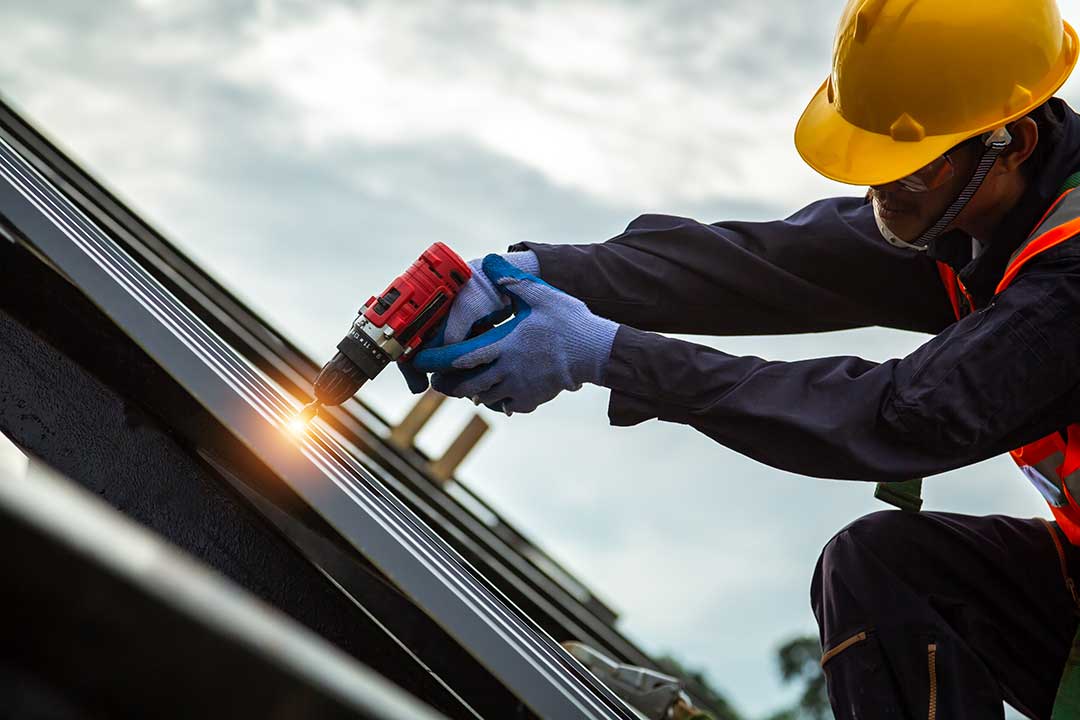
Do not carry tools in your hands while climbing. Use a tool belt or raise equipment only after reaching a stable, protected position. A second person should remain nearby when roof access is necessary, especially where a ladder is involved.
Ordinary sneakers, smooth-soled shoes, sandals, and work boots with worn tread are poor choices. Use clean, well-fitting footwear with soft, slip-resistant soles. Remove mud, packed snow, and debris from the soles before climbing.
What is the safest way to walk on shingles?
Walk slowly and deliberately. Keep your body facing the direction of travel, take short steps, and place each foot carefully before shifting your weight. Avoid sudden turns, jumping, sliding, or walking backward.
On asphalt shingles, step on the lower exposed portions where the shingle is supported by the roof structure beneath it. Avoid placing weight on the thin raised edges, tabs, or loose-looking sections. Do not step directly on flashing, ridge vents, skylights, pipe boots, or gutter edges.
Keep your hands free whenever possible. If you need both hands for balance, stop and place tools somewhere secure rather than carrying them. Never walk close to an unprotected roof edge merely to examine a gutter or fascia board.
A roof is not a normal walking surface. Even experienced workers can lose footing because of a single granule-covered shingle, hidden dampness, or a small change in pitch.
How can you tell whether a roof may be too weak to support you?
Warning signs include sagging between rafters, soft or springy areas, water stains in the attic, a ceiling bulge, long-term leaks, damaged decking, and visible rot around chimneys or roof penetrations.
Do not test a questionable area by stepping on it. A weak section may fail suddenly, and the surface covering can conceal serious deterioration underneath. Skylights are another major hazard because some older units may not support a person even when they look solid.
If the roof has been damaged by a fallen tree, heavy snow, ice buildup, or a long-standing leak, remain off the surface. Structural problems require a proper evaluation rather than a walking inspection.
Is a safety harness enough?
No. A harness by itself does not prevent a fall. It must be part of a properly designed fall-protection system with a suitable anchor, compatible connecting equipment, and enough clearance to prevent impact with a lower level.
Improvised anchors such as plumbing vents, chimneys, gutters, roof jacks, or random framing members may fail. A rope tied around a chimney or thrown over the ridge is not automatically a safe fall-arrest system.
Fall protection also requires training. Incorrectly fitted or connected equipment can create a false sense of security. For steep roofs, elevated work, fragile roofing, or any task near an edge, staying off the roof is often safer than attempting an improvised setup.
What about winter roof access in Ithaca?
Winter conditions deserve extra caution. Snow can hide damaged shingles, ice dams, skylights, valleys, and roof edges. Packed snow may look stable while covering a slippery ice layer. A roof can also shed snow unexpectedly, creating a hazard for anyone below.
Do not climb onto a snow-covered roof to remove snow by hand. Snow removal from a roof can damage shingles, gutters, flashing, and ventilation components, while the person performing the work may be exposed to sliding snow and a fall.
After freeze-thaw cycles, inspect from the ground for displaced shingles, damaged flashing, overflowing gutters, and icicles. Interior attic and ceiling checks can often reveal problems without requiring roof access.
When is roof access not a reasonable do-it-yourself task?
Roof access is not a reasonable do-it-yourself task when the surface is steep, wet, icy, fragile, structurally questionable, or more than one story above the ground. The same applies when the work requires power tools, heavy materials, extended time near an edge, or movement across multiple roof sections.
For safety-critical work, a trained and properly equipped roofing worker is appropriate. Homeowners can still provide useful information by photographing conditions from the ground, checking attic areas, recording when leaks appear, and noting weather patterns without placing themselves on the roof.
The safest roof inspection is often the one that avoids unnecessary foot traffic altogether.
