
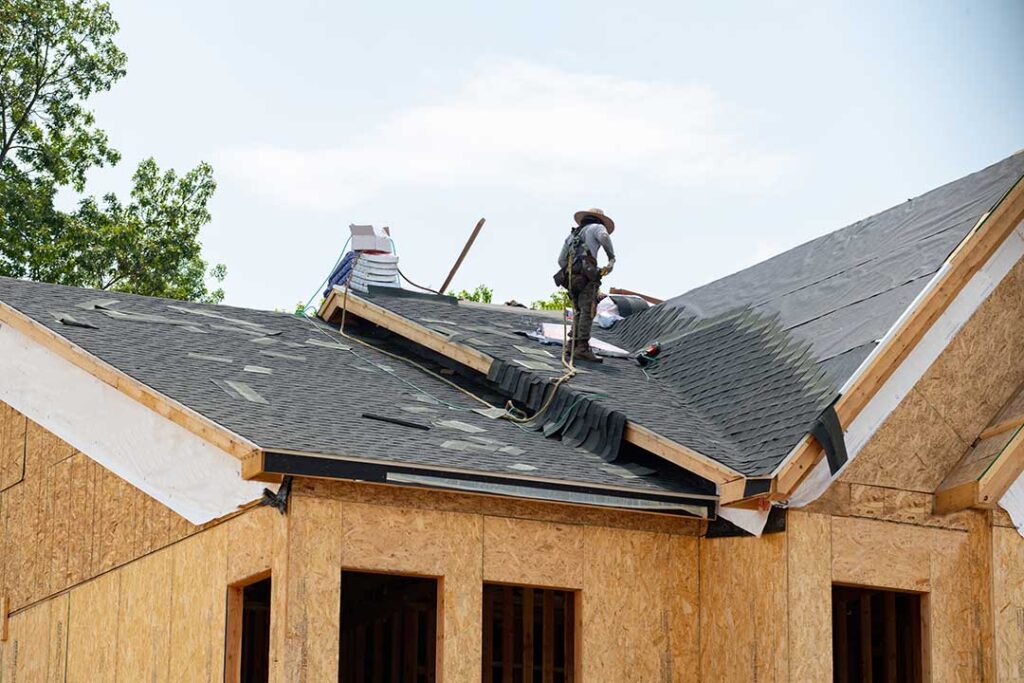
A roof tear-off is the complete removal of existing roofing materials before new roofing is installed. For homeowners in Ithaca, NY, the process usually involves more than stripping away shingles: crews must protect the property, inspect the roof deck, manage debris, and keep the structure weather-tight through changing conditions.
What does a roof tear-off include?
A typical tear-off removes the visible roofing layers down to the roof deck. Those layers may include:
- Asphalt shingles or another roof covering
- Ridge caps and hip shingles
- Underlayment, such as felt or synthetic membrane
- Flashing around chimneys, skylights, walls, and roof edges
- Drip edge and certain ventilation components
- Damaged or deteriorated roof decking, if discovered
The roof deck is the wood surface attached to the rafters or trusses. It provides the structural base for the new roofing system. A tear-off allows the deck and underlying details to be inspected rather than covered by another layer.
This differs from an overlay, sometimes called a re-roof, where new shingles are installed over an existing layer. An overlay may be permitted in some situations, but it can conceal moisture damage, uneven surfaces, inadequate flashing, or ventilation problems.
Why is the old roof removed?
Removing the existing roof provides a clearer view of the roof’s actual condition. Leaks do not always originate directly above the interior stain, and problems can remain hidden beneath shingles or underlayment.
A tear-off can reveal:
- Soft, rotten, or delaminated decking
- Rusted or improperly installed flashing
- Water damage around chimneys, dormers, and valleys
- Missing or blocked ventilation openings
- Multiple layers of old roofing
- Evidence of ice-dam-related moisture entry
- Areas where previous repairs were incomplete
In a cold, wet climate, these details matter. Snow, freeze-thaw cycles, wind-driven rain, and prolonged dampness can place stress on older roofing systems. A roof that appears serviceable from the ground may have localized damage beneath the surface.
What happens before work begins?
Preparation usually starts with a review of the roof design, access points, weather forecast, and property layout. Trees, porches, driveways, gardens, nearby structures, and power lines can affect how materials and debris are handled.
Before the tear-off, homeowners should expect discussion of:
- The planned work area and approximate sequence
- Protection for doors, windows, siding, landscaping, and paved surfaces
- Placement of debris containers or temporary trailers
- How rain or snow will be handled if work is interrupted
- Whether skylights, satellite equipment, gutters, or other attached features are affected
- Permit requirements for the property’s specific jurisdiction
Permit rules can differ depending on whether a home is within the City of Ithaca, the Town of Ithaca, or another nearby municipality. Roofing work may require a building permit, particularly when decking, structural elements, insulation, or related components are being altered. Local code offices can confirm the requirements before work starts.
How long does a tear-off take?
Many straightforward residential tear-offs and replacements can be completed in a day or several working days, but there is no reliable single timetable. Roof size, pitch, number of layers, access, weather, decking repairs, and the complexity of flashing all affect the schedule.
A small, simple roof with one layer of shingles may move quickly. A larger home with steep sections, dormers, valleys, additions, or several roofing layers can take considerably longer.
Weather is a major factor in this area. Rain can make roof surfaces unsafe and can expose the roof deck to moisture. Snow and ice may delay work, while strong wind can interfere with material handling and temporary coverings. A responsible schedule includes time to secure the roof at the end of each work period.
What should homeowners expect during the tear-off?
Roof removal is noisy, dusty, and active. Shingles are loosened and carried or lowered from the roof, while old underlayment and flashing are removed. Some debris may land on protective ground coverings before being collected.
Common short-term effects include:
- Hammering and scraping sounds
- Foot traffic on the roof and around the home
- Temporary access restrictions near walls and entrances
- Small amounts of dust or granule debris
- Vibration inside upper rooms
- Materials stored near the structure
- Limited use of driveways or parking areas

Attic spaces may also experience some debris or dust if there are gaps in the roof deck or if old material has deteriorated. Fragile items stored in an attic can be moved before work begins.
Children and pets should stay away from the work zone. Nails and sharp fragments can remain on the ground until cleanup is complete, even when magnetic tools are used.
What happens if damaged decking is found?
Decking damage is one of the most common discoveries during a tear-off. The affected section is usually marked, cut out, and replaced with suitable structural panels. The exact repair depends on the condition of the wood, the spacing of the roof framing, and the applicable building code.
Not every dark stain means the wood must be replaced. Surface discoloration may be old and dry, while soft, crumbling, warped, or structurally weakened wood is more serious. The important question is whether the decking can securely support the new roofing system and fasteners.
Homeowners should ask how unexpected decking repairs will be documented and approved. Clear communication is especially useful when the original roof covering concealed damage.
How are chimneys, valleys, and roof edges handled?
Certain areas require more attention than the open field of the roof. Valleys collect concentrated water flow, while chimneys and wall intersections depend on properly integrated flashing. Eaves and rakes need edge protection to help direct water away from the deck.
During a tear-off, these areas may involve:
- Replacement or repair of step flashing
- New flashing around chimneys and sidewalls
- Ice-barrier underlayment near eaves and vulnerable transitions
- Improved valley detailing
- Replacement of damaged drip edge
- Adjustments around skylights, vents, and roof penetrations
Older homes may have several generations of repairs layered over one another. Removing the roof exposes these details and may show why a recurring leak has been difficult to solve.
How is the home protected from rain?
A roof should not be left exposed unnecessarily. Work is generally planned in sections so that underlayment or another temporary protective layer can be installed as areas are completed.
If weather changes suddenly, exposed sections may be covered with securely fastened tarps or other temporary protection. Temporary coverings are not a permanent roof, and heavy rain, wind, or melting snow can test them. Homeowners should know who is responsible for checking the site after severe weather and how interior water entry will be handled if it occurs.
What happens to the old roofing materials?
Removed shingles, underlayment, nails, flashing, and damaged wood are collected and transported as construction and demolition debris. Asphalt shingles may be eligible for processing or recycling when they meet facility requirements, while mixed or contaminated materials may require disposal.
Debris should not be placed in ordinary household trash unless local rules specifically allow it. In Tompkins County, construction waste handling follows different requirements from regular residential garbage. Materials such as suspected asbestos-containing roofing products require special evaluation and should not be disturbed casually.
A final cleanup should include the roof surface, gutters, walkways, planting areas, driveways, and nearby ground. A magnetic sweep can help collect loose nails, but homeowners may still find an occasional fastener afterward, especially near lawn edges or areas hidden by vegetation.
What should be checked after the tear-off?
Before the new roof is considered complete, the visible installation should be reviewed for secure flashing, consistent shingle alignment, sealed penetrations, clear ventilation paths, and properly finished edges.
Inside the house, check attic areas and upper ceilings after the first significant rainfall. A small amount of dust from construction is not the same as a leak, but active dampness, new staining, or dripping water should be reported promptly.
The most useful records to keep include permit information, photographs of concealed repairs, product documentation, disposal details, and notes about any areas that received special treatment. These records can help explain the roof’s history if future maintenance is needed.
