

Roof cleaning can remove leaves, moss, algae, and other buildup, but the work can also cause serious falls, roof damage, and chemical runoff if handled carelessly. In Ithaca, NY, freeze-thaw cycles, damp conditions, shade, and heavy seasonal precipitation can leave roofing materials wet and slippery for much of the year.
The safest approach is to determine whether the roof can be cleaned from the ground or from a stable ladder position. Many roofs should not be walked on at all.
What should be removed from a roof?
Roof cleaning usually involves clearing loose debris and reducing biological growth. Common materials include:
- Leaves, twigs, and small branches
- Pine needles and seed pods
- Moss and small weeds
- Black or green algae staining
- Lichen
- Dirt carried by wind and rain
- Bird droppings near roof edges or chimneys
Loose debris can block gutters, hold moisture against shingles, and hide damaged flashing. Moss is more concerning because its roots and dense growth can lift shingle edges, retain water, and slow drying.
Not every dark mark is dirt. Some roof stains are caused by algae, while others may indicate aging, granule loss, moisture intrusion, or deterioration of the roofing material. Cleaning can improve appearance, but it cannot repair underlying damage.
Is it safe to walk on a roof?
Walking on a roof is safe only under limited conditions, and many homeowners should avoid it entirely. Asphalt shingles become slippery when wet, icy, moss-covered, or coated with cleaning solution. Walking can also loosen granules, crack brittle shingles, bend flashing, or damage ridge vents.
Never walk on a roof that is:
- Wet from rain, dew, or cleaning solution
- Frosted, icy, or snow-covered
- Steep enough that balance is difficult
- Covered with moss or thick algae
- Brittle, curling, cracked, or visibly damaged
- Near overhead electrical lines
- Accessible only by an unstable ladder setup
A roof can appear dry while still holding moisture in shaded areas. This is common during spring and autumn, when overnight condensation and slow drying are more likely.
For low-slope areas that can be reached safely without climbing onto the roof, cleaning from a stable ladder or from the ground is usually less hazardous. A roof with a steep pitch, multiple levels, skylights, fragile materials, or significant moss growth presents a higher risk and may require trained assistance.
How can roof debris be removed without causing damage?
Start with a visual inspection from the ground. Look for missing shingles, sagging areas, exposed underlayment, loose flashing, damaged vents, and heavy moss. Cleaning should not begin if the roof appears structurally unsound.
For light debris, use a soft-bristled roof rake or a long-handled brush designed for gentle exterior cleaning. Work from the edge toward the ridge only when the tool can be controlled without standing on the roof. Avoid scraping aggressively across shingles.
Do not use:
- A pressure washer
- A stiff wire brush
- A metal rake dragged across shingles
- A leaf blower aimed forcefully under shingle edges
- Sharp tools to pry off moss
- A garden hose directed beneath shingles or flashing
Pressure washing can remove protective granules from asphalt shingles and force water beneath roofing components. It may also damage wood shakes, loosen flashing, and spread debris into gutters and wall assemblies.
Moss should not be pulled away in large clumps. Pulling can detach shingles or tear their surface. Gentle removal of loose growth is less damaging than aggressive scraping, but heavy or established moss may be unsafe to address from a ladder.
What is the safest way to treat moss and algae?
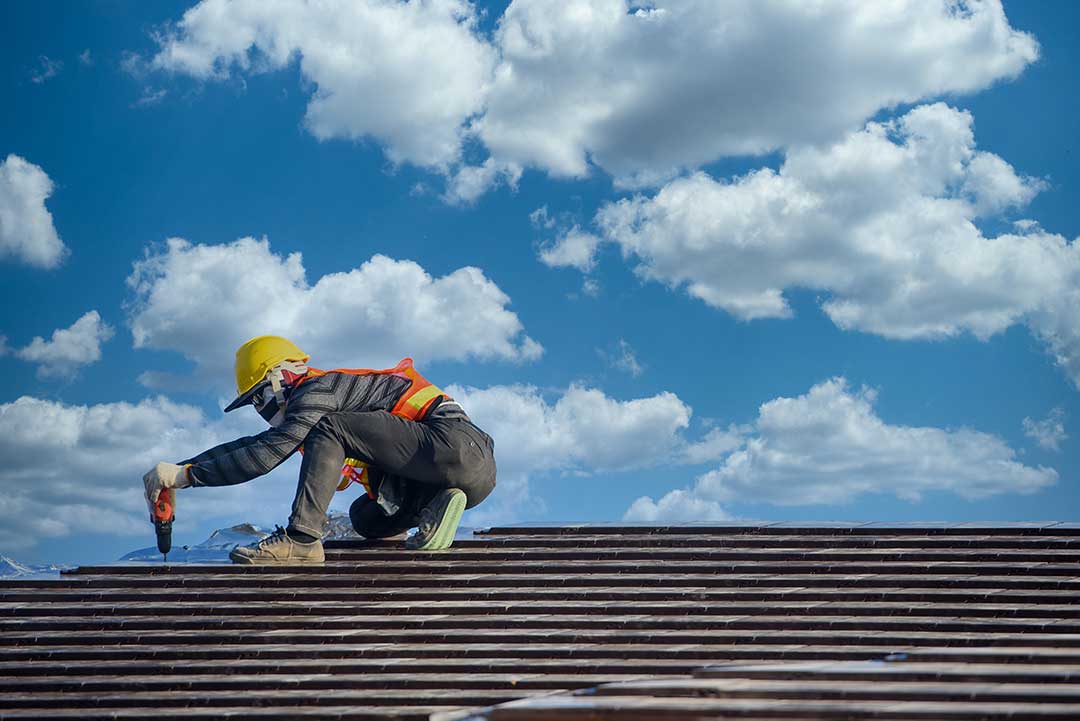
Moss and algae require different approaches. Algae usually appear as dark streaks or broad discoloration, while moss forms raised green or brown growth. Both thrive where roofs stay damp, especially beneath trees or on shaded slopes.
A roof-safe cleaning solution may be applied with a low-pressure sprayer, but the product must be compatible with the roofing material. Follow the label exactly, including dilution, dwell time, protective equipment, and runoff precautions. Never mix cleaning chemicals, especially products containing chlorine with ammonia or acids.
Protect nearby plants, soil, siding, windows, and outdoor equipment from runoff. Wet vegetation before treatment and rinse it afterward if the product directions allow. Keep children and pets away from the work area until the surface is fully dry and the product label permits access.
Avoid applying chemicals before rain. A sudden storm can carry runoff into gardens, streams, drainage areas, or neighboring property. It can also dilute the treatment before it has time to work.
Moss often returns if the roof remains shaded and damp. Trimming branches that touch the roof, improving sunlight and airflow, and keeping gutters clear can help the surface dry more quickly. Branches should not be cut if doing so would require unsafe climbing or work near power lines.
How should gutters be handled during roof cleaning?
Roof debris commonly ends up in gutters, so gutter inspection should be part of the process. Blocked gutters can cause overflow onto fascia boards, siding, foundations, and walkways.
Use a stable ladder on firm, level ground. The ladder should not rest against gutters, loose trim, or delicate downspouts. Keep both hands available whenever possible, and do not overreach sideways. Move the ladder instead of stretching beyond a comfortable balance point.
Remove wet leaves by hand while wearing gloves, then flush the gutter with a gentle stream of water. Check that downspouts drain freely and that water is directed away from the foundation.
In Ithaca, roof debris may combine with spring pollen, autumn leaves, ice, and snowmelt. A gutter that drains adequately in dry weather can still overflow during sustained rain or rapid thawing.
What precautions protect people and property?
Roof cleaning should be postponed during rain, wind, frost, snow, or temperatures near freezing. Wet ladders and surfaces create fall hazards, while wind can make long-handled tools difficult to control.
Before starting:
- Tell household members that work is taking place overhead.
- Keep people and pets away from falling debris and chemical runoff.
- Wear slip-resistant footwear, gloves, eye protection, and clothing that covers the skin.
- Protect windows, painted surfaces, plants, and outdoor furniture.
- Inspect ladders, hoses, sprayers, and extension poles for damage.
- Keep tools secured so they cannot slide from a roof edge or ladder.
If a fall-arrest harness, roof anchor, scaffold, or other specialized equipment would be needed, the task has moved beyond routine household cleaning. The same applies to roofs with steep slopes, structural concerns, fragile materials, or difficult access. In those situations, safety should take priority over appearance.
How often should a roof be cleaned?
There is no fixed schedule for every home. A roof should be checked at least twice a year and after major storms, with additional attention after long periods of shade, heavy leaf drop, or nearby tree work.
Cleaning may be appropriate when debris is accumulating, gutters are repeatedly blocked, moss is spreading, or water cannot drain normally. Cosmetic staining alone does not always require immediate treatment, especially if the roofing material is old or fragile.
A ground-level inspection is often enough to identify whether cleaning is needed. If shingles are losing large amounts of granules, flashing is lifting, or the roof surface is sagging, cleaning should not be treated as a substitute for an assessment of the roof’s condition.
IMAGE_ALT:
A homeowner uses a soft roof rake from a stable ladder to clear leaves from damp asphalt shingles.
