

What are the earliest signs of roof damage?
The first signs are often subtle: a few loose shingles, dark areas on the roof, damp attic insulation, or water stains that appear far from the actual leak. Finding these clues early can help prevent damage to sheathing, insulation, ceilings, and interior walls.
In Ithaca, NY, roofs experience repeated cycles of snow, freezing temperatures, rain, wind, and summer heat. Those changes can gradually weaken roofing materials even when the roof still looks generally intact from the ground.
A roof does not need to be visibly collapsing to have a problem. Small defects can allow moisture to enter during a wind-driven rainstorm or as melting snow refreezes along colder roof edges.
Which exterior roof conditions should be checked from the ground?
A ground-level inspection can reveal several warning signs without requiring anyone to climb onto the roof. Use binoculars when possible, and inspect from more than one angle.
Look for:
- Shingles that are cracked, curled, buckled, or missing
- Shingle edges that appear lifted after windy weather
- Dark patches or areas with noticeably different coloring
- Bare spots where protective granules have worn away
- Sagging sections along the roofline
- Exposed underlayment, flashing, or roof decking
- Loose or damaged metal around chimneys, vents, skylights, and roof edges
- Granules collecting in gutters or at the base of downspouts
A few granules in a gutter are not always a sign of immediate failure. Newer shingles may shed some loose material, and normal aging can produce a small amount of granule loss. A growing quantity, especially alongside bald-looking shingle surfaces, suggests more significant wear.
Sagging deserves particular attention. It may indicate moisture-damaged decking, weakened framing, or a long-standing drainage problem. A sagging roofline should not be treated as a cosmetic issue.
Can gutters and downspouts reveal roof problems?
Yes. Gutters often provide useful evidence because they collect material and water coming from the roof.
During a routine cleaning, check whether the gutters contain an unusual amount of dark, sand-like granule material. Also look for shingle fragments, pieces of metal, or fasteners that may have washed down from the roof.
Downspouts should direct water away from the foundation. If water repeatedly overflows from one section of gutter, the cause may be leaves or ice, but it may also be a roof valley that is not draining properly, a misaligned gutter, or a section of roof that is shedding water unevenly.
In colder months, ice buildup along the eaves can conceal drainage problems. Ice dams may form when heat escapes into the attic and melts snow on the upper roof. The water can refreeze near colder roof edges and work beneath shingles. Not every band of ice indicates serious damage, but recurring ice buildup, leaking during thaws, or stained soffits should be investigated.
What roof damage can be seen inside the house?
Interior signs may appear well after the original roof defect developed. Water does not always drip directly below the entry point; it can travel along rafters, insulation, wiring, or framing before becoming visible.
Inspect ceilings, upper-floor walls, and attic spaces for:
- Yellow, brown, or gray water stains
- Peeling paint or bubbling drywall
- Damp insulation or a musty odor
- Darkened roof sheathing
- Mold-like spotting
- Rust around nails, fasteners, or metal components
- Daylight visible through the roof deck
- Wet areas that appear after rain, snowmelt, or strong wind
An attic inspection is especially useful after a major storm. Look beneath roof valleys, around vent pipes, near chimneys, and along the underside of roof edges. Moisture may be present even when the ceiling below looks normal.
Condensation can resemble a roof leak. Poor attic ventilation or warm, humid air entering from the living space may cause moisture on nails and roof sheathing. The timing can provide a clue: condensation may appear during cold weather without rainfall, while a roof leak often becomes noticeable after precipitation or thawing. In some cases, both problems exist at the same time.
How can weather expose a developing roof problem?
Storms often reveal weaknesses that were already present. After high winds, inspect the roof from the ground for missing shingles, lifted tabs, damaged flashing, and fallen debris. Do not assume that a roof is unaffected simply because there is no visible leak indoors.
Heavy snow can place added stress on older or weakened roof structures. Repeated freeze-thaw cycles can enlarge small cracks in flashing, masonry, and roofing materials. Rain followed by a rapid freeze may also create conditions that allow water to move beneath damaged shingles.
Trees near a home deserve attention as well. Overhanging branches can scrape shingles, drop limbs, block valleys, and create shaded areas where moss or algae remains damp longer. A fallen branch may cause structural damage even if the roof covering appears mostly intact from the ground.
Are moss, algae, and dark streaks signs of roof failure?
Not always. Moss and algae can be signs of persistent moisture, but their presence does not automatically mean the roof is leaking or structurally unsound.
Moss can lift shingle edges as it grows beneath them. It is more concerning when shingles are already brittle, displaced, or losing granules. Dark streaks may be algae-related staining rather than damage, although shaded and damp roof surfaces tend to dry more slowly and may age faster.
Avoid scraping, pressure-washing, or aggressively brushing shingles. These actions can remove protective granules and shorten the roof’s useful life. The condition of the shingles underneath the growth matters more than the discoloration alone.
When should a roof inspection be treated as urgent?
Some conditions require prompt attention because they can lead to rapid water entry or structural damage:
- Active dripping or water pooling indoors
- A large missing section of shingles
- A roof puncture from a branch or other object
- Visible daylight through the roof deck
- A sagging roofline or sagging ceiling
- Electrical fixtures near active water intrusion
- Extensive ice buildup accompanied by interior leaks
- Wind-damaged flashing around a chimney, skylight, or vent
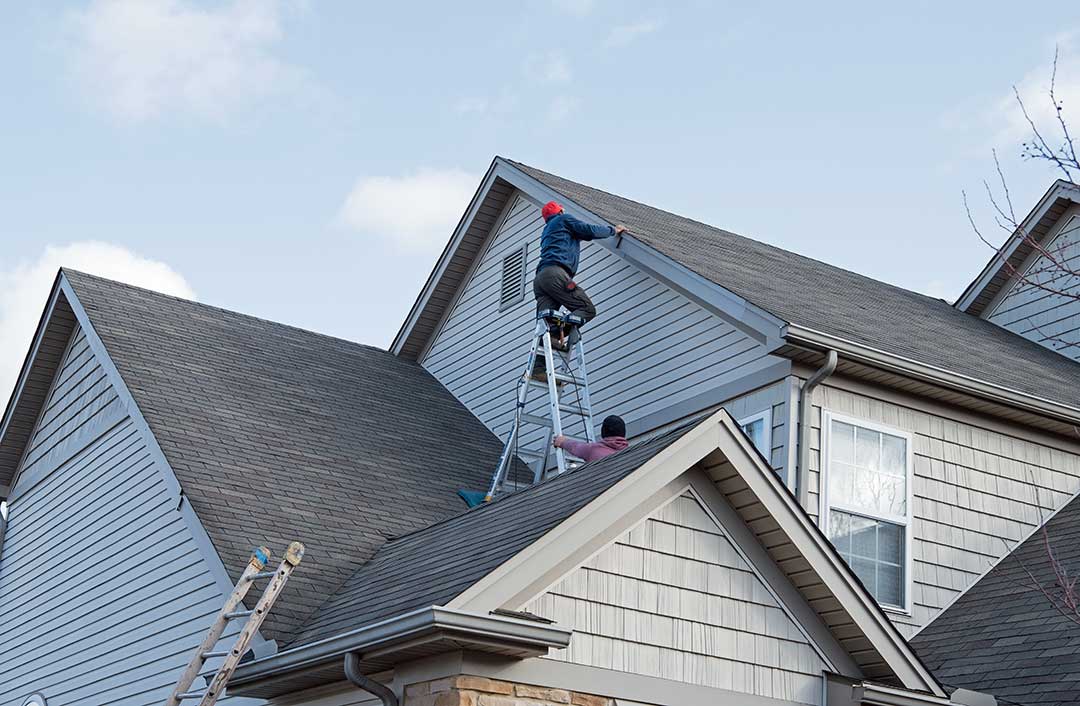
If water is near electrical wiring, light fixtures, or outlets, avoid touching the wet area and address the electrical safety risk first. During severe weather, climbing onto the roof is unsafe. Snow, ice, steep slopes, and wet shingles can make even a seemingly minor inspection hazardous.
How often should homeowners check for early damage?
A practical schedule is to inspect the roof from the ground in spring and fall, and again after unusually strong wind, heavy snow, hail, or a major freeze-thaw event. Gutters and downspouts should be checked more frequently, especially when leaves are falling or ice is forming.
Keep a simple record of observed changes. Photographs taken from the same location can help distinguish a new defect from an older stain or discoloration. Note when a ceiling mark appeared and whether it followed rain, snowmelt, or a cold snap.
Early roof checks are most useful when they focus on changes rather than appearance alone. A roof may look acceptable at a distance while flashing loosens, ventilation causes condensation, or a small opening begins allowing moisture into the attic. Recognizing these clues gives homeowners a better chance to address limited damage before it spreads through the building.
