
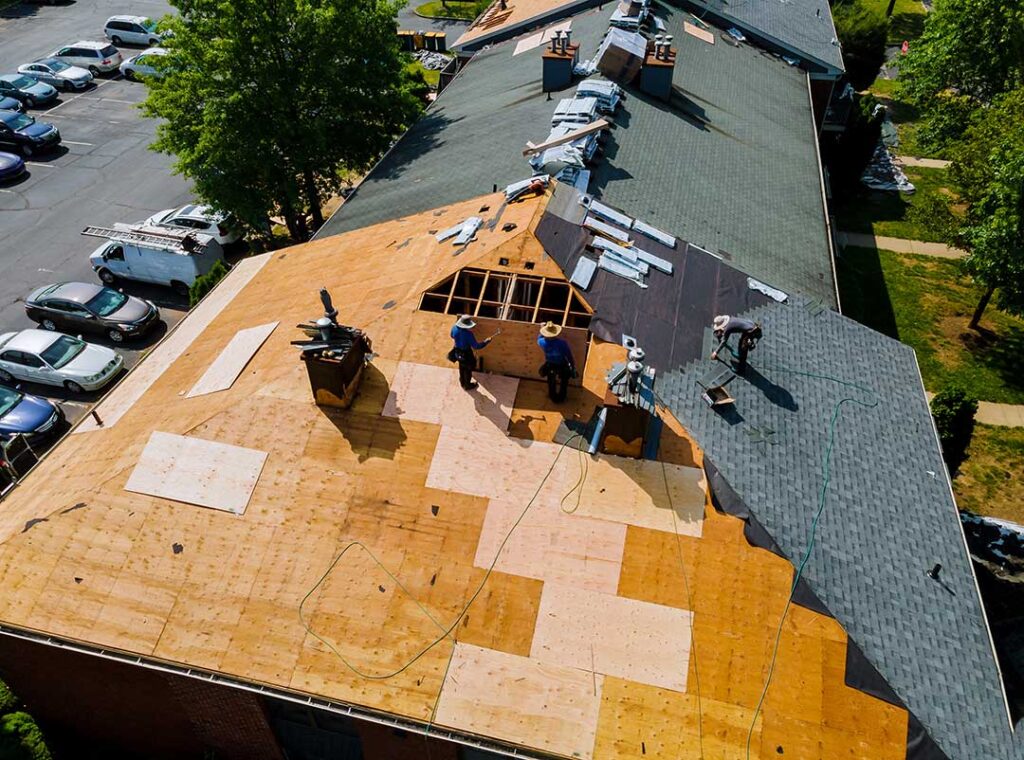
Which roofing material works best for homes in Ithaca, NY?
There is no single roofing material that is best for every home. The right choice depends on roof slope, structural capacity, exposure to snow and wind, budget, appearance, maintenance expectations, and how long the owner expects to remain in the house.
Local weather makes several factors especially relevant. Roofs must handle repeated freeze-thaw cycles, wet snow, ice formation near eaves, summer humidity, falling branches, and periods of strong wind. Proper installation details—particularly flashing, underlayment, ventilation, and drainage—can matter as much as the visible roofing material.
Asphalt shingles: Why are they so common?
Asphalt shingles remain the most widely used option for sloped residential roofs because they offer a practical balance of price, appearance, availability, and installation familiarity.
Advantages:
- Lower initial cost than most premium roofing materials
- Available in many colors and architectural styles
- Suitable for many common roof slopes
- Individual shingles can sometimes be repaired without replacing the entire roof
- Generally lighter than tile, slate, or some other long-lasting materials
Disadvantages:
- Shorter service life than metal, slate, or properly maintained standing-seam roofing
- Shingles can lose granules, curl, crack, or become brittle with age
- Dark surfaces can absorb considerable summer heat
- Ice dams and poor ventilation can shorten service life
- Wind damage may occur if shingles are improperly fastened or have aged adhesives
Architectural asphalt shingles are thicker and more dimensional than basic three-tab shingles. They often provide better visual depth and may offer improved wind and impact ratings, but the rating on the package does not guarantee performance if the roof deck, flashing, or installation is inadequate.
Metal roofing: Is it a good choice for snowy conditions?
Metal roofing can perform well in cold, wet climates because it sheds rain and snow efficiently, resists rot, and is available in long-lasting panel and shingle designs. It is not automatically maintenance-free, however.
Advantages:
- Long potential service life
- Low risk of rot, insect damage, and moisture absorption
- Lightweight compared with slate or concrete tile
- Good resistance to wind, fire, and many forms of weather exposure
- Snow may slide off readily, reducing prolonged snow loading in some situations
Disadvantages:
- Higher initial cost than standard asphalt shingles
- Noise from rain can be noticeable if the roof assembly is not well insulated
- Sliding snow can create a hazard over entrances, walkways, or lower roof sections
- Expansion, contraction, and fastener movement must be addressed during installation
- Repairs may be more difficult if panels are damaged or discontinued
Metal roofs are not all alike. Exposed-fastener panels are usually less expensive but have visible fasteners and may require more attention as seals and fasteners age. Standing-seam systems hide most fasteners and can offer strong long-term performance, but they require careful detailing around chimneys, skylights, valleys, and other penetrations.
Snow guards may be useful where falling snow could damage landscaping, vehicles, or people. Their need depends on roof pitch, panel type, building layout, and the areas below the roof edge.
Wood shingles and shakes: What are the benefits and drawbacks?
Wood roofing can complement older houses, cottages, and homes designed around a natural appearance. Cedar is commonly associated with this category, although different wood products have different durability and maintenance requirements.
Wood roofing may provide:
- A distinctive, natural appearance
- Some insulating value
- A material that can weather attractively when properly designed and maintained
- Compatibility with certain historic or traditional architectural styles
Its limitations are significant in a damp, snowy climate:
- Wood can absorb moisture and decay if ventilation and drainage are poor
- Moss and algae may develop in shaded areas
- Regular cleaning and maintenance may be needed
- Fire-resistance requirements can limit where certain products are permitted
- Splitting, warping, and fungal deterioration can occur over time
Wood shingles and shakes need space to dry. Overhanging branches, dense shade, leaf buildup, and blocked roof drainage can reduce their service life. They are generally less forgiving of neglect than asphalt or metal roofing.
Slate and tile: Do durable materials justify the added weight?
Natural slate and clay or concrete tile can last for decades, sometimes far longer than common asphalt products. Their durability and appearance make them appealing for some homes, but their weight and installation requirements limit their practicality.
Slate advantages:
- Very long potential service life
- Strong resistance to rot, insects, and ultraviolet exposure
- Distinctive appearance
- Good fire resistance
Slate disadvantages:
- High material and installation cost
- Considerable weight
- Individual pieces can break from impact or improper foot traffic
- Repairs require compatible materials and specialized knowledge
- The supporting structure may need evaluation before installation
Clay and concrete tile offer strong durability and fire resistance, but they are also heavy. Some tile profiles can be vulnerable to impact or freeze-thaw damage if the product is poorly suited to the climate or improperly installed.
A roof designed for asphalt shingles should not automatically be assumed capable of supporting slate or tile. Structural capacity, framing condition, roof pitch, and underlayment all need to be considered before changing to a heavier system.
What about rubber, synthetic, and composite roofing?
Synthetic slate and composite shingles are manufactured to imitate slate, wood, or other traditional materials while reducing weight. Some rubber-like roofing products are also used on low-slope sections, additions, porches, and complex roof areas.
Potential benefits include:
- Lower weight than natural slate or tile
- More consistent dimensions
- Resistance to rot and insect damage
- Broad style and color options
- Easier handling during installation than many traditional materials
Potential drawbacks include:
- Product quality varies considerably
- Long-term aging data may be less extensive than for older materials
- Repairs may require matching a specific product
- Some systems cost more than asphalt without providing the full service life of natural slate
- Manufacturer installation requirements can be detailed and restrictive
A synthetic material should be judged by its testing, warranty limitations, impact rating, fire classification, and history in comparable climates—not only by its appearance.
Which material is best for low-slope roofs?
Low-slope roofs require different materials from conventional steep-slope roofs. Water drains more slowly, so overlapping shingles may not provide reliable protection.
Common low-slope options include modified bitumen, built-up roofing, thermoplastic membranes, thermoset membranes, and liquid-applied systems. These can provide continuous water resistance when properly designed, but seams, penetrations, drainage, and flashing become critical.
A low-slope roof may also be found beside a steeper main roof, such as over a porch, addition, or attached garage. Using the same visible material everywhere is not always the best technical choice. The roof slope and drainage design should guide the material selection.
How should local homeowners compare roofing materials?
Price per square foot is only one part of the decision. A useful comparison should include:
- Expected service life under local weather exposure
- Weight and whether the structure can support it
- Performance on the roof’s actual slope
- Resistance to wind, fire, impact, and moisture
- Maintenance and repair requirements
- Availability of replacement materials in the future
- Compatibility with existing flashing, skylights, chimneys, and gutters
- Disposal of the old roofing
- Underlayment, ventilation, and ice-barrier requirements
New York’s residential building requirements address roof coverings, flashing, drainage, wind resistance, fire classification, and ice barriers in areas where ice buildup can cause water backup. Those details are not optional add-ons; they are part of how a roof assembly protects the house.
For local homes, the most durable material is not necessarily the heaviest or most expensive. A correctly matched roof covering, sound roof deck, effective drainage, properly installed flashing, and adequate attic ventilation usually provide a better long-term result than premium material installed over unresolved moisture or structural problems.
When should the existing roof be evaluated before choosing a material?
A roof should be evaluated before selecting a replacement material if there are signs of sagging, recurring leaks, stained decking, widespread shingle loss, moss covering large areas, damaged chimney flashing, or gutters that overflow during ordinary rain.
The condition of the roof deck is especially important. New roofing cannot reliably compensate for wet, deteriorated, or structurally weak sheathing. In snowy conditions, hidden deck damage and repeated moisture intrusion can become more serious even when the roof surface looks acceptable from the ground.
The most suitable roofing material is the one that matches the building, the slope, the structure, the climate, and the household’s maintenance expectations. For many homes, asphalt remains the practical baseline. Metal can offer longer service and strong weather resistance. Slate, tile, wood, and synthetic products may be appropriate when their added cost, weight, detailing, and maintenance needs fit the property.
