
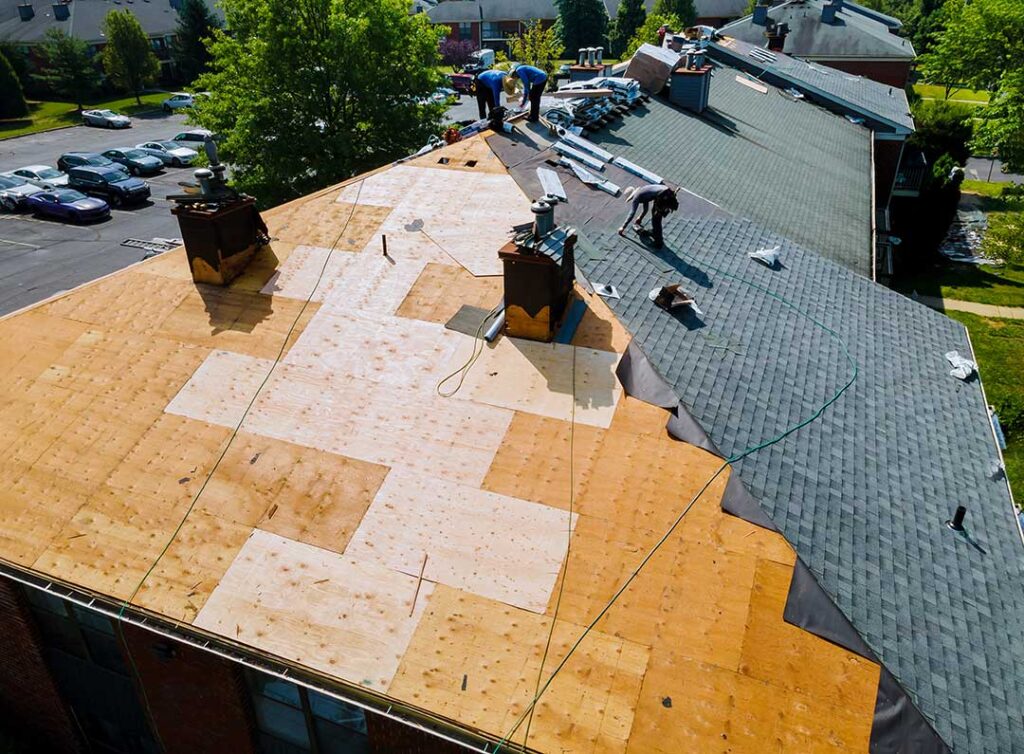
A roof usually lasts longer when small problems are found before they become moisture damage, structural decay, or widespread material failure. In Ithaca, seasonal snow, ice, wind, rain, and repeated freeze-thaw cycles make routine observation especially valuable.
Roof maintenance is not only about shingles. Gutters, flashing, attic conditions, insulation, ventilation, tree growth, and roof penetrations all affect how long the roof assembly remains watertight.
What shortens a roof’s life in Ithaca?
The most common causes of premature roof failure are water that cannot drain properly, ice buildup, poor attic airflow, damaged flashing, and delayed repairs.
The local climate creates several recurring stresses:
- Snow and ice can add weight and encourage water backup at the eaves.
- Freeze-thaw cycles can widen small cracks and loosen materials.
- Heavy rain can expose weak flashing around chimneys, skylights, vents, and wall intersections.
- Falling branches and wind can damage shingles or metal components.
- Damp leaves and organic debris can hold moisture against roofing materials.
A roof does not need to look dramatically damaged to be at risk. Curling shingle edges, dark stains on sheathing, rusty flashing, granules in gutters, or damp attic insulation may indicate problems that are not visible from the ground.
How often should a roof be checked?
A basic visual check from the ground should be performed several times a year, especially in spring and fall. A closer inspection is also wise after a major windstorm, heavy snowfall, or prolonged period of rain.
Look for:
- Missing, cracked, lifted, or visibly curled shingles
- Sagging areas along the roofline
- Loose or damaged flashing
- Gutters pulling away from the fascia
- Debris collecting in valleys
- Moss or heavy organic growth
- Water stains on ceilings or upper walls
- Daylight visible through the attic roof deck
- Wet insulation, musty odors, or darkened wood
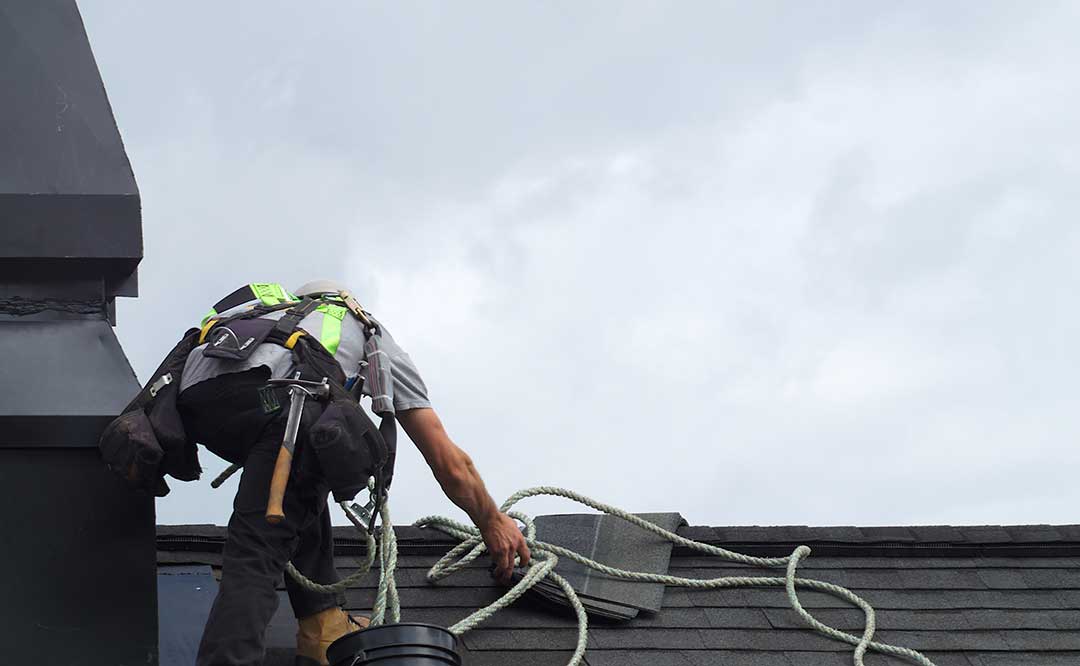
Walking on a roof can damage shingles and creates a fall hazard. Steep roofs, icy surfaces, and roofs near electrical lines should not be approached casually. Ground-level inspection and attic observation are safer for routine monitoring.
Why are gutters important to roof longevity?
Gutters protect the roof edge, siding, foundation, and surrounding soil by directing water away from the building. Clogged or sagging gutters allow water to overflow onto fascia boards and may keep the lower roof edge wet for extended periods.
Clean gutters at least once in spring and once in fall, with additional attention after nearby trees shed leaves. Check that:
- Water flows freely through the outlets and downspouts.
- Downspouts discharge far enough away from the foundation.
- Gutters maintain a slight slope toward the outlets.
- Fasteners remain secure.
- No section holds standing water.
- Ice or snow has not pulled the gutter system out of alignment.
Gutter guards can reduce debris, but they do not eliminate the need for inspection. Some designs can also make it harder to see blockages or may allow fine roof granules and small debris to accumulate underneath.
How can ice dams be prevented?
Ice dams form when heat escapes into the attic, warms part of the roof, melts snow, and allows the water to refreeze near colder eaves. The resulting ice can obstruct drainage and force meltwater beneath roofing materials.
The most durable approach is to address heat loss and airflow rather than simply removing ice after it forms. Useful measures include:
- Sealing air leaks around attic access panels, light fixtures, plumbing penetrations, and ductwork
- Installing adequate insulation at the attic floor
- Keeping soffit and other intake vents open
- Maintaining balanced exhaust ventilation near the upper roof
- Ensuring insulation does not block the air channel above the insulation
- Keeping bathroom and kitchen exhaust fans from discharging into the attic
Do not chop ice dams with an axe, shovel, or other sharp tool. That can puncture shingles and underlayment. Roof-mounted heating cables may help in limited situations, but they do not correct underlying air leakage or ventilation problems and must be installed safely.
What should be done about moss and algae?
Moss is more than a cosmetic issue when it becomes thick. It can hold moisture against shingles, lift their edges, and interfere with drainage. Shaded roof sections beneath trees are particularly prone to persistent dampness.
Small amounts of surface growth can sometimes be removed with a roof-safe cleaning method, but pressure washing is generally too aggressive for asphalt shingles and can strip protective granules. Avoid scraping forcefully or walking repeatedly on affected areas.
Trimming branches that shade the roof can improve drying and reduce the amount of leaves, twigs, and seed debris that collect on the surface. Branches should remain clear of the roof so they do not rub against shingles during wind.
Why do flashing and roof penetrations deserve special attention?
Flashing directs water away from seams and changes in roof direction. It is commonly installed around chimneys, plumbing vents, skylights, dormers, walls, and roof valleys.
These areas often leak before the main field of shingles appears worn. Inspect for lifted metal, cracked sealant, exposed fasteners, rust, gaps, or stains below the penetration. Sealant alone is not a permanent substitute for correctly installed flashing; repeated caulking can hide a problem while allowing water to continue entering behind the assembly.
After a roof repair, check the attic and upper ceilings during the next substantial rainfall. Early confirmation can prevent a small flashing issue from becoming wet insulation, damaged sheathing, or interior staining.
Does attic ventilation really extend roof life?
Proper attic ventilation helps reduce excessive heat and moisture. In winter, a consistently cooler roof surface can reduce uneven snow melting. In summer, ventilation can help release accumulated heat, although it does not replace insulation or air sealing.
Ventilation works best as a system with:
- Low intake openings that remain unobstructed
- High exhaust openings located near the ridge or upper roof
- Adequate insulation below the ventilation channel
- Air sealing between the living space and attic
Adding a single roof vent without improving intake airflow may produce little benefit. In some homes, poorly planned ventilation can even draw conditioned air from the house into the attic.
What roof maintenance can homeowners safely do?
Many preventive tasks are low-risk when performed from the ground or inside the attic:
- Remove leaves from accessible gutters using stable equipment and safe practices.
- Check ceilings and attic spaces for stains or dampness.
- Keep tree limbs from contacting the roof.
- Photograph visible damage after storms.
- Record the dates of inspections and repairs.
- Keep attic access covers properly sealed and insulated.
- Make sure exhaust fans vent outdoors rather than into enclosed roof spaces.
Roof access, work near ice, structural repairs, electrical hazards, and suspected active leaks may require specialized equipment or knowledge. Safety and building-code compliance matter more than attempting a difficult repair without the right conditions.
When does a repair become more urgent?
Prompt attention is warranted when water is actively entering the home, the roof deck is sagging, shingles are missing over a large area, flashing has separated, or a tree has struck the roof. Wet electrical components, ceiling bulges, and rapidly spreading stains also deserve immediate caution.
A roof can often be preserved through timely repairs, but repeated patching may not be appropriate if the underlayment, decking, ventilation, or structural components have deteriorated. The condition of the entire roof system—not just the visible shingles—determines whether maintenance, repair, or replacement is the soundest option.
