
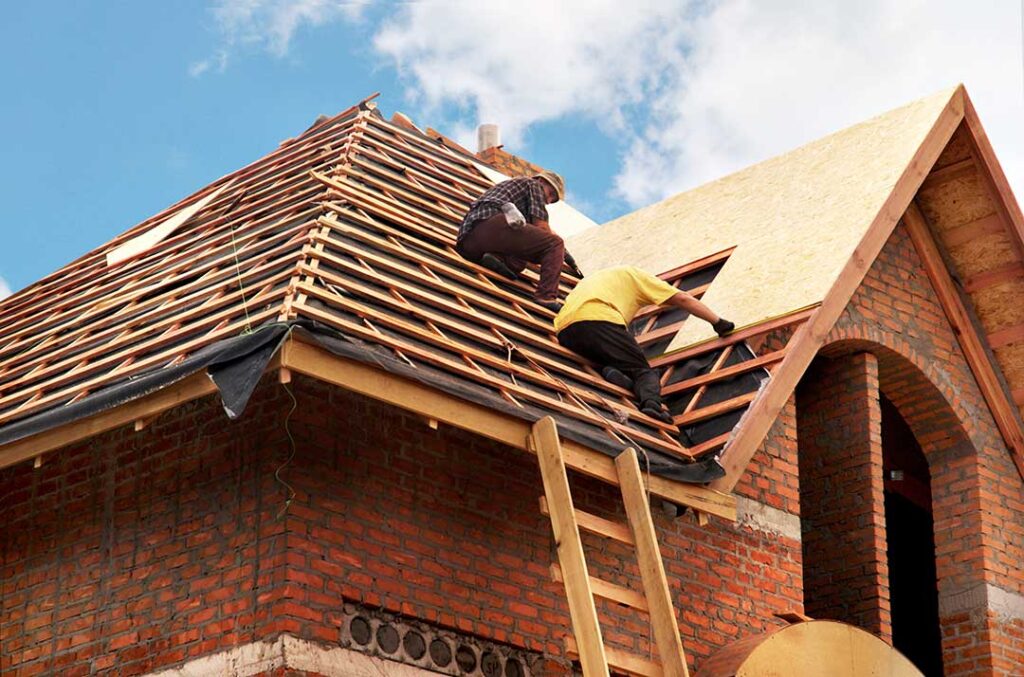
A roof can look simple from the ground, but walking on it involves fall hazards, unstable surfaces, electrical risks, and hidden damage. Homeowners in Ithaca, NY also need to account for snow, ice, rain, leaf buildup, and steep or irregular rooflines common to many local homes.
The safest approach is to do as much inspection as possible from the ground and reserve roof access for situations where the risks are understood and controlled.
Is it safe to walk on a residential roof?
Not always. A roof may be unsafe to walk on even when it appears dry and intact.
Roof surfaces can become slippery from moisture, frost, algae, moss, pollen, fine debris, or recently fallen leaves. Asphalt shingles may also loosen or break under foot traffic, especially when they are brittle from age or softened by heat. Older roofs can have weak decking beneath the surface that is not visible from above.
Avoid walking on a roof if:
- Rain, snow, frost, or ice is present.
- The roof has a steep pitch or multiple levels.
- Shingles appear curled, cracked, missing, or heavily worn.
- The surface feels soft, uneven, or springy.
- Strong winds are present.
- There are overhead wires, nearby trees, or other fall hazards.
- You are taking medication or have a condition that affects balance.
A roof does not need to look severely damaged to be dangerous. Small areas of hidden rot or water damage can fail under concentrated weight.
How can homeowners inspect a roof without climbing on it?
Ground-level inspection is often enough to identify problems that require closer attention. Use binoculars from several viewpoints around the house, including the driveway, yard, and nearby public areas where access is permitted.
Look for:
- Missing, cracked, curled, or displaced shingles
- Dark patches or streaks that may indicate moisture or organic growth
- Sagging along the roofline or between supports
- Damaged flashing around chimneys, vents, and roof edges
- Granules collecting in gutters or at downspout outlets
- Exposed underlayment or wood
- Rusted, bent, or loose metal components
- Debris resting against roof penetrations
- Water stains on exterior walls, soffits, or ceilings
After heavy snow, freeze-thaw cycles, or strong wind, inspect from the ground again. In this climate, repeated expansion and contraction can loosen materials over time, while wet leaves and ice may conceal damage.
What should be checked before using a ladder?
A ladder should be treated as a separate fall hazard, even if the roof itself is low.
Set the ladder on firm, level ground. Soft soil, wet grass, gravel, and uneven paving can allow the feet to shift. Keep the ladder clear of doors, moving vehicles, electrical lines, and areas where children or pets may pass.
Before climbing, check that:
- The ladder is rated for the user and any tools being carried.
- The rails and steps are clean and free of oil, ice, mud, or wet leaves.
- Locks and feet are working properly.
- The ladder extends above the roof edge when roof access is unavoidable.
- The top rests against a stable surface rather than gutters, decorative trim, or weak siding.
- The climbing angle is stable and not excessively steep.
- Someone on the ground knows that the ladder is in use.
Never carry bulky materials while climbing. Use a tool belt or raise small items with a line after reaching a secure position. Keep both hands available for climbing whenever possible.
How should a roof be approached after snow or ice?
Snow and ice create conditions that are unsuitable for routine homeowner roof access. Even a small amount of ice can make shingles and metal components extremely slippery. Snow can also hide roof edges, skylights, weak decking, and changes in elevation.
Do not climb onto a snow-covered roof to remove snow by hand. Shoveling can damage shingles, and a person may slide toward an edge without realizing how little traction is available. Snow removal from the ground can also be hazardous if tools, snow, or ice fall unexpectedly.
Watch for falling ice and snow near:
- Roof edges
- Porch roofs
- Dormers
- Valleys
- Gutters and downspouts
- Areas above entrances and walkways
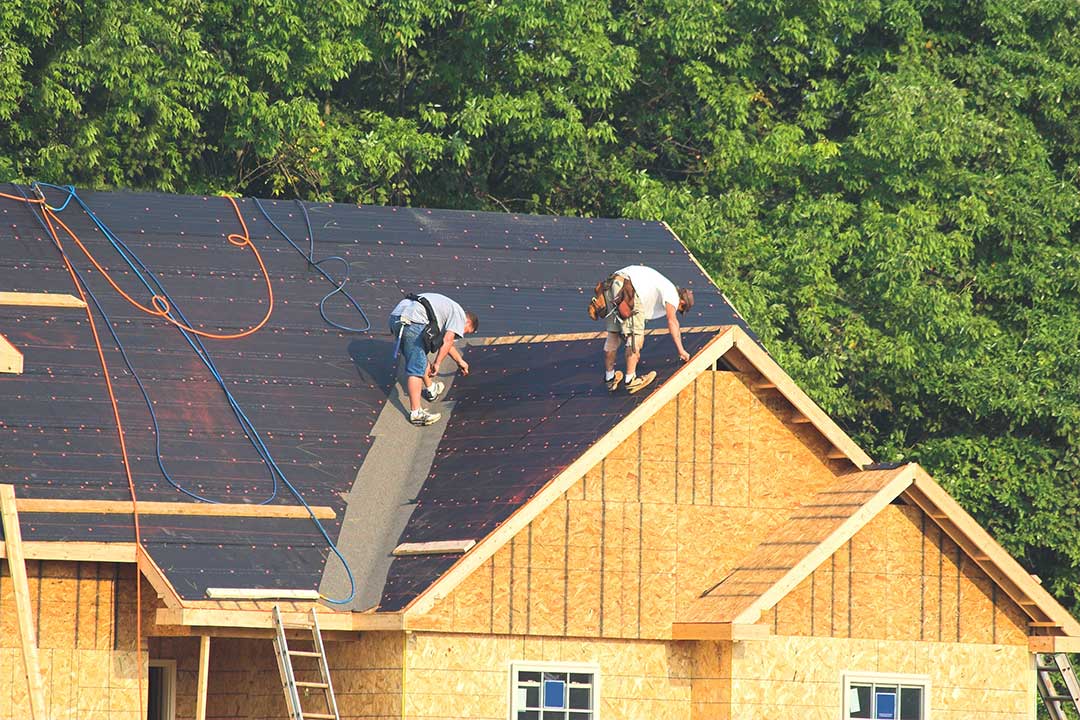
After a storm, keep people away from locations where roof runoff may release large chunks of ice. If a roof shows visible sagging, cracking sounds, or rapidly increasing interior leaks, leave the area below it and treat the condition as urgent.
Are gutters safe to clean from a ladder?
Gutter cleaning can be done safely only when the ladder and work area are stable. Many falls occur because a person leans sideways instead of moving the ladder, places a ladder on an unstable surface, or works too close to an edge.
Keep the task within a comfortable reach. Do not stand on the top step or climb higher than the ladder’s safety instructions allow. Move the ladder frequently rather than stretching across the gutter.
Gutters should not be used as handholds or ladder supports. They may pull away from the fascia or bend under pressure. Be especially cautious in autumn, when wet leaves make both ladders and roof edges slick.
If the roofline is high, the ground is uneven, or the task requires working near electrical lines, avoiding the climb is the safer decision.
What electrical hazards are present around roofs?
Overhead electrical lines can be difficult to judge from ground level, particularly near roof corners, dormers, additions, and trees. A ladder, gutter-cleaning tool, antenna, or long-handled brush can conduct electricity if it contacts a line.
Maintain generous distance from all overhead wires and assume they are energized. Do not place ladders where they could fall or slide toward a line. Metal ladders and tools require particular caution, but wood and fiberglass equipment can still create danger if they contact electrical infrastructure.
Solar equipment, satellite equipment, and roof-mounted wiring may also present hazards. Do not disturb or disconnect rooftop components during an inspection.
What clothing and equipment reduce roof-related injuries?
Wear footwear with clean, slip-resistant soles and clothing that allows full movement. Avoid loose garments, dangling cords, and items that can catch on ladder parts.
Useful safety equipment may include:
- Work gloves with a secure grip
- Eye protection when clearing debris
- A properly fitted helmet for tasks involving overhead hazards
- A tool belt instead of hand-carried tools
- A fall-protection system designed for the specific roof and used according to its instructions
A fall-arrest harness is not automatically safe simply because it is being worn. It must be attached to an appropriate anchor, with enough clearance to prevent striking a lower surface. Improvised tie-offs to gutters, vents, chimneys, or plumbing pipes are not reliable fall protection.
When should a homeowner stop and stay off the roof?
Stop immediately if the surface becomes wet, wind increases, visibility drops, or the roof feels unstable. Do not continue because only a small area remains to be inspected.
Professional assistance is justified when the task involves a steep roof, suspected structural damage, electrical equipment, significant ice, difficult ladder placement, or a fall-protection system. Safety also takes priority after an accident, when injuries may not be obvious at first.
For routine maintenance, many risks can be reduced by keeping gutters clear from a stable position, trimming branches before they threaten the roof, checking attic ceilings for stains, and inspecting from the ground after severe weather. In Ithaca, seasonal changes make these simple checks especially useful before winter and again after snow and ice have cleared.
