
A roof warranty can help pay for certain repairs, but it does not guarantee that every leak, storm loss, or installation problem will be covered. The most useful way to assess coverage is to identify which warranty applies, what caused the problem, what exclusions are listed, and what documentation is required.
What types of roof warranties apply?
Most roofing projects involve more than one warranty. These warranties may overlap, but they do not cover the same problems.
Material or manufacturer warranty
This warranty comes from the company that made the shingles, membrane, underlayment, flashing, or other roofing materials. It generally addresses defects in the product itself.
For example, a material warranty may apply if shingles crack, blister, or lose their protective surface because of a manufacturing problem. It usually does not cover damage caused by improper installation, falling branches, wind beyond the stated limits, poor ventilation, or building movement.
Material warranties may have different coverage periods for different defects. Some provide fuller coverage during the first several years and then offer reduced or prorated protection. Others may cover only replacement materials while leaving labor, disposal, delivery, and related repairs to the property owner.
Workmanship or installation warranty
This warranty comes from the contractor or installer and applies to errors in how the roofing system was installed. Examples can include improperly placed flashing, exposed fasteners, incorrect overlaps, poor sealing, or inadequate preparation of the roof deck.
The length of this warranty depends on the written contract. It may last for a few years or longer, but the number of years alone does not reveal how useful the warranty is. The exclusions, claim process, and financial responsibility for repairs matter just as much.
Extended or enhanced system warranty
Some roofing systems offer additional coverage when specific materials and installation methods are used together. These warranties may provide broader protection, longer terms, or limited coverage for labor.
They often have strict conditions, such as registration, approved installation procedures, required inspections, or use of specified components. A homeowner should not assume that a longer warranty automatically applies simply because the roof uses materials from the same manufacturer.
Home warranty or service contract
A general home warranty is usually a service contract, not the same thing as a roofing material or workmanship warranty. It may cover limited repairs under a separate set of terms, exclusions, deductibles, and service rules.
These contracts often exclude pre-existing conditions, maintenance problems, structural issues, and damage caused by weather. Read the service contract separately rather than treating it as proof that the roof itself has comprehensive coverage.
What should be checked first?
Start with the documents connected to the roof installation. The most relevant records usually include:
- The signed roofing contract
- The material warranty
- The installer’s workmanship warranty
- Product registration confirmation, if required
- Invoices and payment records
- Inspection reports
- Permits or completion records, when applicable
- Photos taken before, during, and after installation
- Records of maintenance, repairs, and previous leaks
The contract should identify the materials used and describe the work clearly. In New York, home improvement contracts generally must be in writing and should include important project details such as materials, timing, price, and payment terms. A warranty promise made verbally is harder to prove than a promise included in the written agreement.
If the roof was installed before the property was purchased, ask whether the warranty transfers to a new owner. Some warranties transfer automatically, some require notice within a specified period, and others are limited to the original purchaser.
Does a roof warranty cover leaks?
Sometimes, but the cause of the leak is decisive. A warranty may cover a leak caused by defective materials or faulty installation. It may not cover a leak caused by:
- Ice damage or wind damage
- Falling limbs or other impact
- Animal activity
- Lack of maintenance
- Clogged drainage areas
- Improper attic ventilation
- Structural movement
- Changes made by another contractor
- Foot traffic or damage from mounted equipment
- Condensation that resembles a roof leak
In Ithaca, freeze-thaw cycles, snow accumulation, ice formation, and heavy rain can expose weaknesses around chimneys, valleys, skylights, eaves, and roof-wall connections. Those weather conditions do not automatically determine coverage. The warranty language usually distinguishes between a product defect, an installation problem, and an outside event.
A ceiling stain also does not prove that the roofing material failed. Water can travel along roof framing before appearing indoors. The visible location of the damage may be several feet away from the actual entry point.
What exclusions deserve close attention?
Exclusions are often more important than the headline warranty period. Look for language concerning:
- Wind speed or storm-related damage
- Hail, snow, ice, and freezing conditions
- Improper repairs or alterations
- Failure to maintain the roof
- Moss, algae, or biological growth
- Inadequate ventilation
- Ponding water on low-slope sections
- Building settlement or movement
- Damage from satellite equipment, solar equipment, or other attachments
- Use of incompatible sealants or replacement materials
- Failure to register the product
- Failure to follow inspection or maintenance requirements
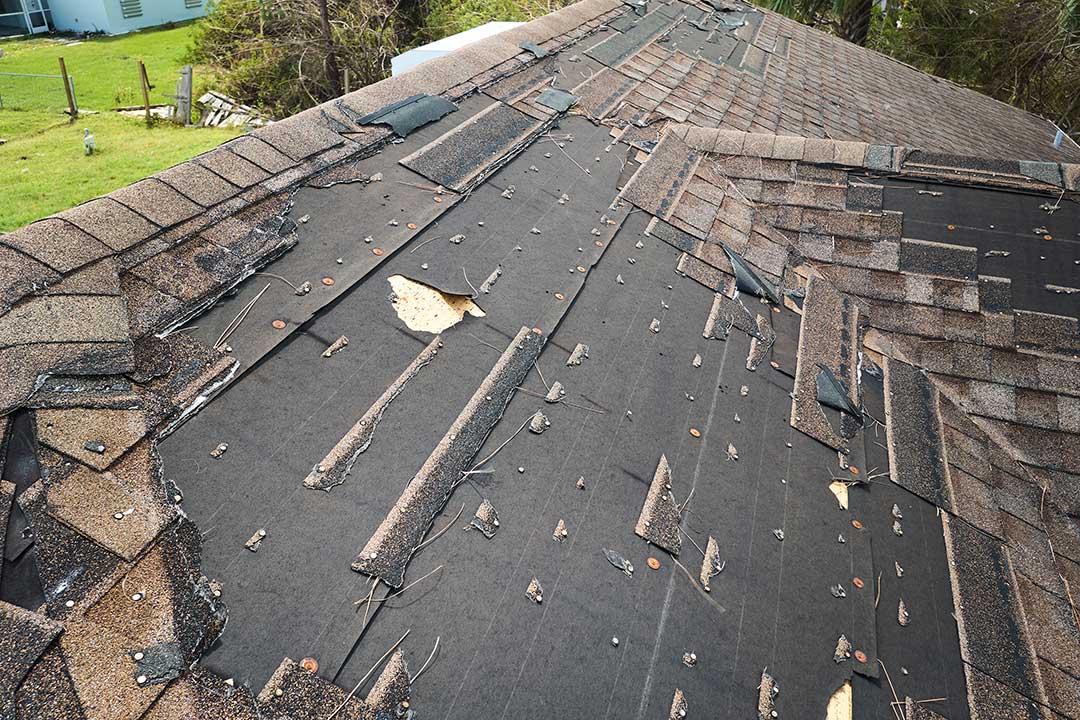
A warranty may also exclude indirect losses. Even when a covered repair is approved, the warranty might not pay for damaged furniture, interior finishes, temporary lodging, mold treatment, or lost use of part of the home.
Can a warranty be voided by another repair?
Not automatically. A warranty may restrict unauthorized alterations or repairs, but a company generally needs to connect the later work to the claimed damage. Keep records of any repair, including the date, location, materials used, and reason for the work.
Federal warranty rules generally limit blanket requirements that force consumers to use a particular brand of replacement part or service unless the required item or service is provided without charge or an appropriate exception applies. However, roofing warranties can still contain legitimate installation and maintenance conditions. The exact wording matters.
Emergency measures are also different from permanent repairs. Covering an opening to limit water entry during a storm may be reasonable, but document the condition first when safe to do so. Keep receipts and photographs, and avoid making extensive changes before the warranty administrator has a chance to inspect the problem unless delay would cause further damage.
How should a warranty claim be documented?
A strong claim explains the problem in a factual, organized way. Include:
- The date the issue was discovered
- The location and size of the affected area
- Weather conditions around the time of discovery
- Photos of the exterior and interior damage
- A copy of the contract and warranty
- Installation and repair records
- A description of any temporary protection used
- Receipts for emergency expenses
- Copies of all written communications
Notify the appropriate warranty provider promptly. The material manufacturer and installer may have separate claim procedures. Sending a claim to only one party may delay the process if the issue falls under the other warranty.
Avoid describing the cause as certain unless an inspection supports that conclusion. “Water appeared near the upstairs ceiling after heavy rain” is more useful than “the shingles failed,” unless the defect has already been established.
What happens if the roof is sold?
A roof warranty may or may not transfer with the property. Review the transfer section before relying on it during a sale. Common requirements include written notice, a transfer fee, a deadline after closing, or inspection by an authorized party.
Keep the original installation date and all available records with the property documents. A future owner may need them to establish when the warranty began and whether the roof was maintained according to its terms.
When is outside guidance necessary?
A warranty dispute may require legal or consumer-protection guidance when the language is unclear, the claimed loss is substantial, the installer no longer operates, or the parties disagree about responsibility. Safety also takes priority if the roof is sagging, actively collapsing, heavily damaged, or unsafe to access.
The clearest assessment usually comes from comparing four things: the observed damage, the likely cause, the exact warranty language, and the records showing how the roof was installed and maintained. A long warranty is useful only when those four pieces align.
