
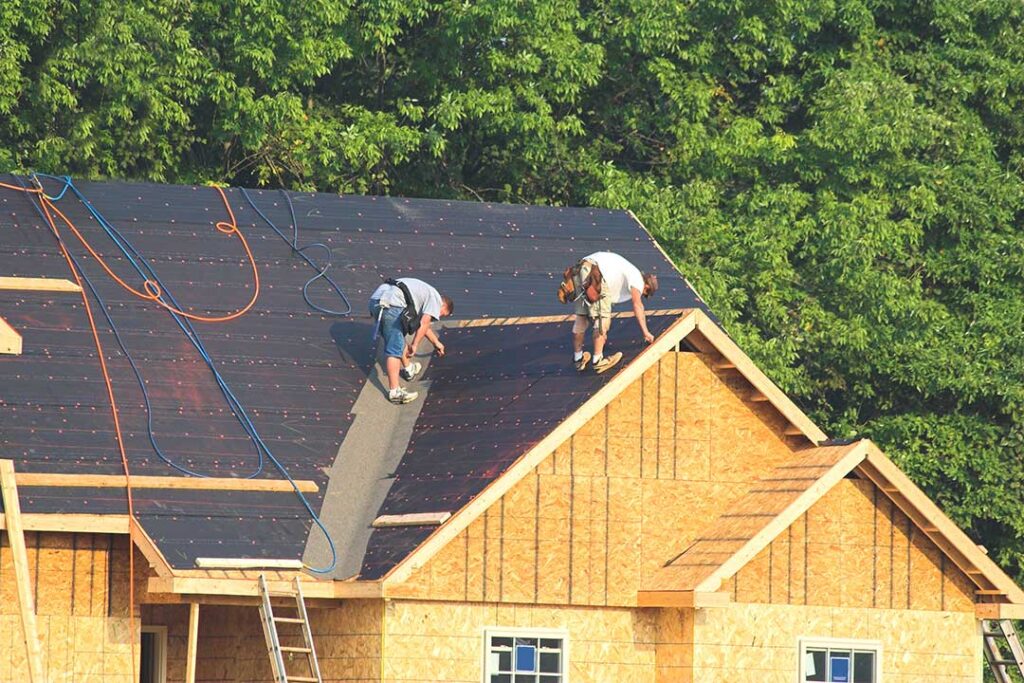
Winter preparation begins before the first major snowfall. For homes in Ithaca, NY, a sound roof must handle repeated freezing and thawing, snow accumulation, wind, ice, and moisture moving through the attic. A careful inspection in fall can identify small problems before cold weather makes repairs more difficult.
What should be checked before winter?
The roof should be inspected for visible damage, drainage problems, weak areas, and signs of moisture inside the home. The most useful checks involve the roof surface, flashing, gutters, attic, and areas where the roof meets walls or chimneys.
Look for:
- Missing, cracked, curled, or loose shingles
- Exposed fasteners or deteriorated roof cement
- Damaged flashing around chimneys, skylights, vents, and wall intersections
- Sagging roof sections
- Excessive moss or organic debris
- Loose or detached gutters
- Downspouts that discharge water near the foundation
- Soft spots or staining on attic sheathing
- Damp insulation, musty odors, or visible mold
- Daylight entering through the roof deck
A roof does not need to look severely damaged to leak during winter. Small openings can allow wind-driven rain or melting snow to enter, while repeated freeze-thaw cycles can enlarge cracks and loosen materials.
How can gutters and downspouts reduce winter roof problems?
Clean, securely attached gutters help melted snow and rain leave the roof instead of backing up along the eaves. Before winter, remove leaves, roof granules, twigs, and other debris. Check that water flows freely through every downspout.
Gutters should be firmly fastened and pitched slightly toward their outlets. Sagging sections can hold water that later freezes, adding weight and stressing the gutter system. Downspouts should direct water far enough away from the foundation to prevent ice buildup beside walkways, basement walls, and entrances.
Gutter guards do not eliminate maintenance. Small particles can still collect on top of or beneath them, and ice can obstruct drainage. Any installed guard system should be checked rather than assumed to be clear.
During winter, avoid standing directly below large icicles or heavy roof-edge ice. Falling ice can injure people and damage trim, vehicles, and outdoor equipment.
Why do ice dams form?
Ice dams form when part of a roof is warm enough to melt snow while the roof edge remains cold enough to freeze the runoff. The resulting ice blocks drainage, allowing water to collect behind the dam and potentially move beneath roofing materials.
In many homes, uneven attic temperatures are caused by heat escaping through gaps around attic hatches, plumbing penetrations, recessed lights, wiring, or poorly insulated areas near the eaves. Inadequate ventilation can also allow heat and moisture to remain beneath the roof deck.
Prevention focuses on keeping the roof surface more evenly cold:
- Air-seal openings between the living space and attic.
- Maintain continuous insulation over the ceiling, including near exterior walls.
- Keep soffit vents clear rather than covering them with insulation.
- Use properly installed baffles to preserve an air channel from the soffits toward the upper roof vents.
- Confirm that the attic ventilation system is balanced and not blocked.
Adding insulation without addressing air leakage can leave the underlying problem in place. Warm, moist air may continue entering the attic even if more insulation is added.
Should snow be removed from the roof?
Most residential roofs are designed to carry ordinary seasonal snow, but unusually deep, wet, or wind-drifted snow can create additional stress. Snow loads are not distributed evenly; valleys, lower roof sections, roof additions, and areas below higher slopes may collect more snow than the rest of the roof.
Snow removal may be appropriate when accumulation is unusually heavy, when structural warning signs appear, or when snow is concentrated in drifts. However, climbing onto an icy roof is hazardous. Improper shoveling or chopping can damage shingles, flashing, gutters, and the roof surface.
Warning signs that require prompt attention include:
- New or worsening ceiling cracks
- Doors that suddenly stick
- Loud popping or creaking from the roof or framing
- Sagging ceilings, rafters, or roof lines
- Interior leaks during or after snowfall
- Gutters pulling away from the fascia
If snow must be removed, the method should avoid walking on the roof whenever possible. Roof rakes used from ground level can be safer, but they must also be handled carefully around windows, utility lines, landscaping, and people below.
What should homeowners inspect in the attic?
The attic often reveals roof problems before they become visible in living areas. Inspect it on a dry day and look beneath roof valleys, around penetrations, and near the eaves.
Signs of trouble include dark stains, wet wood, rusty nails, compressed or displaced insulation, frost on the underside of the roof deck, and peeling or deteriorated materials. Frost may indicate that warm indoor air is entering the attic and condensing on cold surfaces.
Bathroom and kitchen exhaust fans should vent outdoors, not into the attic. Moisture released into an attic can condense during cold weather and contribute to mold, wood decay, and wet insulation.
Do not block soffit vents with stored items or insulation. At the same time, attic ventilation should not be treated as a substitute for proper air-sealing and insulation at the ceiling plane.
Which roof repairs should be completed before freezing weather?
Repairs involving leaks, damaged flashing, exposed roof decking, loose shingles, or deteriorated sealants are best addressed before snow and ice arrive. Wet conditions and low temperatures can limit the performance of some roofing materials and make surfaces slippery.
Pay particular attention to:
- Valleys, where large amounts of water and snow converge
- Chimney and vent flashing
- Roof edges and rake edges
- Skylight curbs and frames
- Areas where a lower roof meets an upper wall
- Penetrations for plumbing, electrical, or ventilation equipment
Temporary coverings may reduce immediate water entry, but they are not a substitute for correcting the underlying opening. Any temporary measure should be secured without creating additional holes or trapping moisture.
How can indoor habits affect the roof?
Winter roof performance is partly influenced by indoor moisture. Use bathroom exhaust fans during bathing and for a short period afterward. Cover pots while cooking when practical, use kitchen ventilation that exhausts outdoors, and avoid drying large amounts of wet laundry indoors without adequate ventilation.
Keeping indoor humidity at a moderate level can reduce condensation on windows and in the attic. Persistent window condensation, peeling paint, or damp attic insulation may indicate a broader moisture-control problem.
Homes with older additions, enclosed porches, dormers, or complex rooflines may have areas that are difficult to inspect from the ground. These transitions deserve extra attention because they often contain more seams, valleys, and changes in ventilation.
What should be done after the first major storm?
After heavy snow, strong wind, or a rapid thaw, inspect the interior ceilings and upper walls for new stains or dampness. From the ground, check for missing shingles, displaced flashing, sagging gutters, and unusual snow or ice patterns.
Do not chip away ice dams with hammers, axes, or other sharp tools. That can damage the roofing system and increase the chance of leaks. Chemical deicers can also corrode metal components and harm nearby vegetation if used improperly.
If structural movement, active leaking, or unstable ice is present, stay clear of the affected area and treat the condition as a safety issue rather than a routine maintenance task.
A winter-ready roof is not simply one with clean shingles. It is a complete system: intact roofing, effective drainage, controlled attic moisture, adequate insulation, sound flashing, and safe response plans for snow and ice. In Ithaca, preparing those components before the weather turns severe can help protect the roof and the rooms below it throughout the cold season.
