
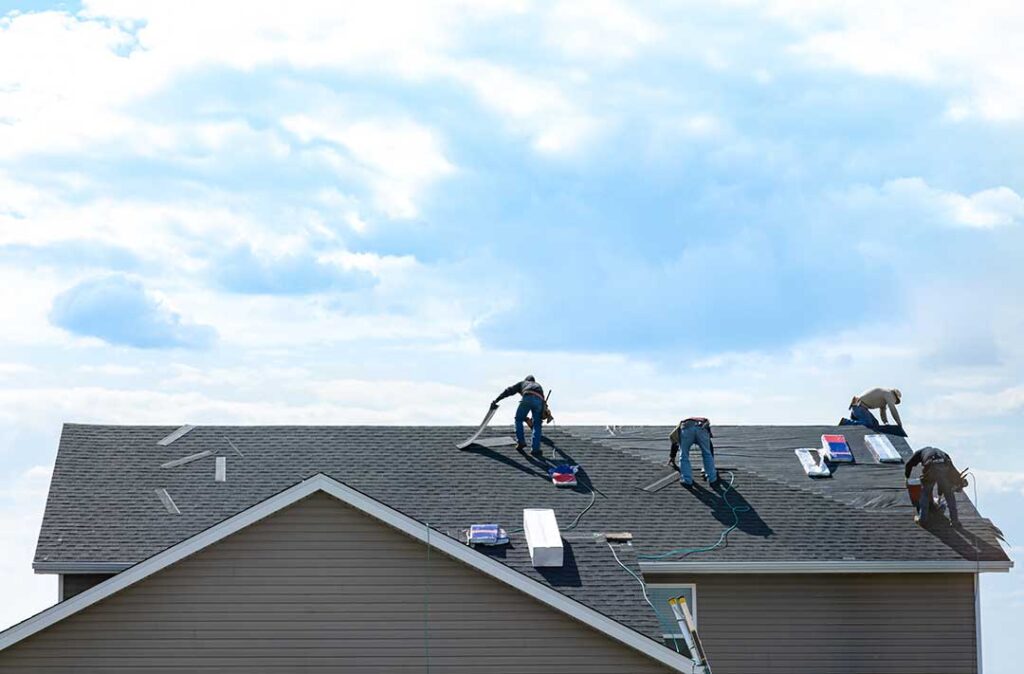
Roof repairs can range from replacing a few damaged shingles to correcting leaks, flashing failures, or ventilation problems. Choosing the right roofing company means looking beyond price and focusing on safety, documentation, local building conditions, repair methods, and the company’s ability to explain what actually needs to be fixed.
What should residents look for first?
Start by confirming that the company is established, properly insured, and experienced with the type of roof on the home. A trustworthy roofing company should be willing to provide clear information before any work begins.
Ask for:
- The company’s legal business name and physical business contact information
- Proof of general liability insurance
- Proof of workers’ compensation coverage for employees
- A written description of the proposed repair
- Details about materials, labor, cleanup, and payment terms
- References for similar repair work, if available
Insurance matters because roofing involves ladders, steep surfaces, falling materials, and possible damage to the home. A homeowner should not assume that a company’s insurance covers every risk. The contractor should be able to explain what is covered and provide current documentation rather than relying on a verbal assurance.
How can a homeowner tell whether a repair is necessary?
A reliable inspection should connect the visible symptom to a likely cause. A ceiling stain, for example, may result from damaged shingles, failed flashing, an open plumbing vent, ice-related damage, or condensation in the attic. Replacing shingles directly above the stain may not solve the problem.
Ask the inspector to explain:
- Where water is entering
- Whether the damage is active or old
- What areas were inspected
- Whether the roof deck, underlayment, flashing, and ventilation were checked
- Why the recommended repair should correct the underlying problem
Photographs are useful, especially when the damaged area cannot be safely viewed from the ground. Clear photos can help distinguish between normal aging, storm damage, poor installation, and a defect that requires more extensive work.
A company that immediately recommends replacing an entire roof without inspecting the roof system should be asked to explain the reasoning. A full replacement may sometimes be justified, but a limited repair can be appropriate when the roof is generally sound and the damage is localized.
Does local experience matter in Ithaca?
Local experience can be useful because roofing systems must withstand the area’s seasonal conditions. Ithaca has cold winters, freeze-thaw cycles, heavy precipitation, wind, and periods of substantial snow. These conditions can expose weaknesses in flashing, drainage, attic ventilation, and shingle installation.
Roofs on older homes may also have multiple layers of past repairs, additions with different roof slopes, aging gutters, or changes in attic insulation. A company familiar with local housing patterns is more likely to recognize how these factors affect a repair.
Experience should not be treated as proof of quality by itself. Ask what the company has repaired, how it handles winter-related damage, and whether it understands the specific roof design involved. A steep roof, low-slope addition, slate roof, metal roof, and conventional asphalt-shingle roof each require different inspection and repair methods.
What should be included in a written repair proposal?
A written proposal should make the scope of work understandable to someone who is not a roofing expert. It should identify the affected areas, the repair method, the materials being used, and the total cost or pricing formula.
Look for details such as:
- Removal and disposal of damaged materials
- Replacement of underlayment, flashing, vents, or decking if needed
- Type and quantity of roofing materials
- Protection of landscaping, siding, windows, and walkways
- Cleanup and removal of roofing debris
- Workmanship warranty terms
- Procedures for unexpected damage discovered during the repair
- Payment schedule and cancellation terms
Be cautious with proposals that use broad wording such as “repair roof as needed” without explaining what that means. It is reasonable for hidden damage to affect the final cost, but the proposal should state how additional work will be documented and approved.
A low price may reflect a smaller repair scope, lower-quality materials, missing cleanup, or exclusions that appear later. Comparing proposals requires comparing the work included, not just the final number.
How many roofing companies should be compared?
For a routine repair, speaking with two or three qualified companies can provide a useful comparison. More bids are not always better if the proposals are vague or if the companies are not evaluating the same areas.
Give each company the same basic information, including when the leak began, whether it worsens during wind-driven rain, whether there are interior stains, and whether previous repairs were performed. Ask each inspector to identify the suspected source rather than simply quoting a price.
Different opinions do not automatically mean that one company is dishonest. Roofing problems can be difficult to diagnose, particularly when water travels along roof decking or framing before appearing indoors. If recommendations differ significantly, ask for photos and explanations of the evidence behind each opinion.
What warning signs should be taken seriously?
Certain behaviors deserve caution before work is authorized. Warning signs include:
- Pressure to sign immediately
- Requests for a large cash payment before inspection or materials
- Refusal to provide insurance information
- A proposal with no company name, address, or detailed scope
- Claims that insurance will definitely cover the repair
- Unexplained large price changes
- A request to sign a document with blank sections
- Instructions to ignore permits or building requirements
- A promise that a temporary patch will permanently solve a recurring leak
Storm-related damage can attract temporary or out-of-area crews that move quickly from one neighborhood to another. A homeowner should have time to review paperwork and verify who will perform the work. Urgency may be appropriate when water is actively entering the house, but pressure is not a substitute for documentation.
What questions should be asked before work begins?
Before approving a repair, ask direct questions and keep the answers in writing:
1. What is the most likely source of the problem?
2. Is this a temporary repair or a long-term correction?
3. Which materials will be removed and replaced?
4. Will the repair affect gutters, siding, insulation, or interior finishes?
5. Who will perform the work?
6. How will the property be protected during construction?
7. How will unexpected damage be handled?
8. What weather conditions could delay the work?
9. What warranty applies to the materials and workmanship?
10. What should the homeowner do if the leak continues?
These questions also reveal how clearly the company communicates. Roofing work can be physically complex, but the explanation should not be unnecessarily confusing.
How do permits, safety, and weather affect a repair?
Permit requirements depend on the nature and extent of the work, so the responsible party should explain whether a permit is needed. A repair involving structural components, major alterations, or changes to the roof system may be treated differently from replacing a small area of covering.
Weather planning is especially relevant during colder months. Roofing materials may require suitable temperatures for proper installation, and wet, icy, or snow-covered surfaces create safety hazards. A responsible company should explain how it handles weather delays instead of installing materials under unsafe or unsuitable conditions.
Homeowners should avoid climbing onto the roof to verify a company’s inspection. From the ground, useful observations include missing shingles, sagging roof lines, damaged gutters, exposed flashing, and interior stains. Active leaks, structural sagging, fallen tree damage, and electrical hazards require prompt attention because they can affect more than the roof covering.
The right choice is usually the company that provides the clearest diagnosis, complete documentation, appropriate safety practices, and a repair plan that matches the actual condition of the roof—not simply the company offering the lowest initial price.
