
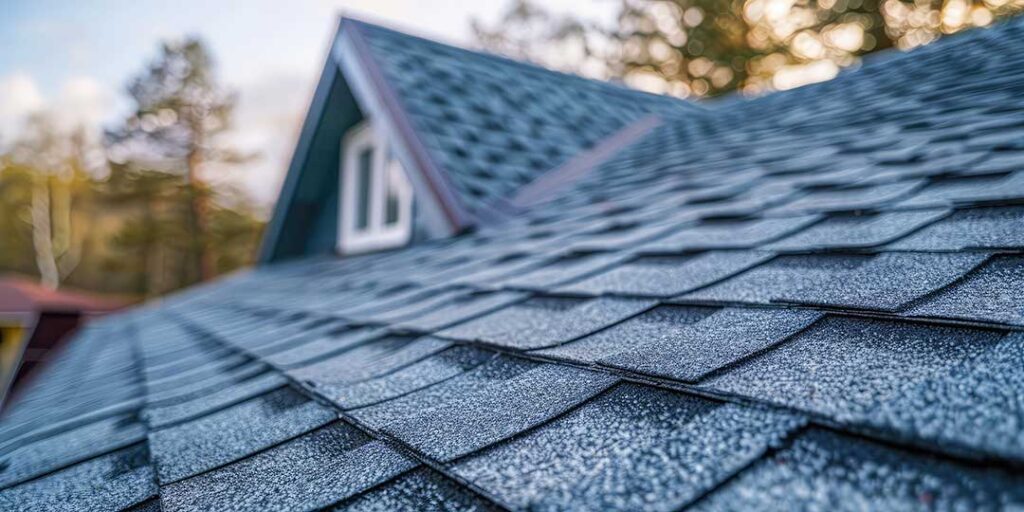
What counts as roof debris?
Roof debris includes any loose material that collects on or becomes trapped by the roof covering. Common examples are:
- Leaves, pine needles, twigs, and small branches
- Windblown trash or lightweight outdoor items
- Moss, algae, and accumulated organic matter
- Dirt and sediment, especially in roof valleys
- Ice fragments or damaged roofing materials
- Bird nests or other animal-related debris
In Ithaca, NY, changing seasons can create several types of debris problems. Autumn leaves may collect in valleys and around roof penetrations, while winter winds, freezing temperatures, and heavy snow can leave branches or broken material behind. Spring storms may also deposit twigs and leaf litter on roofs near mature trees.
Debris is not always an emergency, but it should not be ignored. Wet organic material can hold moisture against shingles, block drainage, stain roofing surfaces, and contribute to premature deterioration.
Can homeowners safely remove debris themselves?
Some debris can be removed safely from the ground or from a securely positioned ladder. Walking on the roof is much riskier, especially when the surface is wet, icy, steep, moss-covered, or damaged.
A homeowner may be able to handle light debris when:
- The roof is low-slope and easily reached without climbing onto it
- The weather is dry and calm
- The roof covering appears intact
- The debris consists only of leaves, pine needles, or small twigs
- There are no nearby electrical lines or unstable tree limbs
- A stable ladder and appropriate safety equipment are available
Roof work should not be attempted when the roof is steep, more than one story above ground, visibly damaged, covered with ice, or difficult to access. Heavy branches, fallen trees, nests containing animals, and debris near power lines require additional caution. A roof that feels soft, flexes under weight, or has exposed underlayment should be treated as unsafe to walk on.
What tools are appropriate for removing leaves and twigs?
The safest general-purpose tool is a roof rake or soft-bristled roof brush used from the ground or from a stable ladder. These tools can pull loose debris toward the lower edge without requiring a person to stand on the roof.
Useful equipment may include:
- A roof rake with a lightweight, nonabrasive head
- A soft broom for reachable areas
- Work gloves and eye protection
- A stable extension ladder with a level base
- A bucket or ground tarp for collecting debris
- A garden hose for limited rinsing after loose material is removed
Avoid sharp tools, metal rakes, shovels, and anything that can scrape or puncture the roofing surface. Asphalt shingles lose protective granules when aggressively brushed or dragged. Metal roofing can also be scratched, and delicate flashing around chimneys, skylights, and vents may bend or loosen.
A leaf blower can remove some dry debris, but it may scatter material into gutters, neighboring yards, or attic vents. Blowing upward under shingles can also lift exposed edges. If used, it should be operated from the ground at a low setting and directed away from roof joints and flashing.
How should debris be removed from shingles?
Start from the ground and work slowly. Pull loose debris downward rather than pushing it sideways across the roof. Sideways scraping creates friction and may loosen shingle edges.
For a small amount of dry material:
1. Inspect the roof from the ground before beginning.
2. Check for hanging branches, damaged shingles, sagging areas, and exposed nails.
3. Position the ladder on firm, level ground if a ladder is needed.
4. Use a soft roof rake or brush with gentle strokes.
5. Keep the tool head parallel to the roof surface.
6. Remove material from valleys, roof edges, and areas around vents without pressing hard.
7. Gather the debris from the ground instead of allowing it to accumulate in walkways or drains.
Do not pull on material that is tightly lodged beneath shingles. A branch caught under a shingle may be connected to damaged roofing, and forcing it out can enlarge the damage.
How do you clear roof valleys and gutters?
Roof valleys deserve extra attention because they direct water from two roof sections into a drainage path. Leaves and twigs can form a wet mat in a valley, slowing runoff and allowing water to back up beneath roofing materials.
Gutters and downspouts also need to remain open. However, roof debris should not simply be swept into the gutters. That may create a second blockage and increase the weight carried by the gutter system.
If a ladder is used for gutter cleaning:
- Keep both feet and at least one hand in contact with the ladder when possible.
- Do not stand on the top cap or the highest unsafe step.
- Never lean sideways to reach another section.
- Move the ladder instead of stretching.
- Keep tools secured so they do not fall.
- Stay clear of overhead electrical lines.
A ladder stabilizer or a second person holding the ladder may improve stability, but neither replaces proper fall protection or makes a steep roof safe to walk on.
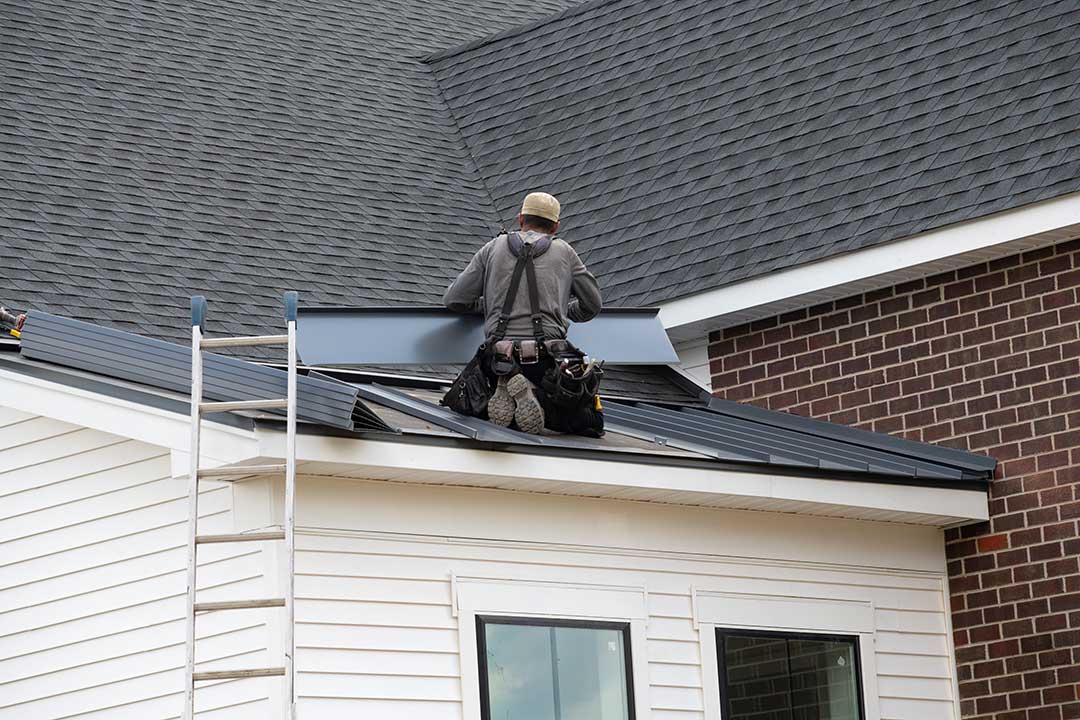
Should moss and algae be removed like ordinary debris?
No. Moss is attached to the roofing surface and should not be pulled or scraped off aggressively. Removing it by force can tear shingle granules and expose the backing material.
Small amounts of surface growth may sometimes be treated with a roof-safe cleaning solution, but the product must be compatible with the roofing material. High-pressure washing is generally unsuitable for shingles because it can drive water beneath the roofing layers and strip away protective granules.
Overhanging branches often contribute to moss and algae by shading the roof and dropping organic material. Carefully reducing that source of shade and debris may help, but tree work can introduce its own risks. Branches under tension, dead limbs, and trees near structures should not be handled casually.
What should be done after a storm?
After strong wind, heavy rain, or a winter storm, inspect the roof from the ground before attempting cleanup. Look for missing shingles, torn flashing, exposed underlayment, displaced vents, fallen limbs, and debris resting near skylights or chimneys.
Do not climb onto a roof immediately after a storm if it is wet, icy, unstable, or covered with snow. A few visible pieces of debris may be less urgent than hidden structural damage. Water stains in the attic or on ceilings, unusual dripping, or daylight visible through the roof indicate that the building interior should also be checked.
Keep people away from areas beneath hanging branches or loose roof materials. Fallen wires should always be treated as energized, even if they appear inactive.
How often should roof debris be cleared?
There is no universal schedule, but inspecting the roof and drainage system twice a year is practical for many homes, with additional checks after major storms. Homes beneath mature trees may need more frequent attention, particularly in late autumn and after windy weather.
Debris should be cleared sooner when it is:
- Blocking a roof valley or drain
- Packed into gutters
- Holding standing water
- Covering a suspected leak
- Trapped against flashing or a chimney
- Heavy enough to bend or pull on gutters
- Mixed with ice or snow
Routine ground-level inspections can identify problems before they become leaks. The safest approach is to remove only loose, reachable material and leave steep, damaged, icy, or hazardous areas undisturbed.
What mistakes should be avoided?
Several common cleanup methods can cause more damage than the debris itself:
- Walking on wet or frosted shingles
- Using a pressure washer
- Scraping shingles with a shovel or metal rake
- Pulling branches that are lodged beneath roofing
- Blowing debris under shingle edges
- Standing on an unsecured ladder
- Cleaning around electrical lines
- Ignoring damaged flashing because the roof looks mostly clear
- Pushing leaves into gutters or downspouts
Roof debris removal is mainly a drainage and surface-protection task. Gentle tools, stable footing, weather awareness, and a willingness to stop when conditions become unsafe are more valuable than removing every last leaf.
