
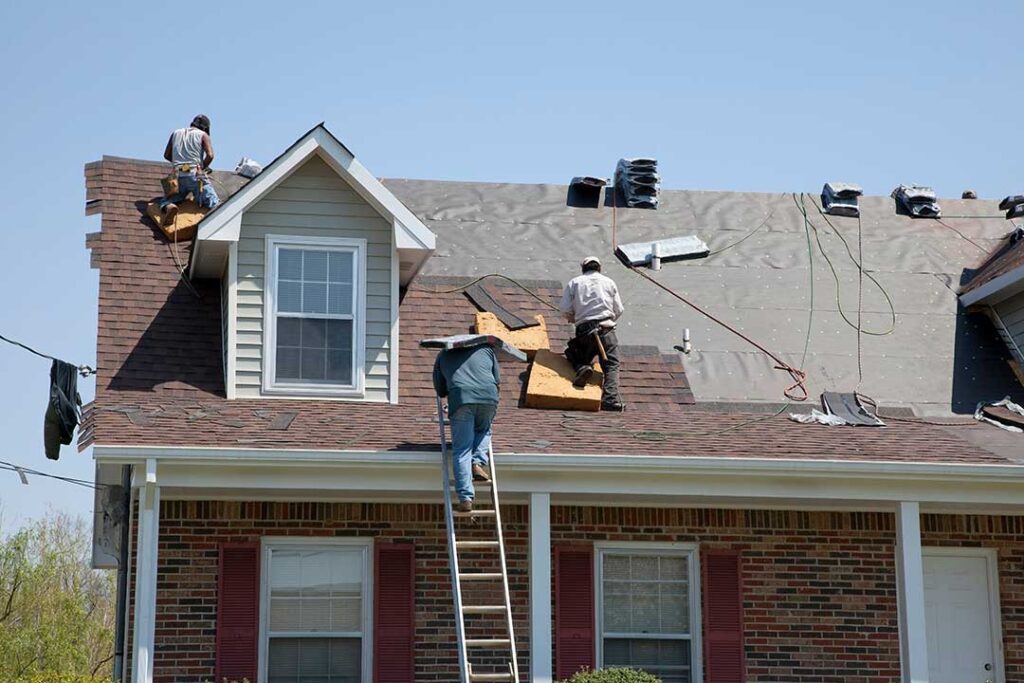
Roof valleys are the channels where two sloping roof sections meet. They collect and direct a large volume of rainwater, melting snow, leaves, and ice toward the gutters or roof edges. Because of that concentrated drainage, valleys often show trouble before other parts of a roof do.
For homeowners in Ithaca, NY, seasonal rain, freeze-thaw cycles, wet snow, and leaf accumulation can place added stress on these areas. Learning to recognize early warning signs can help distinguish routine maintenance from damage that needs prompt attention.
What makes a roof valley vulnerable?
A valley handles more water than most other roof surfaces. During a heavy rain, runoff from two roof planes converges into one narrow path. If the valley is poorly detailed, clogged, worn, or damaged, water may slow down, back up, or move beneath the roofing material.
Valleys are commonly built in one of three ways:
- Open valleys: A visible strip of metal or other flashing runs down the center.
- Closed-cut valleys: Shingles from one roof plane extend across the valley, with a cut line forming the drainage channel.
- Woven valleys: Shingles from both roof planes overlap across the valley.
Each design can work properly when installed and maintained correctly. Problems often develop where flashing, underlayment, shingles, and roof geometry do not work together.
What are the first visible signs of a failing valley?
The earliest signs may appear on the roof surface or inside the attic. A valley deserves closer attention if it shows:
- Missing, cracked, curled, or displaced shingles
- Exposed fasteners or lifted shingle edges
- Rust, holes, open seams, or buckling in metal valley flashing
- Granules collecting heavily at the bottom of gutters
- Dark streaks or areas that stay wet longer than nearby roofing
- Leaves, twigs, or sediment packed into the drainage channel
- Shingles that are unusually worn along the valley centerline
- A wavy or sunken appearance in the roof plane beside the valley
A small amount of granule loss is normal as roofing ages, but concentrated granules near a valley can indicate that runoff is abrading the shingle surface. A damaged valley may also look fairly minor from the ground while allowing water beneath several layers of roofing.
Can an interior stain be traced to a roof valley?
Yes. Water stains on ceilings or upper walls can result from valley leakage, especially when the affected room is below an intersection of roof sections. However, the stain may not appear directly beneath the actual entry point.
Water can travel along roof decking, rafters, insulation, or framing before becoming visible indoors. A stain near an exterior wall may originate higher up the roof. Likewise, a mark near a chimney, skylight, vent, or dormer can sometimes be caused by water moving from a nearby valley.
Look for:
- Brown or yellow ceiling discoloration
- Peeling paint or bubbling drywall
- Damp insulation in the attic
- Darkened roof decking
- Musty odors after rain
- Water trails on rafters or nail points
- Mold-like growth caused by repeated moisture
A single stain does not prove that the valley is responsible, but stains that appear after heavy rain or thawing conditions deserve investigation.
How can roof valleys fail during winter?
Winter damage often develops through repeated freezing and thawing rather than one dramatic event. Water enters a small gap, freezes, expands, and gradually enlarges the opening.
Snow and ice can also remain in valleys longer than on open roof slopes. If melting water cannot drain freely, it may refreeze near the eaves or beneath overlapping roofing materials. This creates conditions similar to an ice dam, even when the main problem begins higher in the valley.
Warning signs after winter include:
- Shingles lifted along the valley edges
- Split or displaced flashing
- Damp attic insulation after snow melts
- Water entering during warm spells
- Ice buildup concentrated in the valley
- Sagging roof decking near the drainage path
Snow should not be climbed onto or removed from a roof without appropriate equipment and training. A roof surface can be slippery even when it appears stable, and valley areas may be especially hazardous.
Do leaves and moss cause valley leaks?
Leaves do not automatically cause a leak, but repeated buildup can increase the risk. Wet organic debris holds moisture against shingles and flashing. It can also slow drainage, trap sediment, and conceal small defects.
Moss and algae are different from simple leaf buildup. Moss can lift shingle edges as it grows beneath them, while algae mainly causes discoloration. Neither should be scraped aggressively, because removing granules or breaking shingles can create additional damage.
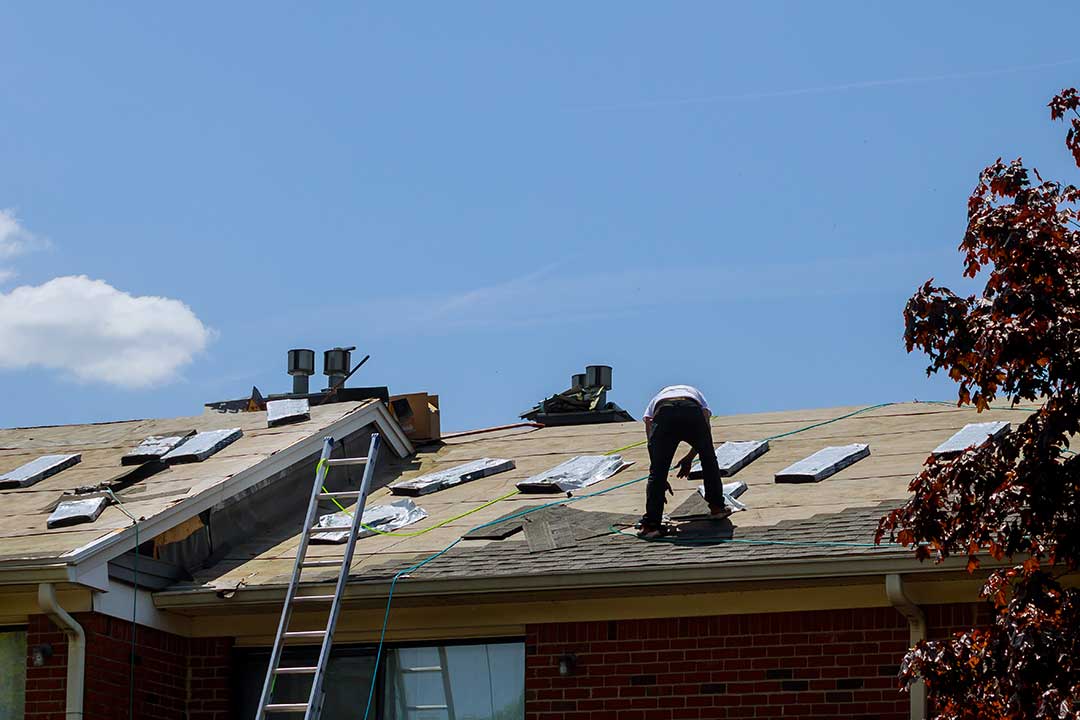
In wooded parts of the community, valley inspections are especially useful after autumn leaf drop and spring storms. Debris that repeatedly collects in the same valley may point to surrounding tree cover, roof design, or drainage limitations.
What does a safe ground-level inspection include?
A ground-level inspection can reveal many warning signs without requiring anyone to climb onto the roof. Use binoculars if necessary and inspect from several angles.
Check for:
- Uneven lines or dips along the valley
- Shingles that appear different in color or texture
- Flashing that is bent, exposed, or missing
- Debris lodged in the valley
- Water stains on fascia or exterior walls below the drainage area
- Gutter sections that overflow during rain
- Excessive granules beneath the valley
- Sagging near the lower end of the roof
After rainfall, observe whether water flows continuously toward the gutter or disappears beneath overlapping materials. Do not stand beneath a roof edge during active runoff, and do not use a ladder on icy, wet, or unstable ground.
Which valley problems require prompt attention?
A valley should be treated as a higher-priority roof concern when water is entering the building, roof decking is sagging, or the valley flashing has visible openings. Prompt attention is also appropriate when:
- A ceiling or wall becomes wet during rain
- The roof structure appears soft or uneven
- Shingles have blown out of the valley
- Metal flashing has separated at a seam
- Water is running behind gutters or along exterior trim
- Repeated temporary repairs have failed
- Electrical fixtures are near a water stain
Active leaks can worsen quickly during prolonged rain or snowmelt. If water is near electrical wiring, light fixtures, or outlets, avoid touching wet components and address the immediate safety hazard first.
Are valley leaks always caused by bad shingles?
No. Valley leakage may result from several interacting problems, including damaged flashing, inadequate underlayment, poor shingle alignment, clogged drainage, exposed fasteners, roof movement, or improper transitions where the valley meets a wall or dormer.
A replacement shingle placed over a damaged foundation may hide the symptom without correcting the pathway that allows water inside. The visible defect is not always the source of the leak, so repairs should account for the surrounding roof layers and drainage pattern.
How often should valleys be checked?
A practical schedule is to inspect valleys at least twice a year and after major wind, hail, or snow events. In this region, useful times include late spring, after winter conditions have passed, and late fall after most leaves have dropped.
A careful ground-level check may be enough for routine observation. Roof access becomes hazardous when surfaces are wet, icy, steep, or covered with debris. Conditions that cannot be safely viewed from the ground are better evaluated using appropriate fall protection and roof-inspection practices.
A valley that stays clear, drains freely, and has intact shingles and flashing is less likely to create trouble. Early signs such as localized granule loss, lifted edges, damp attic areas, or recurring debris are worth recording before they become active interior leaks.
