
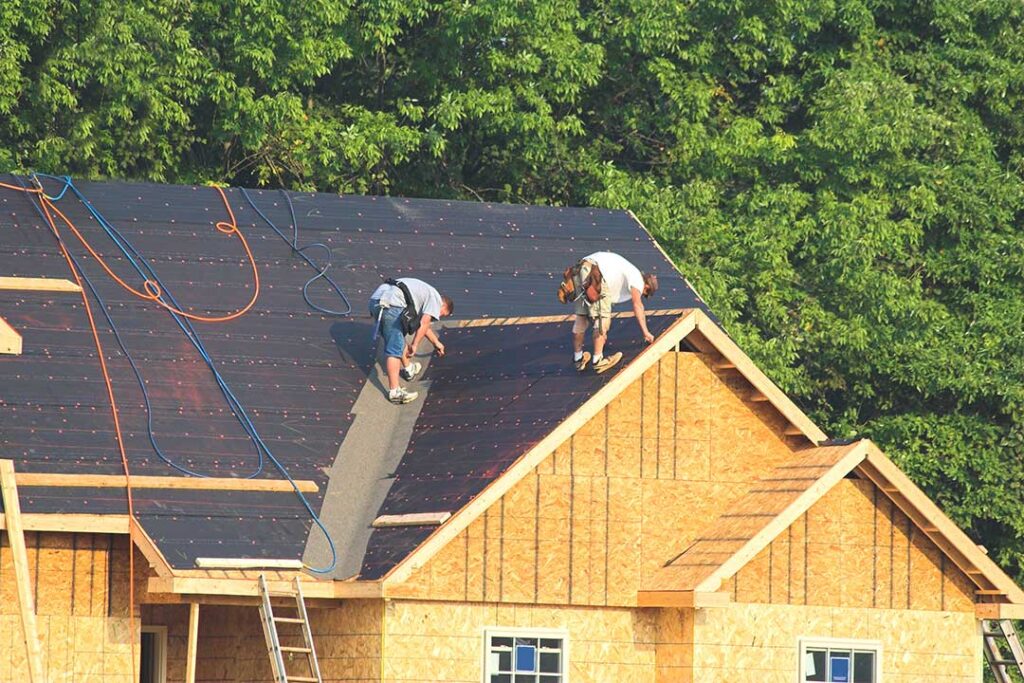
Why Small Roof Repairs Often Go Wrong
Many roof problems become more expensive because the original repair addressed only the visible symptom. A ceiling stain, for example, may come from a damaged shingle, but it can also result from flashing, a roof-to-wall junction, a plumbing vent, or water traveling beneath the roof covering.
In Ithaca, NY, repeated rain, freeze-thaw cycles, wind, and winter snow can expose weak repairs quickly. A patch that appears sound during dry weather may fail after moisture enters a seam and freezes.
Common mistakes include:
- Repairing the interior stain instead of finding the exterior leak
- Covering damaged materials without removing wet or deteriorated sections
- Using roofing materials that do not match the existing roof system
- Applying sealant as a permanent fix for a structural problem
- Working on a steep, icy, or wet roof without adequate safety equipment
A repair should address how water is entering, how it is moving, and whether the surrounding materials have been affected.
Mistake: Fixing the Ceiling Before Finding the Leak
A ceiling mark shows where water became visible inside the house, not necessarily where it entered the roof. Water can travel along rafters, roof decking, insulation, or framing before reaching the interior surface.
Painting over a stain may improve appearance temporarily, but it does not stop continued moisture. Trapped dampness can contribute to deteriorated wood, mold growth, damaged insulation, and peeling finishes.
A better inspection begins above the stained area and considers nearby roof features. Useful areas to examine include:
- Shingles or other roof coverings above the leak
- Valleys where two roof sections meet
- Chimneys, skylights, and roof vents
- Wall intersections and dormers
- Gutter edges and areas where ice may accumulate
- Attic sheathing, rafters, and insulation
If the leak cannot be located safely from the ground or attic, climbing onto the roof may create more risk than useful information.
Mistake: Using Caulk or Roofing Cement for Every Problem
Sealants have legitimate uses, but they are often treated as a universal roof repair. A bead of caulk may temporarily close a small gap, yet it will not correct loose flashing, missing fasteners, rotted wood, displaced shingles, or poor drainage.
Sealant can also hide the source of a leak and make a later repair more difficult. Some products shrink, crack, separate from wet surfaces, or fail after repeated temperature changes.
Before applying a sealant, consider what caused the opening. If movement, corrosion, decay, or water pressure is involved, the damaged material may need to be reset or replaced rather than covered.
Mistake: Installing New Shingles Over Damaged Materials
Adding a new shingle over a damaged area can make the roof look repaired while leaving the underlying problem in place. Wet underlayment, weakened decking, and deteriorated flashing may continue to absorb water.
This approach also creates an uneven surface. Shingles depend on proper alignment, fastening, and overlap to shed water. If the surface below is raised, soft, or irregular, the new material may not seal correctly.
A limited repair generally requires removing enough surrounding material to inspect the roof deck and underlayment. If the wood underneath is soft, discolored from prolonged moisture, or structurally weakened, covering it is not a reliable solution.
Mistake: Mismatching Materials Without Considering the Roof System
A roof is made of connected components rather than shingles alone. Shingles, underlayment, flashing, ventilation, drip edges, fasteners, and drainage features must work together.
Using a different shingle size, exposure, thickness, or fastening pattern can create an area that drains differently from the rest of the roof. Mixing materials may also produce visible differences in color and texture, especially after the older roof has weathered.
A replacement should be compatible with the existing roof design and installed according to the material’s requirements. This matters particularly on older homes, additions, porches, and sections with different roof pitches.
Mistake: Ignoring Flashing and Roof Transitions
Flashing is installed where water is most likely to enter, including around chimneys, walls, vents, skylights, valleys, and changes in roof direction. These locations deserve close attention during any repair.
Replacing a few shingles while leaving loose or corroded flashing often allows the leak to continue. Problems may also occur when flashing is fastened incorrectly, cut too short, installed over the wrong layer, or sealed without allowing water to drain naturally.
Roof-to-wall transitions are especially easy to overlook. Water can enter behind siding or trim and appear indoors several feet away from the actual opening. A proper repair must account for the direction water travels, not just the location of the stain.
Mistake: Clearing Snow or Ice in a Risky Way
Snow and ice can place additional stress on a roof, but aggressive removal can damage shingles, flashing, gutters, and protective membranes. Chopping ice with sharp tools may puncture the roof surface or create hidden cracks.
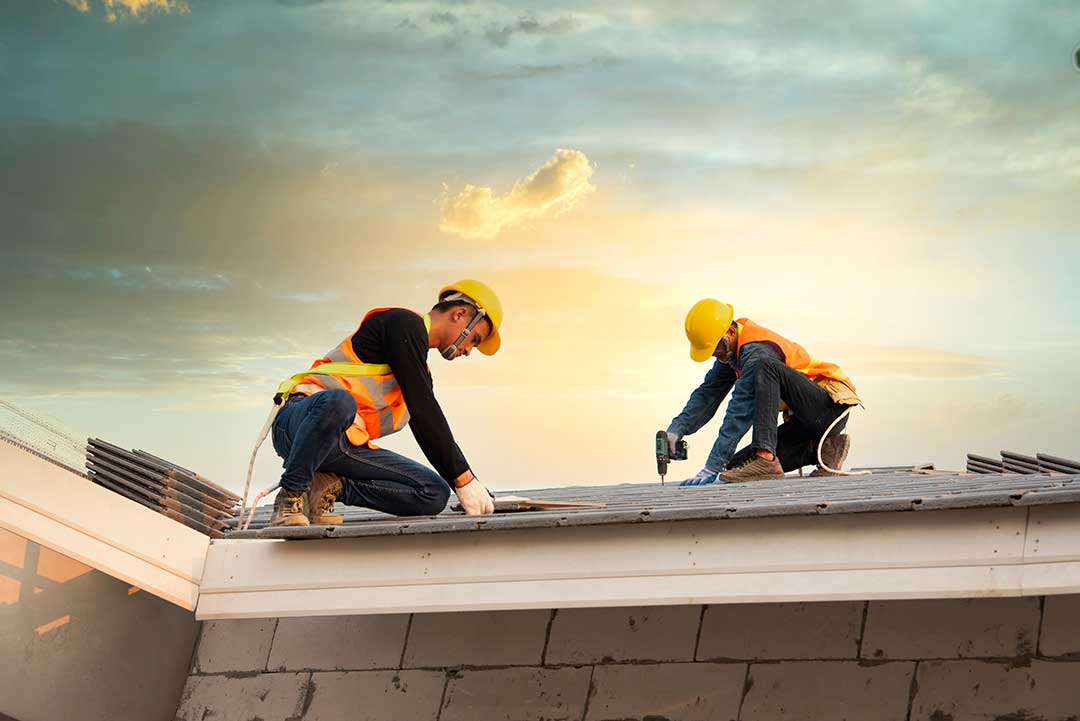
Walking on snow-covered or icy roofing is also hazardous. Even a low-slope roof can be slippery, and hidden weak areas may not support a person safely.
From ground level, residents can watch for sagging rooflines, heavily loaded gutters, blocked drainage paths, and ice buildup along eaves. Interior warning signs include new leaks, bowed ceilings, sticking doors, or cracking finishes near upper walls. Structural concerns or substantial snow loads require caution because the roof may be unsafe to access.
Mistake: Neglecting Attic Ventilation and Insulation
A roof leak is not the only source of moisture in an attic. Warm indoor air can rise through gaps around light fixtures, wiring, plumbing penetrations, or attic access panels. If that air reaches a cold roof surface, condensation may form.
This moisture can resemble a roof leak and may damage sheathing, insulation, and framing over time. Adding more insulation without addressing air leakage can leave the underlying problem unresolved.
Useful checks include looking for frost or dampness on roof sheathing, compressed or wet insulation, blocked vents, and darkened wood near penetrations. Ventilation should not be blocked by insulation, and bathroom or kitchen exhaust should discharge outdoors rather than into the attic.
Mistake: Repairing Only the Most Visible Damage
A missing shingle may be the only obvious defect, but nearby materials may also be loose, brittle, or water-damaged. Roof damage can spread beyond the initial point of impact, especially after wind, fallen branches, or repeated freeze-thaw movement.
After a storm, inspect the ground for shingle fragments, metal flashing, granules, and other roof components. From a safe location, look for lifted edges, exposed underlayment, damaged vents, and unusual depressions.
Repairs are more dependable when the inspection includes the surrounding area rather than stopping at the first visible defect. A small area of missing material may be simple to replace, while widespread lifting or repeated leaks may indicate that spot repairs are no longer addressing the underlying condition.
Mistake: Delaying Repairs After Water Enters the Home
A minor leak can become a larger problem if moisture remains trapped in insulation, drywall, or framing. Delaying action may also make it harder to determine whether the source was a roof covering, flashing detail, condensation, or plumbing-related issue.
Place containers under active drips, move belongings away from the affected area, and avoid electrical fixtures or outlets that may have become wet. Do not puncture a bulging ceiling unless there is a clear safety reason and the area can be handled without electrical exposure.
Roof access should be avoided during lightning, strong winds, heavy rain, or icy conditions. Steep roofs, structural sagging, damaged framing, and repairs near electrical service are situations where safety and building-code requirements take priority over a quick patch.
A Practical Repair Checklist
Before treating a roof problem as finished, confirm that:
- The source of water was identified rather than assumed
- Wet insulation and damaged decking were inspected
- Flashing and roof transitions were checked
- Replacement materials are compatible with the existing roof
- Fasteners are placed correctly and are not exposed unnecessarily
- Gutters and drainage paths are clear
- Attic moisture and ventilation problems were considered
- The repaired area was observed during or after wet weather
- No one had to work in unsafe conditions
For local homes, seasonal changes can reveal weaknesses that remain hidden during dry periods. A repair that accounts for water movement, temperature changes, roof age, and safe access is far more dependable than a patch chosen only for appearance.
