
Shingle curling and cracking are visible signs that an asphalt-shingle roof is changing, but they do not always mean the entire roof has failed. The right response depends on the pattern, age, severity, and whether water is reaching the roof deck or attic.
What do curling and cracking look like?
Curling shingles usually have edges or corners that lift upward or turn inward. The exposed tabs may look like claws, waves, or small raised flaps. Cracking appears as splits through the shingle surface, often along a straight line, across the lower edge, or around areas that have been stressed by movement.
Other warning signs can include:
- Missing granules collecting in gutters or near downspouts
- Dark or exposed fiberglass mat beneath the surface
- Shingles that are loose, lifted, or blowing upward
- Uneven rows or buckling across a larger section
- Water stains on attic framing, ceilings, or upper walls
- Daylight visible through the roof deck
A few isolated cracks may be localized damage. Widespread curling, repeated cracking, or shingles that have become brittle across several roof slopes suggest a broader aging, material, installation, or ventilation problem.
Why do asphalt shingles curl?
Curling is often caused by long-term weathering, but several conditions can contribute. Older shingles gradually lose flexibility as asphalt dries and the reinforcing mat becomes less resilient. Repeated exposure to sunlight, wind, rain, snow, and temperature changes accelerates that process.
In Ithaca, seasonal movement is especially relevant. Roofs experience cold winters, snow, periods of freezing rain, and repeated transitions between freezing and thawing. Those cycles can cause roofing materials and the wood beneath them to expand and contract at different rates.
Curling can also result from:
- Poor or uneven fastening
- Shingles installed when they were too cold to seal properly
- Inadequate bonding between shingle tabs
- Roof decks that move or have moisture-related swelling
- Insufficient attic ventilation or excessive attic moisture
- Shingles installed over an uneven or wrinkled underlayment
- Roof slopes that receive more intense sun and weather exposure
Curling does not automatically prove that ventilation is the cause. Attic ventilation is one part of a roof system, and the condition of the decking, insulation, air sealing, underlayment, and exterior shingles should be considered together.
What causes shingle cracking?
Cracking usually develops when the shingle becomes brittle or is repeatedly stressed. Surface cracks may begin small, then widen as the material expands and contracts. A crack that reaches through the shingle can allow water to pass beneath the protective surface.
Common causes include:
- Age-related drying and loss of flexibility
- Repeated freeze-thaw cycles
- Severe wind or impact from falling branches
- Foot traffic on brittle shingles
- Manufacturing or material defects
- Movement in the roof deck
- Improper installation or fastening
- Thermal stress on areas with strong sun exposure
Straight, repeated cracks in similar locations may point to a product or installation pattern. Random cracks on scattered shingles are more consistent with isolated impact, age, or general weathering. The pattern matters more than any single damaged shingle.
Can curled or cracked shingles be repaired?
Minor damage can sometimes be addressed with individual shingle replacement, but repair is not always practical. A shingle that is badly curled may break when lifted. Brittle shingles can also crack during an attempted repair, especially in cold weather.
A limited repair may be reasonable when:
- Damage is confined to a small, clearly defined area
- Replacement shingles can be matched closely
- The surrounding shingles remain flexible and well bonded
- The roof deck and underlayment are still sound
- There is no evidence of widespread water entry
Replacement shingles may not match perfectly because older shingles fade and weather over time. A color difference does not necessarily indicate a poor repair, but it can make the repaired area more visible.
Roof cement or sealant should not be treated as a permanent solution for widespread curling or cracking. Smearing material over a damaged shingle may temporarily reduce movement, but it does not restore the shingle’s reinforcement or correct a wet deck, poor fastening pattern, or ventilation imbalance.
When does the problem require more than a repair?
A roof deserves a closer evaluation when damage is widespread, recurring, or associated with water intrusion. Replacement of a larger section—or the roof system—may be necessary if the shingles have lost flexibility over broad areas or if the underlying deck is damaged.
More serious indicators include:
- Curling across multiple roof slopes
- Cracks in many shingles of the same age and exposure
- Shingles missing from wind-exposed edges or ridges
- Granule loss that exposes large areas of the shingle mat
- Sagging, soft, or visibly uneven roof decking
- Repeated leaks after temporary patching
- Moisture, mold-like staining, or wet insulation in the attic
- Shingles near the end of their expected service life
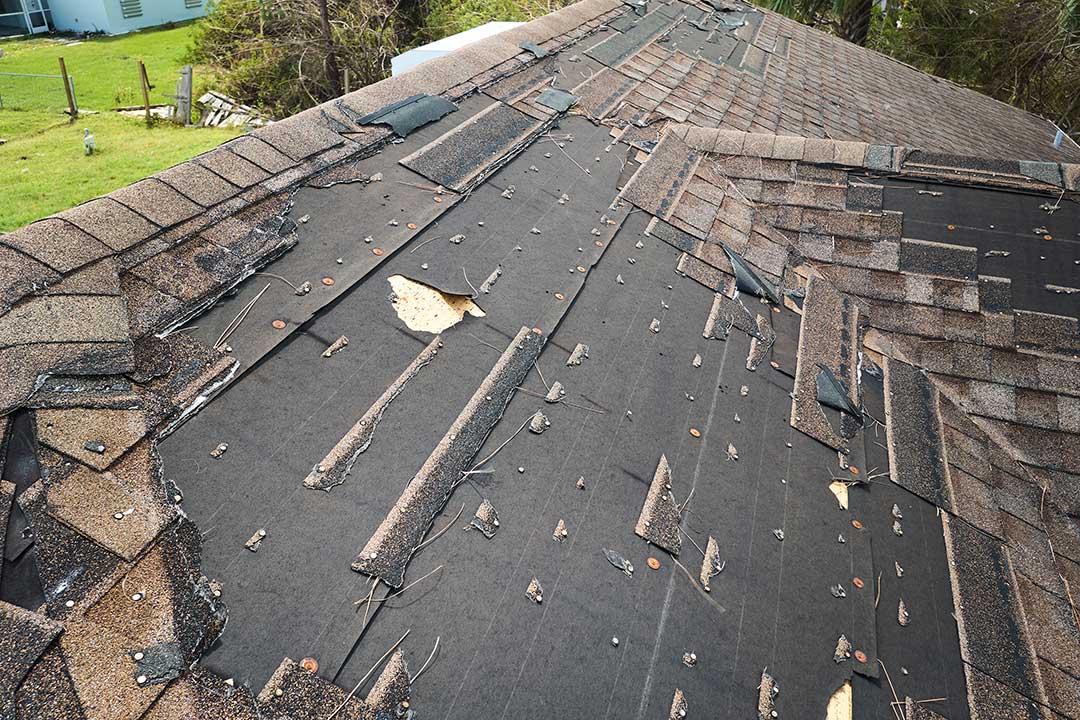
A roof may still shed water while its shingles are deteriorating. Waiting for an interior leak can allow moisture to damage sheathing, insulation, framing, and finishes.
How should residents inspect the roof safely?
A ground-level inspection is often enough to identify obvious trouble. Look for raised tabs, bare patches, dark streaks that differ from normal staining, loose flashing, and shingle pieces in gutters or around the foundation.
From inside the attic, check for:
- Damp or discolored wood
- Rust around nails
- Wet insulation
- Condensation on the underside of the roof deck
- Musty odors
- Light visible through gaps
Do not walk on a roof that is wet, icy, steep, brittle, or visibly damaged. In the colder months, frost and snow can hide broken shingles and create a serious slipping hazard. Snow and ice should not be scraped with sharp tools, which can damage shingles and flashing.
How can future curling and cracking be reduced?
Prevention begins with a complete roof system rather than shingles alone. Proper fastening, compatible materials, sound decking, correctly installed underlayment, and balanced attic ventilation all affect service life.
Useful maintenance practices include:
- Inspecting the roof from the ground in spring and fall
- Checking after major wind, hail, or falling-branch events
- Keeping gutters and downspouts clear
- Watching for ice buildup along eaves
- Maintaining insulation and air sealing between the living space and attic
- Keeping bathroom and kitchen exhaust directed outdoors
- Trimming branches that rub against roof surfaces
- Avoiding unnecessary foot traffic on shingles
Ice dams can worsen moisture problems by allowing meltwater to back up beneath shingles. They are often linked to heat loss, uneven roof temperatures, snow conditions, and inadequate drainage rather than to shingle quality alone.
Should shingles be replaced during cold weather?
Cold weather can make asphalt shingles less flexible, and factory-applied adhesive strips may seal more slowly. That does not mean every winter repair is impossible, but handling and installation require extra care. Temporary measures may be appropriate when active water entry must be controlled, while permanent work may be better completed under suitable conditions.
The key question is not simply whether shingles are curled or cracked. It is whether the roof still has reliable, flexible, well-sealed materials over a dry and structurally sound deck. A careful inspection of both the exterior and attic can distinguish a manageable isolated repair from a roof system that needs broader attention.
