
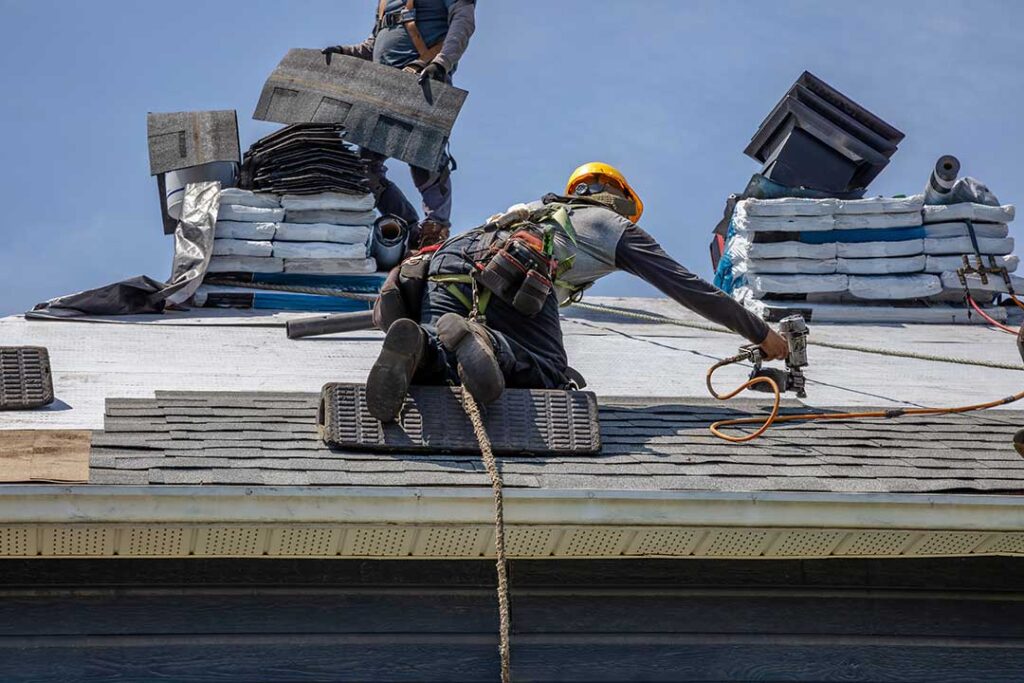
A storm can damage a roof without leaving an obvious hole or a pile of shingles on the ground. Strong wind, hail, heavy rain, ice, and falling branches may create problems that only become visible from the attic or inside the home. A careful inspection after severe weather can help identify urgent hazards early while avoiding unnecessary risks.
What should be checked first after a storm?
Start with personal safety, not the roof itself. Do not climb onto a wet, icy, steep, or visibly damaged roof. Storm debris may conceal weak areas, exposed fasteners, broken skylights, or unstable branches.
Before approaching the house, look from the ground for:
- Missing, lifted, curled, or displaced shingles
- Dark patches or exposed underlayment
- Broken or cracked chimney materials
- Damaged vents, flashing, skylights, or gutters
- Tree limbs resting on the roof
- Sagging roof sections
- Loose siding, trim, or exterior wiring
- Water pooling near the foundation or overflowing from gutters
Stay away from any downed electrical wires and avoid touching metal objects that may be in contact with them. If the roofline has collapsed, a large tree has struck the house, or structural movement is visible, keep people and pets away from the area.
In Ithaca, winter weather adds another concern: snow and ice can hide damage for days or weeks. A roof that appears intact from the ground may still have cracked flashing, loosened shingles, or water entry beneath accumulated snow.
How can roof damage be inspected safely from the ground?
A ground-level inspection is often enough to identify whether further evaluation is needed. Use binoculars or a phone camera with a zoom feature rather than climbing a ladder immediately after a storm.
Check each roof slope that can be seen from the yard or street. Look for patterns rather than a single mark. A few small dark spots may be dirt or natural color variation, while a group of irregular marks on one slope may suggest hail impact or wind-related damage.
Pay close attention to roof edges, ridges, valleys, and areas around vents. These locations experience more wind exposure or contain more seams and flashing. Gutters and downspouts can also provide clues. Shingle granules collecting in gutters after a storm may indicate surface wear, especially if the roof is relatively new or the amount is unusual.
Do not assume that a shingle lying in the yard came from the roof. It may have been carried from another property. However, if the piece matches the roof and nearby shingles appear lifted or missing, the roof should be examined more closely.
What should be checked inside the attic?
The attic can reveal leaks that are not yet visible on ceilings or walls. Inspect it during daylight if possible, using a flashlight for dark corners and areas near roof penetrations.
Look for:
- Damp or discolored roof sheathing
- Wet insulation
- Dark stains around nails or fasteners
- Dripping water or active moisture
- Mold-like growth or musty odors
- Daylight visible through the roof deck
- Compressed or displaced insulation
- Water trails along rafters or trusses
A leak may not appear directly below the damaged shingle. Water can travel along roof decking, framing, insulation, or electrical pathways before reaching the ceiling. For that reason, a ceiling stain does not always identify the exact entry point.
If the attic contains wet insulation, do not handle it unnecessarily. If water is near electrical equipment, lighting, or wiring, avoid the area and address the electrical hazard before attempting cleanup.
How can damage be checked from inside the living areas?
Inspect ceilings, upper walls, window trim, and areas around chimneys or skylights. Fresh brown or yellow staining, bubbling paint, peeling drywall, or a soft ceiling may indicate water intrusion.
Some signs appear several hours after rainfall ends. Check again later, especially after a storm that included wind-driven rain. Open closets and look at ceilings near exterior walls because these areas are easy to overlook.
A small stain does not necessarily mean the damage is minor. Water may have entered behind the ceiling material and affected insulation or framing. Avoid puncturing a bulging ceiling unless there is an immediate need to release trapped water and the electrical risk has been ruled out. A ceiling can become heavier and weaker as it absorbs moisture.
Photograph visible damage from a safe location. Include wide views showing where the damage is located, followed by closer images of stains, debris, or displaced materials. Written notes about the storm date and the time damage was discovered can also be useful for household records.
How can storm damage be distinguished from normal roof aging?
Storm damage is usually associated with a specific weather event and may appear as a sudden change. Normal aging tends to develop gradually across much of the roof.
Possible storm-related signs include:
- Shingles missing from an otherwise intact roof
- Fresh creases or folds in shingles
- Exposed nail lines or underlayment
- New cracks in flashing or vent materials
- Impact marks with a sharp, irregular appearance
- A bent or detached gutter section
- A branch strike or puncture
- New water entry following the storm

Aged shingles may be brittle, faded, curled along many edges, or missing granules across broad areas. Those conditions can make a roof more vulnerable during a storm, but they do not prove that the storm caused every visible defect.
Do not pull up shingles, scrape away granules, or move damaged flashing to investigate. Disturbing the roof can worsen a leak and make it harder to determine what happened.
What temporary steps can reduce further water damage?
If water is entering the home, move furniture, electronics, and other belongings away from the affected area. Place containers beneath drips and use towels to limit spreading water, but do not stand under a sagging ceiling.
A temporary covering may help keep rain out when installed safely by someone trained to work around roof hazards. Improvised plastic sheeting, tarps, or ladders can become dangerous in wind, on wet surfaces, or near power lines. Any temporary measure should avoid trapping water inside the roof assembly.
Remove only small, loose debris from the ground if doing so does not require reaching onto the roof. Do not cut large branches, climb onto the roof, or walk across damaged decking.
Wet materials should be dried promptly when it is safe to do so. Prolonged moisture can contribute to mold growth, damaged insulation, stained finishes, and weakened wood.
When is a roof inspection especially urgent?
Prompt attention is warranted when the roof has a visible opening, major shingle loss, active leaking, sagging, a fallen tree limb, damaged chimney masonry, or exposed electrical components. The same applies when water is spreading near outlets, light fixtures, or electrical panels.
A roof may also need urgent evaluation if damage is suspected but cannot be safely reached. Climbing a roof after a storm is particularly hazardous in Ithaca during freezing weather, when ice, wet leaves, and concealed snow can make surfaces unstable.
Minor concerns can still be documented and monitored, but delaying action after active water entry may allow a small opening to affect insulation, framing, ceilings, and interior finishes. Safety should determine whether a homeowner inspects further or leaves the area undisturbed.
What common mistakes should homeowners avoid?
Several responses can create more risk than the original damage:
- Walking on the roof to inspect every shingle
- Using a ladder against gutters or unstable surfaces
- Pulling out embedded branches
- Covering an area without addressing nearby electrical hazards
- Assuming a dry ceiling means the leak has stopped permanently
- Ignoring attic moisture because the roof looks normal outside
- Sweeping granules or debris away before photographing it
- Making repairs during lightning, high winds, or freezing conditions
A careful post-storm check is mainly about identifying hazards, documenting conditions, and preventing additional interior damage. The roof does not need to be climbed to determine whether the situation deserves further attention.
