

What happens during a professional roof inspection?
A professional roof inspection is a structured evaluation of the roof system, not just a quick look at shingles from the ground. The inspection usually covers the visible roof surface, flashing, drainage, attic conditions, ventilation, and signs that water or weather has affected the building.
For homeowners in Ithaca, NY, inspections can be especially useful after heavy snow, ice buildup, wind, repeated freeze-thaw cycles, or summer storms. A roof may appear intact from the street while developing problems around chimneys, roof edges, valleys, skylights, or attic spaces.
The purpose is to document the roof’s current condition, identify active or developing defects, and explain which findings require immediate attention versus routine monitoring.
Does the inspection begin on the ground?
Usually, yes. The inspector often starts by reviewing the property from the ground before getting on the roof. This provides a broader view of roof slopes, drainage patterns, sagging areas, missing materials, and nearby conditions that may affect the roof.
The ground-level review may include:
- Roof lines that appear uneven or visibly sagging
- Missing, lifted, curled, cracked, or heavily weathered shingles
- Exposed underlayment or roof decking
- Damaged gutters, downspouts, or roof-edge metal
- Tree limbs, moss, debris, or vegetation touching the roof
- Stains or damaged siding below roof edges
- Areas where snow or ice may accumulate during winter
An inspector may also look at the age and style of the roof, the number of layers visible at the edges, and whether additions or different roof sections meet properly.
What is checked on the roof surface?
If conditions are safe, the inspector examines the roof more closely from the surface. This may involve walking the roof, using a ladder, or viewing difficult areas from a safe position. Wet, icy, steep, fragile, or structurally unsafe roofs should not be accessed directly.
The roof surface is checked for more than missing shingles. Common inspection points include:
- Shingle granule loss and exposed fiberglass
- Blistering, cracking, splitting, curling, or lifted tabs
- Loose or deteriorated ridge caps
- Damaged pipe boots and vent flashing
- Open seams or failed sealant
- Rusted, bent, or displaced metal flashing
- Poorly secured or damaged roof penetrations
- Soft areas that may suggest damaged decking
- Debris collecting in valleys or behind roof features
A few damaged shingles do not automatically mean the entire roof must be replaced. The significance depends on the location, extent, age of the roofing materials, and whether water has reached the layers beneath.
Why are flashing and roof penetrations so important?
Flashing directs water away from joints and openings where leaks are more likely to develop. These areas often include chimneys, plumbing vents, skylights, dormers, sidewalls, headwalls, and roof valleys.
Inspectors look for missing flashing, corrosion, gaps, lifted edges, cracked sealant, and installation details that allow water to move behind the protective materials. A roof can have sound shingles and still leak because a flashing transition has failed.
Chimneys deserve particular attention in older homes. Masonry, mortar joints, chimney caps, and metal flashing can all deteriorate at different rates. Water may enter around the chimney and appear inside the home several feet away from the actual entry point.
What does the inspector look for in the attic?
The attic can reveal problems that are not visible from the exterior. An inspection may identify roof leaks, condensation, insufficient ventilation, compressed insulation, mold-like growth, rusted fasteners, or daylight showing through the roof deck.
The inspector may examine:
- Water stains or darkened wood
- Damp insulation or compressed insulation
- Rust around nails or metal components
- Frost buildup or evidence of winter condensation
- Air leaks from the living space
- Blocked soffit vents
- Inadequate or unbalanced ventilation
- Damaged rafters, trusses, or roof decking
- Signs of animals entering through roof openings
A water stain does not always indicate an active leak. It may be from an older event, a seasonal condensation problem, or water entering at a nearby roof feature. Moisture readings and the pattern of damage help determine whether the issue is current.
How do gutters and drainage affect the roof?
Roof inspections include drainage because water must leave the roof efficiently. Gutters, downspouts, valleys, and roof edges work together to control runoff.
Inspectors may check whether:
- Gutters are clogged or pulling away from the fascia
- Downspouts discharge water too close to the foundation
- Water pools on low-slope sections
- Valley areas contain leaves, moss, or roofing debris
- Ice-dam staining is visible near eaves
- Gutters are incorrectly positioned beneath roof runoff
- Roof edges show staining or decay from repeated overflow
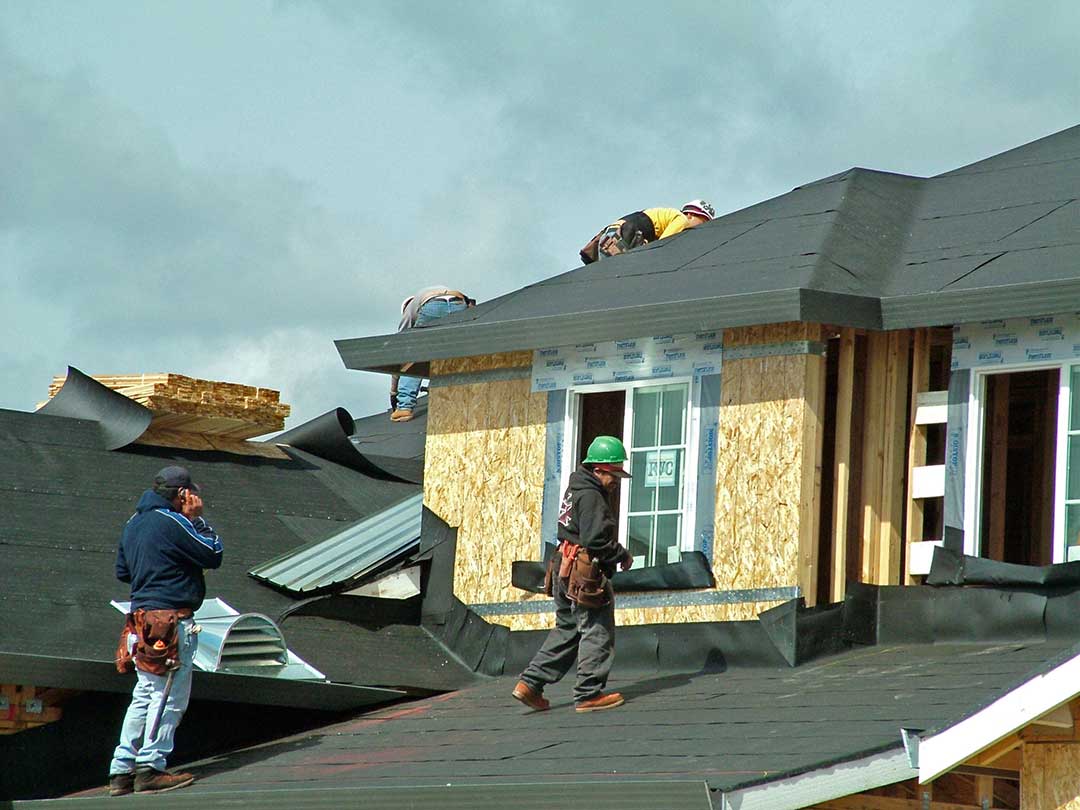
In this region, fall leaves, winter ice, snowmelt, and spring debris can all affect drainage. A roof problem may sometimes be connected to a gutter or downspout issue rather than a failure in the shingles themselves.
Will an inspection identify ice-dam damage?
It may identify evidence of ice-dam damage, although an inspection cannot predict exactly where future ice dams will form. Ice dams develop when heat escapes into the attic, snow melts on warmer roof sections, and the water refreezes near colder eaves.
Possible indicators include:
- Repeated staining along ceiling edges
- Damaged shingles near the eaves
- Corroded or stained soffit and fascia
- Wet insulation
- Rusted roofing nails
- Uneven attic temperatures
- Inadequate air sealing or ventilation
Snow and ice conditions can also limit what an inspector can safely see. A later inspection after the roof has cleared may reveal additional information.
What will the inspection report include?
A useful report explains the condition of the roof in understandable terms. It commonly includes photographs, descriptions of observed defects, notes about areas that could not be inspected, and recommendations organized by urgency.
Findings may be grouped into categories such as:
- Immediate concerns: Active leaks, exposed decking, major structural movement, or hazardous loose materials
- Repair needs: Localized flashing failures, damaged roof sections, or defective drainage components
- Maintenance items: Debris, minor sealant deterioration, gutter cleaning, or vegetation contact
- Monitoring items: Aging materials or minor wear that does not yet require corrective work
The report should distinguish observed facts from assumptions. For example, a ceiling stain may indicate past water entry, but it does not prove that the roof is currently leaking without additional evidence.
How long does a roof inspection take?
The time varies with roof size, design, accessibility, weather, and the presence of multiple roof sections. A simple roof may take less time than an older home with dormers, additions, chimneys, skylights, and difficult attic access.
An inspection may take longer if the inspector needs to compare indoor stains with exterior roof features, examine several attic areas, or document conditions in detail. Safety precautions can also affect the process, especially during wet, icy, snowy, or windy weather.
What should homeowners do before the inspection?
Access and information can make the inspection more thorough. Homeowners can help by making the attic entrance accessible, noting where leaks or stains have appeared, and sharing information about recent storms or past repairs.
It is useful to record:
- When a leak was first noticed
- Whether it occurs during rain, snowmelt, or wind
- Which rooms or ceilings are affected
- Whether repairs have been made before
- Any unusual attic odors, dampness, or temperature changes
Do not walk on the roof before the inspection. Roofing materials can be slippery, and hidden weak areas may be present. If water is entering near electrical fixtures, shut off power to the affected area only if it can be done safely and address the immediate hazard before the inspection takes place.
What should an inspection not be confused with?
A roof inspection is different from a repair, replacement estimate, or laboratory analysis of suspected mold. It is also not a guarantee that a roof will remain leak-free. Inspections are based on conditions visible at a particular time, and some defects remain hidden beneath roofing materials or only appear during specific weather.
The most useful result is a clear record of the roof’s present condition, the likely source of observed concerns, and the order in which issues should be addressed. That information helps homeowners make decisions based on evidence rather than appearance alone.
