
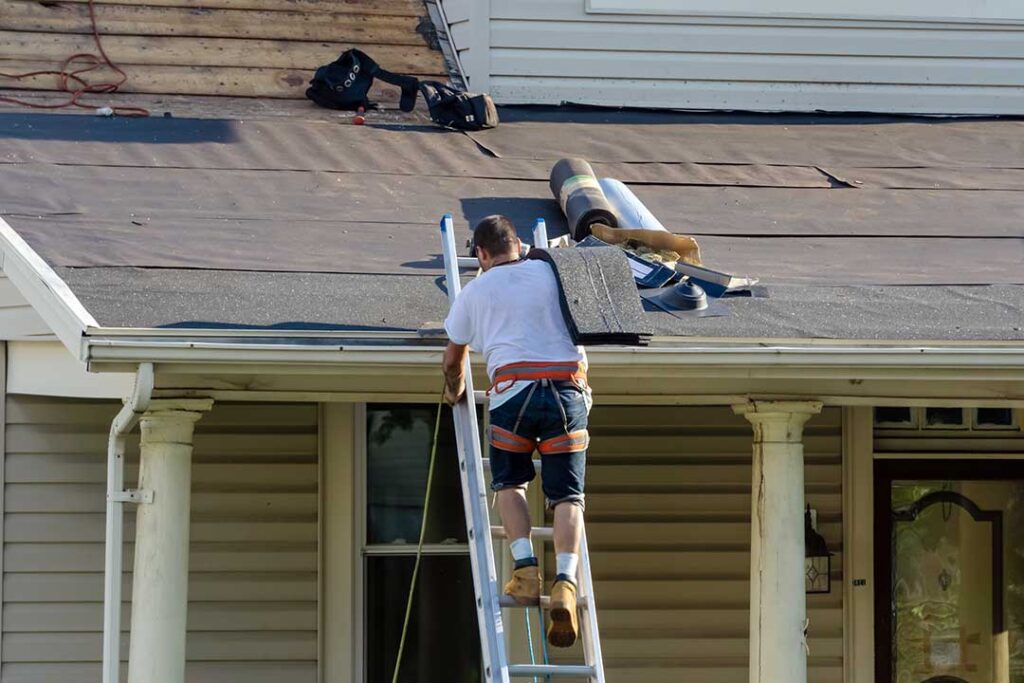
Does the roof affect a home’s energy efficiency?
Yes. A roof influences how much heat enters a home during summer, how quickly warmth escapes during winter, and how hard the heating and cooling systems must work. The roof is only one part of the building envelope, but its condition, insulation, ventilation, color, and air sealing can all affect household energy use.
In Ithaca, cold winters, freeze-thaw cycles, snow, wind, and humid summers create changing demands throughout the year. A roof that performs well in one season may still have weaknesses that become noticeable during another.
Energy efficiency is not determined by roofing material alone. The most effective approach considers the roof covering, attic insulation, ventilation, air leakage, moisture control, and the rest of the home’s construction as a connected system.
How does attic insulation improve roof-related efficiency?
Attic insulation slows the movement of heat between the living space and the roof. During winter, it helps keep heated indoor air from escaping upward. During summer, it reduces the amount of heat transferred from the roof and attic into the rooms below.
For many homes, especially older houses, attic insulation provides more energy benefit than replacing an otherwise serviceable roof covering. Insulation performance is often described by an R-value, which measures resistance to heat flow. A higher R-value generally provides greater resistance, but only when the insulation is installed evenly and remains dry.
Common problems include:
- Thin or compressed insulation
- Gaps around chimneys, vents, wiring, or attic hatches
- Insulation blocking soffit vents
- Moisture damage from roof leaks
- Uneven coverage along attic edges
- Air movement through recessed lights or other ceiling penetrations
Adding insulation without addressing air leaks can limit the benefit. Warm, moist household air can travel through small openings into a cold attic, where it may condense on roof framing or the underside of the roof deck.
Why is roof ventilation important?
Roof ventilation helps control heat and moisture in the attic. A balanced system typically allows air to enter near the lower roof edges and leave through higher points, creating a steady flow through the attic space.
Proper ventilation can help:
- Reduce excessive attic heat during sunny weather
- Limit moisture buildup during cold weather
- Reduce the chance of condensation on roof components
- Help protect insulation from dampness
- Support longer service life for some roofing materials
Ventilation does not replace insulation, and more vents do not automatically mean better performance. A poorly planned system can draw air from the living space instead of from the exterior, or allow wind-driven snow and rain to enter. Vents also need to remain clear of insulation and debris.
In snowy conditions, ventilation may help keep roof temperatures more consistent, but it cannot eliminate every ice dam problem. Ice dams are often related to heat escaping into the attic, uneven roof temperatures, snow cover, air leakage, and roof design.
Can a roof reduce summer heat gain?
A roof can reduce summer heat gain, but its effect depends on the entire roof assembly. A light-colored or reflective roof surface may absorb less solar energy than a dark surface. However, surface color is only one factor, and its value depends on attic insulation, ventilation, shading, roof pitch, and the home’s ceiling design.
A well-insulated attic is often more useful than changing roof color alone. If heat enters the attic but cannot easily pass into the living space, indoor temperatures may remain more stable.
Trees can also shade portions of a roof and reduce solar heating, although branches should not rub against the roof or create pathways for moisture. Shade should be considered alongside roof maintenance, daylight, drainage, and the risk of falling limbs.
Do roofing materials make a major energy difference?
Roofing materials can influence energy performance, but claims about dramatic savings should be treated carefully. Material properties such as reflectivity, durability, thermal mass, and installation method all matter.
A roof covering may perform differently depending on whether it is installed over:
- A vented or unvented attic
- Well-insulated or poorly insulated ceilings
- A solid or damaged roof deck
- A roof with adequate or inadequate air sealing
- A structure exposed to full sun or substantial shade
A durable roof that remains watertight can also support efficiency indirectly. Water intrusion may damage insulation, framing, and interior finishes. Wet insulation generally performs poorly, and hidden moisture can create conditions that require additional energy for drying and repair.
Replacing a roof solely for energy savings may not be the most efficient use of money if the existing roof is sound. Energy improvements should be prioritized according to the home’s actual weaknesses.
How do air leaks affect roof performance?
Air leakage is different from heat transfer through insulation. Heated indoor air can escape through gaps around attic hatches, plumbing penetrations, ductwork, chimneys, light fixtures, and framing joints. Cold outdoor air may enter through the same types of openings.
These leaks can create drafts, increase heating demand, and carry moisture into the attic. They may also contribute to uneven roof temperatures, which can worsen snow-related problems.
A practical inspection often starts at the attic floor rather than on the roof surface. Look for:
- Darkened insulation near penetrations
- Frost or water staining in cold weather
- Daylight around an attic hatch
- Drafts near ceiling fixtures
- Compressed or displaced insulation
- Signs of rodents or insects entering through gaps
Air sealing materials must be compatible with the location and surrounding construction. Some areas near chimneys, flues, and heat-producing equipment require special clearances and fire-safe materials.
What should Ithaca homeowners consider before improving roof efficiency?
Local weather makes moisture management especially important. Snow can remain on a roof for extended periods, while alternating warm and freezing conditions can stress flashing, sealants, gutters, and roof edges. Heavy rain and wind also test drainage and water-shedding details.
Before making improvements, consider these questions:
- Is the roof leaking, sagging, or showing damaged flashing?
- Is the attic insulation dry and evenly distributed?
- Are soffit and ridge or gable vents functioning as intended?
- Does the attic have visible condensation or frost?
- Is warm air escaping through the ceiling plane?
- Are gutters and downspouts moving water away from the foundation?
- Has an addition, skylight, finished attic, or solar installation changed the original roof design?
Safety and code compliance matter when work involves steep roofs, electrical equipment, chimneys, structural damage, or confined attic spaces. Some conditions are difficult to evaluate safely without appropriate equipment and training.
Which roof improvements usually provide the greatest benefit?
The highest-value improvement varies by house, but a common order of attention is:
1. Stop active leaks and repair moisture damage.
2. Air-seal the attic floor and ceiling penetrations.
3. Improve insulation where coverage is inadequate.
4. Confirm that ventilation is balanced and unobstructed.
5. Address damaged flashing, roof edges, gutters, and drainage.
6. Consider roof-surface upgrades when replacement is already necessary.
This sequence helps prevent a common mistake: adding insulation while leaving water intrusion or uncontrolled air movement unresolved.
Energy efficiency also depends on windows, doors, walls, basement or crawl-space insulation, heating equipment, and household behavior. A roof upgrade can help, but it should be evaluated as part of the complete home rather than as an isolated feature.
How can residents recognize that roof efficiency may be a problem?
Warning signs include rooms that are noticeably colder or hotter than others, unusually warm ceilings beneath the roof, persistent attic dampness, frost on roof framing, peeling paint near upper walls, recurring ice dams, or heating and cooling costs that seem inconsistent with similar homes.
These symptoms do not prove that the roof is the cause. They may also result from duct leakage, inadequate wall insulation, poor drainage, mechanical ventilation problems, or air leakage elsewhere. Still, they are useful signals that the roof and attic assembly deserve closer attention.
A roof that sheds water, limits unwanted air movement, contains sufficient dry insulation, and maintains appropriate ventilation is better positioned to support comfortable indoor temperatures through Ithaca’s changing seasons.
