
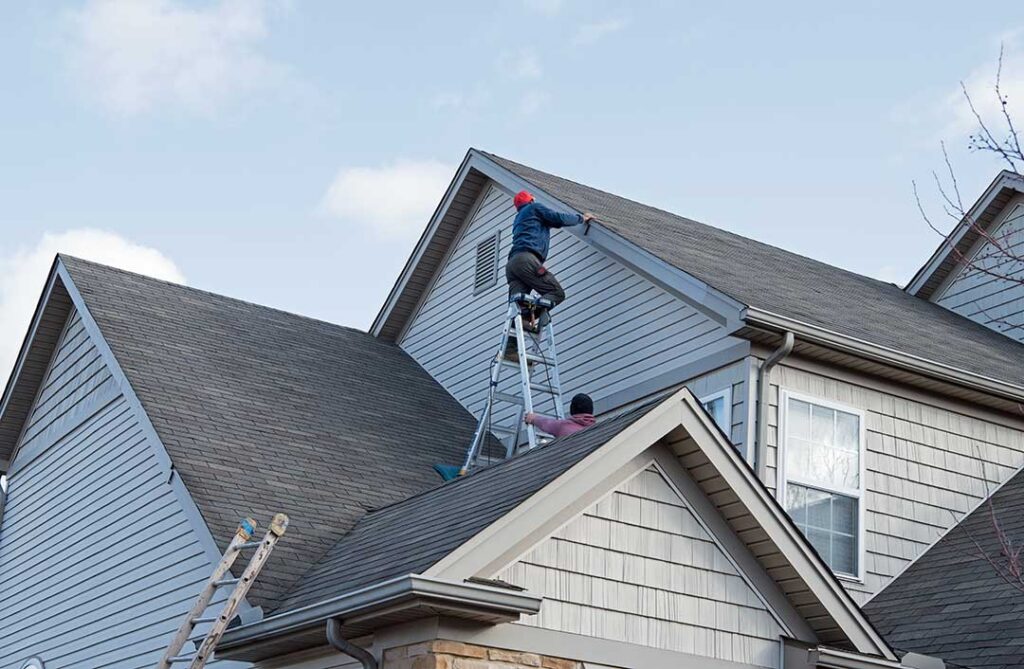
Roof leaks rarely come from a single dramatic failure. More often, water enters through a small weakness—such as a lifted shingle, a cracked seal, or a clogged drainage path—and gradually damages the roof deck, insulation, ceilings, or walls.
In Ithaca, NY, changing seasons can expose roofing materials to repeated wetting, freezing, thawing, snow, wind, and falling debris. Understanding the most common causes makes it easier to recognize warning signs before a minor leak becomes a larger building problem.
Where do roof leaks usually start?
Most leaks begin at roof openings, seams, edges, or areas where different materials meet. These locations experience more movement and weather exposure than the broad field of the roof.
Common starting points include:
- Roof penetrations for plumbing vents, chimneys, skylights, and exhaust fans
- Valleys where two roof slopes meet
- Flashing around walls, chimneys, and dormers
- Roof edges, eaves, and rakes
- Areas with damaged, missing, or deteriorated shingles
- Gutters and downspouts that allow water to back up beneath roofing materials
The visible drip inside a home may not be directly below the entry point. Water can travel along roof sheathing, rafters, insulation, or wall framing before appearing as a stain.
How do damaged or missing shingles cause leaks?
Shingles protect the roof deck from direct exposure to rain and melting snow. A missing shingle leaves the underlying layers vulnerable, while a cracked, curled, or lifted shingle may allow water beneath the surrounding courses.
Damage can result from:
- Wind lifting or tearing shingles
- Fallen branches
- Foot traffic
- Long-term ultraviolet exposure
- Repeated freezing and thawing
- Fasteners that loosen or back out
- Improper installation
A few damaged shingles do not always produce an immediate ceiling stain. Water may first soak the underlayment or roof decking, making the problem harder to notice until heavier rain or snowmelt occurs.
Why are flashing failures so common?
Flashing consists of metal or other water-shedding materials installed around joints and penetrations. It directs water away from vulnerable seams. If flashing is bent, corroded, cracked, poorly sealed, or installed incorrectly, water can enter even when the surrounding shingles appear intact.
Problem areas often include:
- Chimney sides and upper corners
- Roof-to-wall intersections
- Dormer edges
- Skylight frames
- Plumbing vent collars
- Transitions between different roof sections
Sealant is not a substitute for properly installed flashing. Caulk can shrink, split, or detach over time, especially where materials expand and contract at different rates.
Can clogged gutters cause a roof leak?
Yes. Clogged gutters can contribute to leaks by preventing rainwater and melting snow from draining away from the roof. Water may overflow against fascia boards, back up beneath the lower edge of the roofing, or soak nearby wood components.
Gutter problems are more likely after leaves, twigs, and roof granules accumulate. Ice can create a related problem during winter. When melting snow refreezes near the eaves, an ice dam may form and obstruct drainage. Water can then move beneath shingles and into the roof assembly.
Keeping gutters and downspouts clear helps, but it does not correct every drainage issue. Gutters that are poorly pitched, separated at joints, or discharging too close to the foundation can still cause trouble.
How do ice dams and snow contribute to leaks?
Snow itself does not automatically cause a leak. The greater concern is uneven melting and refreezing, especially near colder roof edges.
Heat escaping from the living space can warm portions of the roof while the eaves remain below freezing. Snow melts on the warmer section, flows downward, and freezes near the edge. As the ice builds, water may be forced under roofing materials.
Roof leaks associated with winter conditions may appear as:
- Brown ceiling stains after a thaw
- Damp insulation in an attic
- Peeling paint near exterior walls
- Water around skylights or chimneys
- Drips that stop when temperatures fall and return during thawing
Adequate attic insulation, air sealing, and ventilation can reduce heat transfer into the roof space. These measures are building-performance improvements, not simple substitutes for repairing damaged roofing.
What role does poor roof ventilation play?
Poor ventilation does not always cause a direct leak, but it can shorten the life of roofing materials and increase moisture problems. Warm, humid air that reaches a cold attic may condense on roof sheathing, nails, or framing.
This moisture can be mistaken for a roof leak. The difference may become clearer through timing:
- A true roof leak usually worsens during rain or snowmelt.
- Condensation may appear during cold weather even without precipitation.
- Both problems can occur at the same time.
Blocked soffit vents, insufficient exhaust ventilation, bathroom fans that discharge into the attic, and unsealed attic penetrations can all increase moisture levels.
Can chimneys, skylights, and vents leak even when the roof is sound?
Yes. Penetrations are frequent leak sources because they interrupt the continuous surface of the roof. Their seals and flashing are exposed to weather and movement throughout the year.
A skylight may leak because of failed flashing, deteriorated gaskets, condensation, or damage to the surrounding roofing. A chimney may develop problems where masonry meets metal flashing. Plumbing vent collars can crack with age, allowing water to travel around the pipe.
A stain near one of these features does not prove that the feature itself is defective. Water may be entering higher on the roof and moving downslope.
How do valleys create leak problems?
Roof valleys collect water from two sloping sections and carry it toward the eaves. Because they handle concentrated runoff, they require careful installation and regular inspection.
Leaks may develop when:
- Leaves and debris collect in the valley
- Valley flashing is damaged or poorly fitted
- Shingles are cut incorrectly
- Fasteners are placed where water flows
- Ice or snow blocks drainage
- Heavy runoff exceeds the capacity of the drainage design
Valley leaks can be difficult to trace because water may spread beneath several rows of shingles before entering the attic.
What signs suggest a roof leak?
Some signs are obvious, while others appear gradually. Watch for:
- Brown, yellow, or gray ceiling stains
- Bubbling or peeling paint
- Damp attic insulation
- Musty odors
- Mold-like growth on roof framing
- Sagging drywall
- Daylight visible through the roof deck
- Wet or rusted fasteners
- Granules collecting in gutters
- Shingles that are curled, cracked, loose, or missing
A small stain should not be dismissed simply because it dries between storms. Intermittent leaks can still damage wood, insulation, and interior finishes.
What should be done when water is entering the home?
First, protect people and belongings from falling ceiling material and water near electrical fixtures. Place a container beneath active drips, move furniture, and avoid standing water near outlets, light fixtures, or wiring.
If a ceiling is bulging, do not press on it. Saturated drywall can become heavy and collapse. Electrical hazards, structural damage, severe storm damage, or unsafe roof conditions require qualified assistance because climbing onto a wet, icy, or damaged roof can create greater danger.
The source should be identified from both the attic and the exterior when conditions are safe. Interior patching may hide the stain temporarily, but it does not stop water from entering. A lasting repair depends on correcting the damaged roofing, flashing, drainage, ventilation, or building detail that allowed the moisture inside.
