

Why roofing vocabulary matters
Understanding basic roofing terms makes it easier to read inspection notes, compare repair descriptions, and recognize possible trouble before it becomes a larger problem. In Ithaca, NY, roofs must handle snow, wind, heavy rain, repeated freezing and thawing, and occasional ice buildup along the eaves.
The terms below describe the main parts of a roof, the materials that protect it, and common conditions that affect performance.
What are the main parts of a roof?
A roof is more than the visible shingles. It is a layered system designed to shed water, resist weather, and protect the structure below.
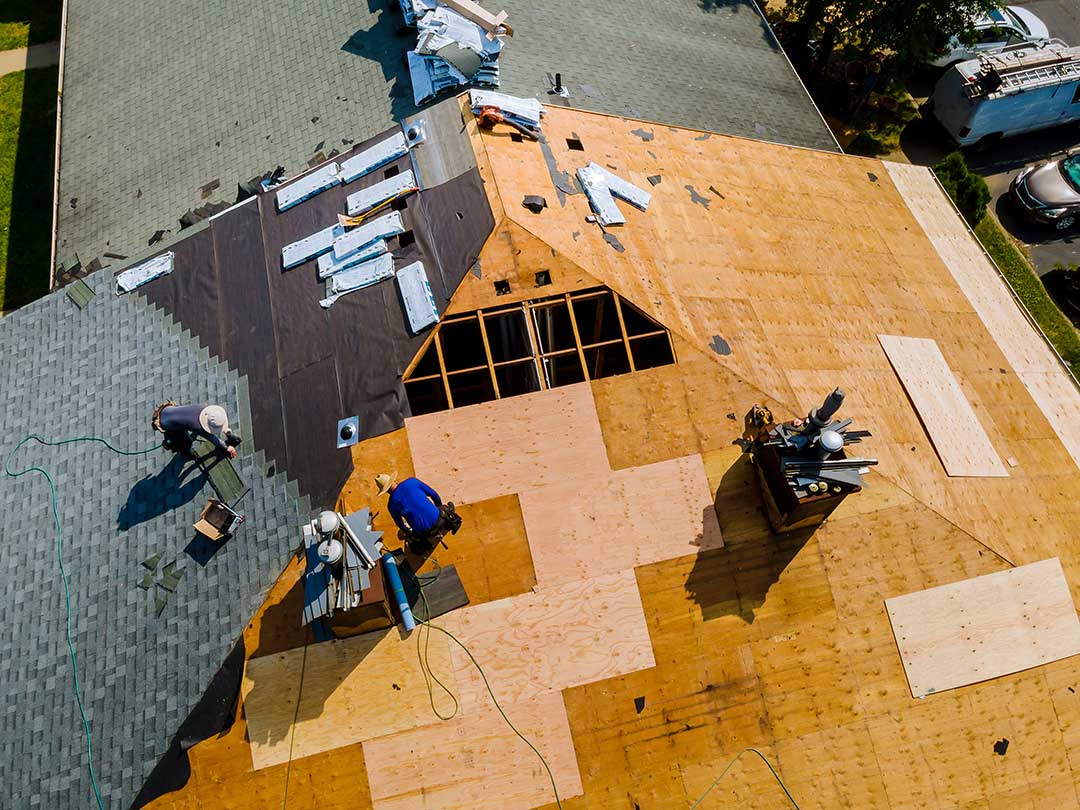
- Roof deck: The structural surface attached to the rafters or trusses. It is commonly made from plywood or oriented strand board. Shingles and underlayment are installed over the deck.
- Rafters: Sloped structural members that support the roof deck. In older homes, rafters are often visible in attic spaces.
- Trusses: Prefabricated structural frames that support the roof. They are common in many newer homes.
- Roof covering: The outer weather-resistant material, such as asphalt shingles, metal panels, slate, or wood shakes.
- Eaves: The lower edges of a sloped roof that extend beyond the exterior walls.
- Rake: The sloped edge of a roof running from the eave toward the ridge.
- Ridge: The highest horizontal line where two roof slopes meet.
- Hip: An outside sloping intersection where two roof sections meet.
- Valley: An inside angle where two roof slopes meet. Valleys carry a significant amount of runoff and require careful installation.
A roof with several valleys, dormers, or intersecting sections has more areas where water can collect or flashing can fail.
What is roof pitch, and why does it matter?
Roof pitch describes how steeply a roof rises compared with its horizontal distance. It may be written as a ratio, such as 6:12, meaning the roof rises 6 inches for every 12 inches of horizontal run.
Pitch affects:
- How quickly rain and melting snow drain
- Which roofing materials are suitable
- How easily workers can safely move across the surface
- How much snow may remain on the roof
- The amount of attic and roof-edge ventilation needed
A low-slope roof generally sheds water more slowly than a steep roof. It may require different materials and installation methods than a standard shingle roof. Roof pitch should not be guessed from the ground when material compatibility or safety is involved.
What are shingles and granules?
Asphalt shingles are the most common roof covering on many homes. They consist of a fiberglass or organic base coated with asphalt and surfaced with mineral granules.
The granules protect the shingle from sunlight and help provide color and texture. Some granule loss is normal, especially after installation, but heavy loss can expose the asphalt beneath.
Signs of advanced shingle wear may include:
- Bald or visibly bare areas
- Cracked, curled, or lifted tabs
- Shingles that have become brittle
- Dark streaks or patches caused by biological growth
- Granules collecting heavily in gutters or at downspout outlets
A small amount of granule material in a gutter does not automatically mean the roof has failed. The pattern, age, and overall condition matter.
What is underlayment?
Underlayment is a protective layer installed between the roof deck and the roof covering. It provides a secondary line of defense if water gets beneath shingles.
Common types include:
- Asphalt-saturated felt: A traditional underlayment used beneath some roof coverings.
- Synthetic underlayment: A lighter, manufactured sheet designed to resist moisture during and after installation.
- Ice barrier: A self-adhering membrane used in vulnerable areas to help prevent water from entering when ice blocks normal drainage.
In a cold, snowy climate, the roof edge, valleys, and areas around penetrations deserve particular attention. Ice barriers are not a substitute for proper drainage, insulation, or ventilation, but they can provide additional protection where winter conditions create a risk of backup.
What is flashing?
Flashing is a water-shedding material installed where the roof meets another surface or where water could enter a joint. It is commonly made from metal or a flexible membrane.
Flashing is used around:
- Chimneys
- Plumbing vent pipes
- Skylights
- Dormers
- Roof-to-wall intersections
- Valleys
- Edges and transitions between different roof sections
Step flashing is installed in overlapping pieces along a roof-to-wall joint. Counterflashing is placed over or into masonry, often around chimneys, to help protect the upper edge of the flashing.
Many leaks blamed on shingles actually begin at flashing points. Sealant alone is not a permanent replacement for properly designed and layered flashing.
What do ridge vents, soffit vents, and baffles do?
Roof ventilation allows air to move through the attic or roof assembly. A typical venting system uses intake openings near the eaves and exhaust openings near the ridge or upper roof.
- Soffit vents: Intake vents located under the eaves.
- Ridge vents: Exhaust vents installed along the roof ridge.
- Gable vents: Openings in the triangular wall sections at the ends of some attics.
- Baffles: Channels that keep insulation from blocking airflow between soffit vents and the upper attic.
Good ventilation helps remove heat and moisture. It does not cool a poorly insulated attic by itself, and adding an exhaust vent without adequate intake airflow may not improve the system.
Moisture in an attic can come from indoor air escaping through ceiling penetrations, bathroom exhaust directed into the attic, roof leaks, or inadequate ventilation. Frost on the underside of roof decking is a warning sign that deserves attention.
What is an ice dam?
An ice dam is a ridge of ice that forms along a roof edge and prevents melting snow from draining. Water can then back up beneath shingles and enter the roof assembly.
Ice dams are more likely when:
- Heat escapes into the attic
- Snow remains on the roof
- The roof edge stays colder than the upper roof surface
- Air sealing or insulation is incomplete
- Gutters or roof valleys are obstructed
Removing snow or ice from a roof can be dangerous and may damage shingles. Chopping at ice with sharp tools can also harm the roof covering. Prevention generally involves managing attic heat loss, maintaining airflow, and keeping drainage paths clear.
What are flashing leaks, blow-offs, and penetrations?
A roof penetration is any object that passes through the roof, including a plumbing vent, chimney, skylight, or exhaust pipe. Each penetration requires a properly integrated flashing system.
A blow-off occurs when wind lifts or removes shingles. Missing shingles may expose the underlayment and roof deck to water. Wind damage is not always obvious from the ground because shingles can lift without fully detaching.
A leak may appear far from its actual source. Water can travel along rafters, roof decking, insulation, or framing before reaching a ceiling stain. A stain therefore identifies a symptom, not necessarily the exact entry point.
What does roof replacement involve?
Roof replacement generally means removing some or all of the existing roof covering and installing new materials. The work may also involve replacing damaged decking, underlayment, flashing, vents, or edge components.
Re-roofing usually means installing a new layer over an existing layer, where permitted and appropriate. This approach may not address hidden moisture, deteriorated decking, poor flashing, or inadequate ventilation.
The number of existing layers, the condition of the roof deck, and the requirements of the applicable New York State code can affect which approach is suitable. Older homes may also contain several generations of roofing materials that are not visible from the ground.
Which roofing terms should homeowners remember first?
The most useful terms to recognize are:
- Roof deck: The structural base beneath the covering
- Underlayment: The secondary moisture barrier
- Flashing: The material protecting joints and penetrations
- Valley: The channel where roof slopes meet
- Soffit and ridge vents: Intake and exhaust ventilation components
- Ice dam: Ice that blocks drainage at the roof edge
- Roof pitch: The steepness of the roof
- Roof covering: The visible shingles, metal, slate, or other outer material
Knowing these terms helps homeowners describe symptoms accurately, understand written reports, and ask better questions about roof maintenance in a climate where moisture, snow, and freeze-thaw cycles can affect every layer of the roof system.
