
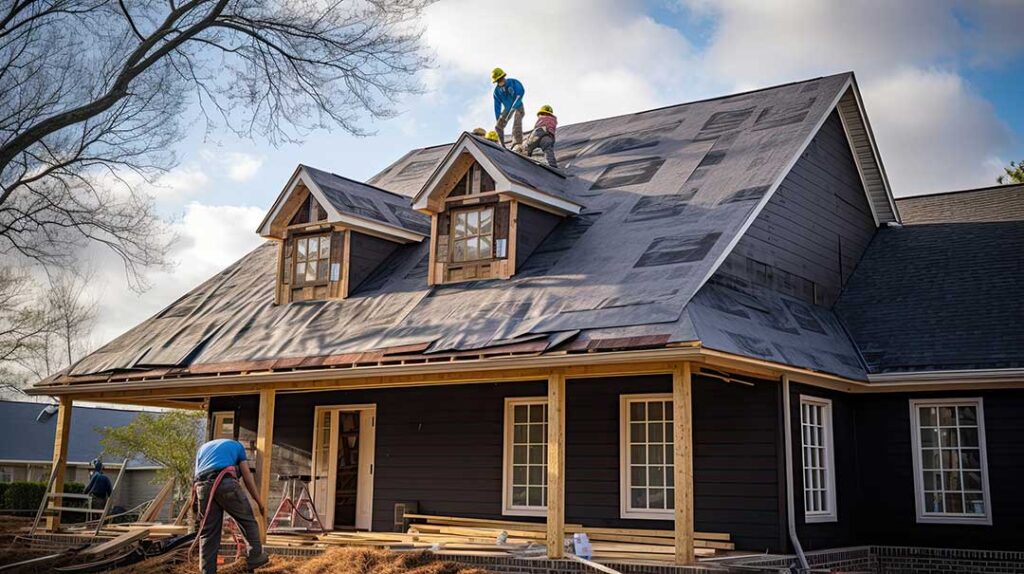
Replacing only part of a roof can be more complicated than matching a color from a sample. Shingles vary by manufacturer, product line, exposure, texture, age, and weathering. For homeowners in Ithaca, NY, seasonal moisture, snow, freeze-thaw cycles, and shaded roof areas can make an accurate match especially challenging.
A good match is not always an exact visual duplicate. The goal is to create a durable repair that blends reasonably with the existing roof while managing water properly.
Can replacement shingles match the existing roof exactly?
Usually, no. Even shingles from the same product line may look different after years of exposure.
Sunlight, rain, snow, wind, algae growth, airborne debris, and temperature changes gradually alter a roof’s color and surface texture. Older shingles may fade, become darker from dirt or biological growth, or lose some of their original granule pattern.
A new bundle placed beside weathered shingles will often look noticeably brighter or more uniform. The difference may become less obvious over time, but it should not be assumed that new shingles will weather into a perfect match.
The closest match generally comes from identifying all of the following:
- Manufacturer
- Product line
- Shingle style
- Color name
- Shingle dimensions
- Exposure, or the portion visible after installation
- Approximate installation date
- Roof slope and viewing angle
How can the original shingle be identified?
The most reliable starting point is leftover material from the original installation. Check garages, attics, sheds, basements, and storage areas for unopened bundles or loose shingles. Packaging may show the manufacturer, product name, color, and production information.
If no packaging remains, examine the roof itself. Useful details include:
- The number of tabs or visible sections
- The shape of the shingle edges
- The width and height of each shingle
- The pattern of color variation
- The texture and size of the roofing granules
- Whether the shingle is a traditional strip style or an architectural laminated style
Photographs can help with comparison, but color accuracy is affected by lighting and camera settings. A close-up taken in natural daylight is more useful than a distant photo or an image taken under indoor lighting.
A small loose shingle from a previous repair can also provide valuable information. However, a sample from a shaded area may look different from one exposed to direct sunlight.
Why does color matching alone often fail?
Roof shingles are three-dimensional products, not flat paint colors. Two shingles with similar color names may have different blends, shadow lines, granule patterns, or surface profiles.
For example, one brown-toned shingle may contain subtle gray and gold granules, while another may use reddish or charcoal tones. From the ground, the overall color may seem similar, but the repaired area can still appear as a distinct patch.
The visible portion of the shingle matters as well. A shingle installed with a different exposure can create a different horizontal rhythm across the roof. Even the correct color may look wrong if the replacement has a different size or is positioned differently.
Matching should therefore consider appearance and installation geometry together.
What if the original shingle is discontinued?
Discontinued shingles are common, particularly on roofs that are more than a decade old. Roofing manufacturers regularly change product lines, colors, dimensions, and manufacturing details.
If the original is no longer available, compare several possible substitutes rather than choosing the closest color immediately. Look for a replacement with similar:
- Overall color temperature, such as warm, neutral, or cool
- Light-to-dark contrast
- Granule distribution
- Thickness and shadow line
- Shingle dimensions
- Exposure requirements
- Warranty and installation requirements
A close substitute may be more noticeable from one side of the roof than another. Viewing the roof from the street, driveway, backyard, and upper windows can provide a better sense of how the blend will appear in normal conditions.
Does the location of the repair affect how visible it will be?
Yes. A small repair near a roof edge may be less noticeable than one in the middle of a large, uninterrupted roof plane.
Repairs are often easier to see when they are:
- Near the front-facing roof slope
- Close to windows or decks
- Located beside a contrasting roof feature
- On a low-slope section viewed from above
- In an area with strong sunlight
- Surrounded by shingles with substantial weathering
A patch on a shaded roof section may also stand out because the old shingles have accumulated moss, algae, or surface staining while the new material has not.
For this reason, the best visual match is sometimes obtained by using salvaged shingles from a less visible part of the roof, provided they remain sound and suitable for reuse. Removing material from one area to repair another can create a second repair zone, so the overall condition of the roof must be considered.
Can shingles from different manufacturers be mixed?
Mixing manufacturers is generally a poor choice unless the products are truly compatible and the repair location makes the difference acceptable. Shingles can vary in thickness, dimensions, adhesive placement, nailing zones, and required installation methods.
Even products that look similar may not interlock correctly. Differences in thickness can create raised edges or uneven courses. Differences in size can affect alignment and water-shedding performance.
The repair should use materials that are compatible with the existing roof system, including underlayment, flashing, ridge details, and ventilation components. Appearance is only one part of a successful match.
How do Ithaca weather conditions affect replacement shingles?
The local climate makes timing and surface conditions relevant. Roof repairs may be affected by cold temperatures, wet surfaces, snow, ice, and rapid temperature changes.
Asphalt shingles generally need suitable conditions for their seal strips to bond properly. A repair completed during cold weather may not seal immediately, and loose or poorly bonded shingles can be more vulnerable to wind until bonding occurs.
Moisture also matters. Shingles placed over damp decking, wet underlayment, or trapped debris may not provide a durable repair. Freeze-thaw cycles can expose weaknesses in flashing, fasteners, and roof edges that are not obvious during a brief visual inspection.
For a small replacement, dry weather and moderate temperatures are usually easier conditions for achieving both proper installation and a cleaner visual blend.
Should the whole roof be replaced just because shingles do not match?
Not necessarily. A visible color difference does not automatically mean the entire roof needs replacement.
A limited repair may be reasonable when the surrounding shingles are generally sound, the damage is localized, and the roof system is not near the end of its service life. Full replacement becomes a more relevant consideration when there are widespread issues such as:
- Numerous missing or damaged shingles
- Repeated leaks in different locations
- Brittle shingles that crack during handling
- Significant granule loss
- Sagging or deteriorated roof decking
- Failing flashing around penetrations and edges
- Extensive moss or moisture-related deterioration
The condition beneath the shingles matters as much as the surface appearance. A visually acceptable patch will not solve problems caused by damaged decking, inadequate flashing, or persistent moisture.
What should be checked before installing replacement shingles?
Before selecting material, inspect the damaged area and its surroundings. Confirm whether the problem is limited to the shingle or extends into the underlayment, flashing, or roof deck.
Check for:
- Water staining on the underside of the roof
- Soft or weakened decking
- Lifted neighboring shingles
- Exposed fasteners
- Damaged metal flashing
- Missing sealant at roof penetrations
- Signs of ice-related movement
- Moss or debris holding moisture against the roof
A replacement shingle should be secured according to its design, with fasteners placed in the correct area and covered or sealed as required. Improper fastening can cause leaks even when the color and shape are a close match.
For steep roofs, icy conditions, damaged decking, or repairs near electrical lines, safety and building protection take priority over appearance. Those conditions can make do-it-yourself work hazardous.
What is the most practical approach to matching shingles?
Start with original packaging or leftover material, then confirm the shingle style, dimensions, exposure, and color blend. Compare samples in natural light from several viewing angles, and consider how much weathering has occurred across the existing roof.
If an exact match cannot be found, choose the closest compatible product and focus on correct installation, water management, and a sensible repair location. A slightly visible but properly installed repair is generally preferable to a visually similar product that does not fit the roof system or shed water correctly.
