
Which roofing materials are most common for homes in Ithaca, NY?
Asphalt shingles are the most common residential roofing material because they balance cost, appearance, availability, and relatively simple installation. Metal roofing, wood shingles, slate, synthetic slate, and low-slope membrane systems are also used, but each fits different types of homes and roof designs.
The right choice depends on more than expected lifespan. Roof slope, attic ventilation, structural capacity, maintenance habits, winter conditions, appearance, and budget all affect whether a material performs well over time.
Ithaca receives substantial annual precipitation and regular winter snowfall. Freeze-thaw cycles, ice buildup near eaves, damp leaf debris, and summer sun can all influence roofing performance. A material that works well on one house may be less suitable on another, even within the same neighborhood.
What are the pros and cons of asphalt shingles?
Asphalt shingles are practical, widely available, and compatible with many roof shapes. They are usually the least expensive conventional option for a complete roof replacement.
Advantages include:
- Lower initial cost than most premium roofing materials
- Many colors and profiles for traditional and modern homes
- Relatively straightforward repairs
- Moderate weight, making them suitable for many existing roof structures
- Broad familiarity among building inspectors and installers
- Good performance when the roof deck, flashing, ventilation, and underlayment are properly installed
Standard three-tab shingles generally have a simpler appearance and shorter service life than architectural shingles. Architectural shingles are thicker, provide more visual dimension, and commonly offer better wind and impact performance.
Potential drawbacks include:
- Shorter service life than metal, slate, or some synthetic products
- Granule loss, cracking, and curling as the roof ages
- Vulnerability to poor attic ventilation and repeated moisture exposure
- Dark colors can absorb more summer heat
- Shingles may be damaged by falling branches, foot traffic, or severe weather
In a snowy climate, the shingle itself is only part of the system. Ice-barrier underlayment, properly sealed roof penetrations, sound flashing, and adequate ventilation are especially significant near eaves, valleys, chimneys, and sidewalls.
Is metal roofing a good choice for local homes?
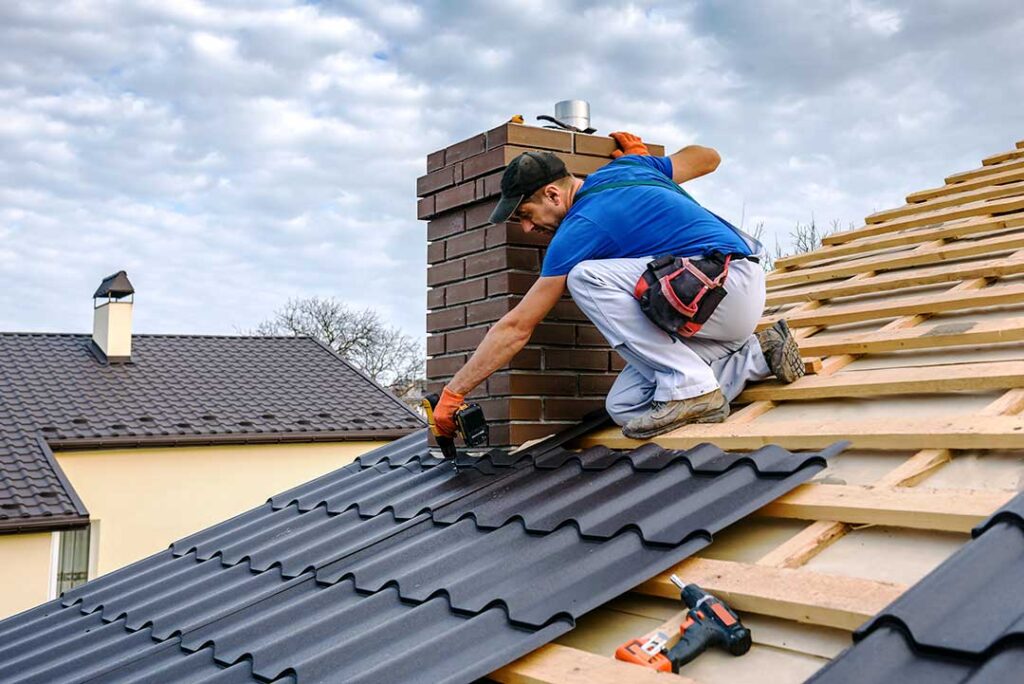
Metal roofing can provide long service life, strong resistance to moisture, and dependable performance under changing weather conditions. It is available in standing-seam panels, interlocking metal shingles, and other profiles.
Advantages include:
- Long expected service life compared with basic asphalt shingles
- Resistance to rot, insect damage, and many forms of moisture deterioration
- Lightweight construction in many product types
- Good performance on steep roofs
- Reduced likelihood of snow remaining on smooth roof surfaces
- Compatibility with some reflective or “cool roof” designs
Metal roofs are not maintenance-free. Fasteners, seams, penetrations, coatings, and flashing require periodic inspection. Snow sliding from a smooth roof can also create a safety concern over entrances, walkways, decks, or lower roof sections. Snow guards may be appropriate in some designs.
Common disadvantages include:
- Higher initial cost
- Greater need for careful detailing around chimneys, skylights, valleys, and wall transitions
- Potential for noise if the roof assembly lacks adequate insulation or underlayment
- Visible dents from large hail or falling branches
- Expansion and contraction that can expose weaknesses in poorly designed systems
Metal roofing is not automatically better for every house. Roof geometry, snow-shedding behavior, structural details, and the appearance of the home should be considered together.
What should homeowners know about slate and synthetic slate?
Natural slate is a durable, fire-resistant material that can last for many decades when properly installed and maintained. It is especially compatible with older homes and buildings designed for a formal, traditional appearance.
Its main limitation is weight. Slate requires a roof structure capable of supporting it, and replacement may involve specialized flashing, fastening, and repair methods. Broken pieces can be difficult to match, and walking on slate can cause damage.
Synthetic slate is designed to resemble natural slate while reducing weight and, in some cases, installation complexity. It may be a practical alternative for homeowners who want a slate-like appearance without adding as much structural load.
The tradeoffs include product-quality differences, fading or surface wear over time, and less certainty about very long-term performance compared with established natural slate. Synthetic products should be evaluated as complete systems rather than by appearance alone.
Are wood shingles or shakes practical in a wet, snowy climate?
Wood roofing can complement older homes, cottages, and buildings with a natural architectural style. Cedar shingles and shakes may offer attractive texture and can perform well when they are properly detailed and maintained.
However, wood roofing requires more attention to moisture management than asphalt or metal. Persistent shade, leaf accumulation, moss, poor airflow, and damp roof surfaces can shorten its service life.
Wood roofing may be less practical where:
- The roof remains shaded for much of the day
- Trees regularly deposit leaves and small branches
- Gutters and valleys are difficult to maintain
- The roof has inadequate ventilation
- The homeowner wants minimal upkeep
Wood products may also have specific fire-resistance and installation requirements. The material should be selected with the roof’s pitch, drainage, surrounding vegetation, and maintenance access in mind.
How do tile roofs compare with other materials?
Clay and concrete tile can provide long service life and strong resistance to rot, insects, and fire. Tile also offers distinctive architectural character and can perform well in many weather conditions.
The primary concern is weight. Existing homes may need structural evaluation before tile is installed. Individual tiles can also crack from impact, improper foot traffic, or structural movement. Repairs may require matching older or discontinued profiles.
Tile is generally more common on homes designed for it from the beginning. It is less often a simple replacement for asphalt shingles because the supporting structure and roof detailing may be different.
What roofing works best on a low-slope section?
Low-slope roofs often require membrane systems rather than conventional shingles. Common categories include rubber-like single-ply membranes, modified bitumen, and other built-up or liquid-applied systems.
These materials are designed to manage slower drainage, but they depend heavily on seams, edge details, drains, penetrations, and flashing. Ponding water is a warning sign because standing water can expose weaknesses that may not appear on a steep roof.
A low-slope addition attached to an older pitched-roof home may need a different material from the main roof. Treating the entire structure as though it has one roof design can lead to drainage and detailing problems.
Which roofing factors matter more than the material itself?
Installation quality and roof design often matter as much as the covering. A premium material can fail early if water is directed behind flashing, the deck is deteriorated, or the attic remains damp.
Before selecting a material, consider:
- Roof pitch and shape
- Existing deck condition
- Attic insulation and ventilation
- Snow-shedding behavior
- Ice-dam exposure at eaves and valleys
- Weight-bearing capacity
- Chimneys, skylights, dormers, and roof-to-wall transitions
- Access for future maintenance
- Compatibility with existing gutters and drainage
- Local building-code requirements
New York’s residential code includes requirements related to roof coverings, underlayment, ice barriers, flashing, and structural considerations. Requirements can vary according to the roof design and the scope of work, so code compliance should be confirmed before materials are ordered.
Is a more expensive roof always the better investment?
Not necessarily. A longer-lasting material may reduce replacement frequency, but its added cost may not make sense if the roof structure needs major reinforcement or if the material is difficult to repair locally.
For many households, architectural asphalt shingles provide a sensible balance. Metal may be appropriate when long service life, snow shedding, or reduced maintenance is a priority. Slate, tile, wood, and synthetic materials are better viewed as specialized choices tied to building design, structural capacity, appearance, and maintenance expectations.
The most useful comparison is not simply price per square foot. It is the full roof system: material, underlayment, flashing, ventilation, drainage, structural support, expected maintenance, and likely replacement timeline.
