
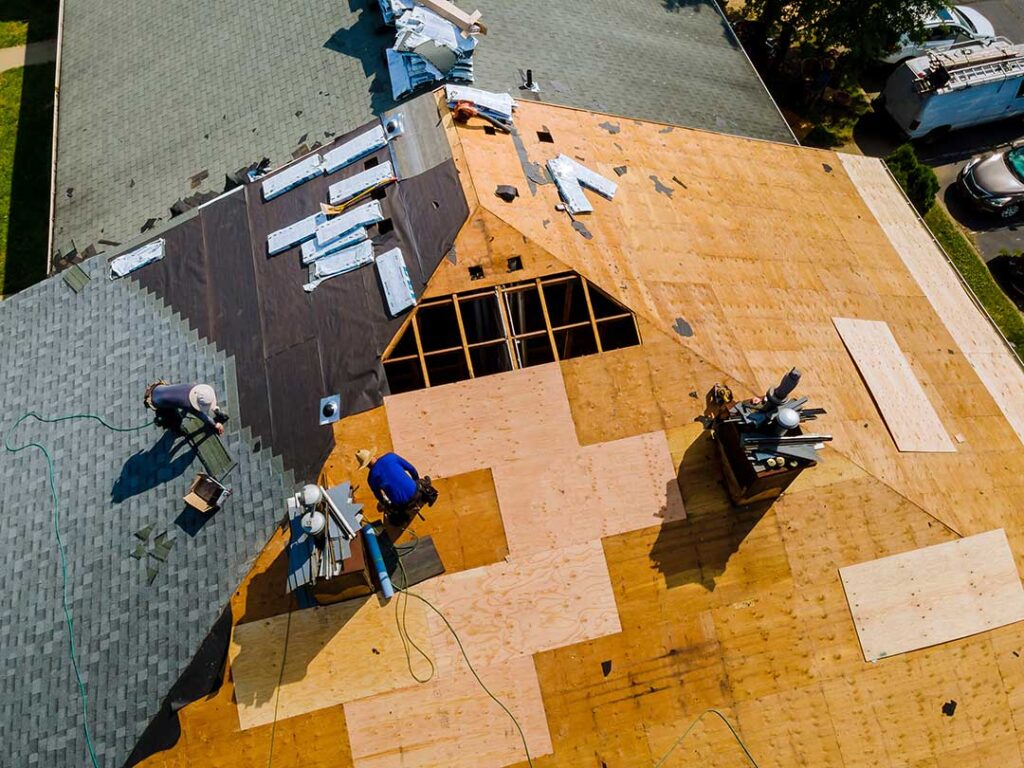
Tree limbs can damage a roof without immediately creating a visible hole. Branches may scrape away protective granules, clog gutters, trap moisture, or break during snow, ice, wind, or heavy rain. In Ithaca, NY, seasonal weather can increase these risks because trees may carry snow and ice during storms, while repeated freezing and thawing can worsen small areas of damage.
Understanding how limb contact affects roofing helps residents recognize problems early and respond safely.
What kinds of roof damage can tree limbs cause?
Tree limbs can affect nearly every exposed part of a roof, including shingles, flashing, gutters, soffits, and roof vents. The damage depends on the size of the limb, how often it moves against the roof, and whether the branch is alive, dead, cracked, or decaying.
Common forms of damage include:
- Shingle abrasion: Repeated rubbing can remove the granules from asphalt shingles and expose the underlying material.
- Punctures and broken shingles: A falling limb can crack, tear, or dislodge shingles.
- Flashing damage: Branches may bend metal flashing around chimneys, walls, skylights, and roof edges.
- Gutter damage: A limb can pull gutters away from the fascia or dent them, causing water to overflow.
- Roof-edge damage: Falling branches may damage soffits, fascia boards, drip edges, and trim.
- Vent damage: Roof vents can crack or become displaced, allowing water or cold air into the attic.
- Structural damage: A large limb or tree can damage roof decking, rafters, trusses, or interior ceilings.
Even a small branch can create a leak if it strikes a vulnerable area or opens a seam around flashing.
Can branches damage a roof just by touching it?
Yes. A branch does not need to fall to cause damage. Wind moves limbs back and forth, and that motion can wear through shingle surfaces over time. The effect is similar to repeated rubbing or scraping.
Branches that touch the roof may also:
- Hold wet leaves against shingles
- Prevent the roof from drying after rain
- Drop twigs and bark into gutters
- Rub against metal flashing
- Provide a path for squirrels and other animals to reach the roof
- Conceal damaged shingles during a visual inspection
The problem is often gradual. A homeowner may notice only a dark streak, a bare-looking patch, or a few missing granules before water reaches the attic or ceiling.
Why are winter storms a concern for trees near homes?
Snow and ice add weight to branches. Freezing rain can coat limbs with a dense layer of ice, while wet snow may bend branches lower than usual. Wind then places additional stress on already burdened limbs.
This combination can lead to:
- Broken branches falling onto the roof
- Limbs striking roof edges or gutters
- A whole tree leaning or falling
- Blocked roof drains and downspouts
- Damage that is hidden under snow until melting begins
In the local climate, mixed precipitation and freeze-thaw cycles can make storm effects difficult to predict. A branch that appears stable during dry weather may become hazardous after ice accumulation, saturated soil, or strong wind.
Evergreen limbs can be especially heavy when snow collects on dense foliage. Deciduous trees may present a different risk because deadwood and weakened branches are more exposed after leaves fall.
What warning signs should homeowners look for?
Roof damage from trees is not always visible from the ground, but several signs deserve attention:
- Shingles that are lifted, cracked, curled, or missing
- Freshly exposed wood or dark marks on the roof surface
- Granules collecting heavily in gutters or near downspouts
- Dented or separated gutters
- Bent flashing around roof penetrations
- Water stains on ceilings or upper walls
- Damp insulation or a musty attic odor
- Daylight visible through the roof deck
- Branches resting on the roof or caught in gutters
- New sagging along the roofline or ceiling
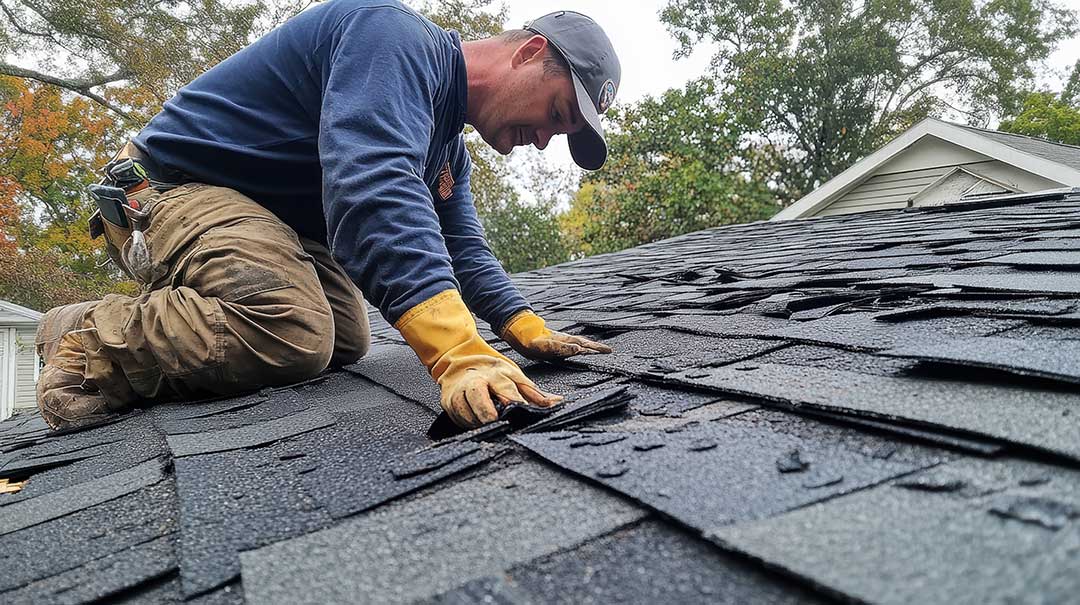
After a storm, inspect the roof from the ground with binoculars if available. Do not climb onto a wet, icy, or visibly damaged roof. A branch touching a power line creates an additional hazard and should not be handled by a homeowner.
Can leaves and small twigs cause roof leaks?
Leaves and twigs usually do not puncture sound shingles, but they can contribute to leaks by holding moisture in place and blocking drainage. Organic debris may collect in valleys, behind chimneys, along roof edges, or inside gutters.
When water cannot drain normally, it may back up beneath roofing materials or overflow onto fascia and siding. Repeated wetting can contribute to wood deterioration, mold growth, and interior water damage.
Debris is particularly troublesome on low-slope roof sections and in areas where branches overhang valleys or gutters. A roof may appear intact while water is entering through a blocked drainage path.
How should a homeowner respond after a limb hits the roof?
Safety comes first. A limb resting on a roof may be under tension, unstable, or connected to a larger broken branch. Moving it can cause additional damage or make it fall unexpectedly.
After a limb strike:
1. Keep people and pets away from the area below the branch.
2. Look for downed or damaged power lines without approaching them.
3. Check interior ceilings, attic areas, and upper walls for active leaking.
4. Place containers under minor leaks and move belongings away from affected areas.
5. Photograph visible damage from a safe location.
6. Avoid walking beneath hanging branches or sections of damaged roof.
7. Arrange for hazardous limbs and roof damage to be evaluated by appropriately trained personnel.
If the roof has a large opening, significant sagging, or water near electrical equipment, leave the affected area and treat the situation as urgent.
Should branches be trimmed away from a roof?
Keeping limbs away from the roof reduces rubbing, debris buildup, and the chance of direct impact. The appropriate clearance depends on tree species, mature growth, branch movement, and the height and shape of the roof.
Trimming should focus on more than the branches that are already touching the shingles. Dead limbs, cracked unions, decayed sections, and branches with weak attachments may present greater danger than healthy growth.
Large limbs near a roof, utility lines, or occupied areas can be hazardous to cut. Cutting from a ladder or using a chainsaw overhead creates serious fall and strike risks. Tree work should not be attempted where a branch is tangled with a power line or where its movement is difficult to predict.
Does a tree near a house always create a roofing problem?
No. A nearby tree is not automatically dangerous. Healthy trees can provide shade, reduce heat gain, and contribute to the character of residential neighborhoods. Risk depends on the tree’s condition, structure, distance from the building, soil stability, and exposure to wind.
Closer attention is warranted when a tree has:
- Dead or hanging branches
- Cavities, decay, or fungal growth
- Cracks in the trunk or major limbs
- Roots disturbed by construction or erosion
- A noticeable lean toward the house
- Branches resting against the roof
- Repeated history of dropping limbs
Regular observation from the ground, especially before winter and after severe storms, can reveal changes before they become roof damage. Keeping gutters clear and checking attic spaces after major weather also helps identify problems that are not obvious from outside.
