
What does a roof fire rating mean?
A roof fire rating describes how a roof assembly performs when exposed to fire coming from outside the building. It helps indicate how well the roof resists flame spread, burning brands, and ignition during a standardized test.
For most residential discussions, the terms Class A, Class B, and Class C refer to the roof covering or complete roof assembly’s external fire-exposure classification:
- Class A provides the highest level of protection against severe fire exposure.
- Class B provides moderate protection.
- Class C provides light protection.
A fire classification is not a guarantee that a roof cannot burn. It means the roof assembly performed to a particular standard under controlled testing conditions.
Is a roof covering the same as a roof assembly?
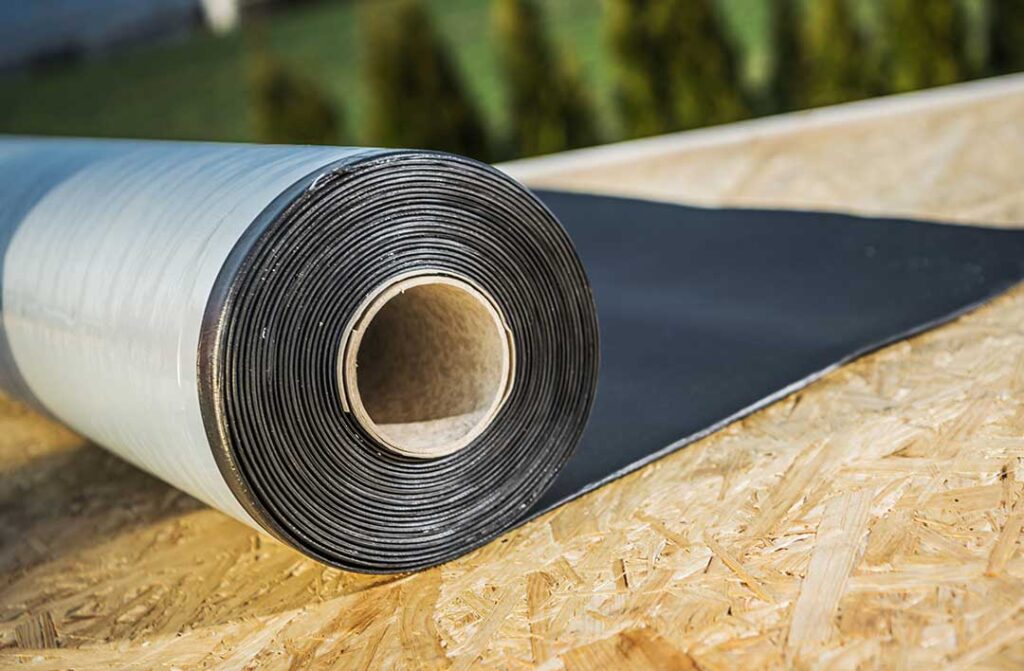
No. This distinction is often overlooked. A roof covering is the visible weatherproof layer, such as shingles, tile, slate, or metal panels. A roof assembly includes the covering along with other components beneath it, including underlayment, sheathing, insulation, and sometimes the structural deck.
The same type of roof covering may receive different fire classifications depending on how it is installed. The roof deck, underlayment, slope, fasteners, ventilation details, and other components can affect the tested result.
For that reason, a product label should not be interpreted separately from its installation instructions. A Class A designation generally applies to the tested assembly, not automatically to every possible combination of materials.
What is the difference between Class A, B, and C?
Class A
Class A is the strongest of the three commonly used roof-covering classifications. It is tested against severe external fire exposure and is designed to provide a high degree of protection to the roof deck.
Examples of materials or assemblies that may achieve Class A performance include:
- Certain asphalt shingle systems
- Some metal roofing assemblies
- Clay or concrete tile
- Slate
- Roof systems installed over noncombustible decks
- Other products tested and listed as Class A
The material alone does not establish the rating. A particular shingle or panel must be installed as part of the assembly described in its listing.
Class B
Class B roofs are tested against moderate fire exposure. They provide less protection than Class A systems but more than Class C systems.
Class B products may be appropriate where the applicable code permits them, though the required classification depends on the building type, roof location, lot-line distance, and other conditions.
Class C
Class C is tested against light fire exposure. It is the lowest of the three standard classifications and may be permitted in some situations, but it is not equivalent to Class A.
Older roofs, specialty wood products, and certain less fire-resistant assemblies may have Class C or nonclassified characteristics. A roof’s age does not by itself reveal its rating, so documentation or product markings may be needed.
Does a Class A roof make a house fireproof?
No. A Class A roof primarily addresses fire exposure from above or outside the building. It does not make the entire structure fire-resistant.
A home can still be threatened by:
- Fire entering through soffits, vents, or openings
- Burning debris collecting in gutters or roof valleys
- Flames spreading from an attached porch, shed, or neighboring structure
- Interior fires reaching the roof framing
- Damaged, improperly installed, or poorly maintained roofing materials
- Combustible vegetation or stored materials near the building
Class A protection is one part of a broader fire-safety system. Walls, windows, doors, attic insulation, penetrations, electrical systems, and smoke alarms also affect how a building responds to fire.
How are roof fire ratings tested?
Roof assemblies are commonly tested under procedures associated with ASTM E108 or UL 790. These tests evaluate the roof’s response to simulated external fire conditions, including flame exposure and burning wood brands.
Testing may examine whether the roof:
- Allows flame to spread across its surface
- Permits fire to penetrate to the roof deck
- Produces flaming materials or burning brands
- Slips, separates, or fails during exposure
- Continues to resist ignition after the initial test
These tests are controlled laboratory evaluations. They do not recreate every condition found during an actual house fire, including wind, heavy snow, ice, wet materials, aging, debris, or nearby burning structures.
What does New York’s building code require?
New York’s residential code addresses roof fire classification in Section R902. In general, Class A, B, or C roof assemblies are required where the code or local conditions call for them, including situations where the edge of the roof deck is less than 3 feet from a lot line.
The required classification can also depend on the building’s construction type and whether the project involves a new building, an addition, a reroofing project, or a repair. Code requirements may differ for residential and larger commercial structures.
The 2025 New York State Uniform Code became fully effective on December 31, 2025. Older buildings may have been built under earlier code editions, but replacement work must be evaluated under the requirements that apply to the current project.
Because lot lines and roof edges can be difficult to measure accurately, code questions are especially relevant for homes on narrow parcels, attached structures, additions, and buildings with roofs close to neighboring properties.
Does snow affect a roof’s fire rating?
Snow does not change a roof’s listed fire classification, but Ithaca’s winter conditions can affect roof performance and maintenance.
Freeze-thaw cycles, ice dams, wind-driven debris, and prolonged moisture can damage shingles, underlayment, flashing, and roof edges. Once an assembly is cracked, lifted, punctured, or altered, it may no longer perform as it did when tested.
Heavy snow can also conceal leaves, branches, damaged flashing, and debris that may contribute to fire spread during warmer weather. Keeping roof drainage areas clear and avoiding unapproved penetrations helps preserve the roof system’s intended performance.
What should homeowners check on roofing paperwork?
Useful information may appear on:
- Product packaging or bundle labels
- Manufacturer installation instructions
- A roofing product’s listing or classification documentation
- Building permit records
- Previous reroofing invoices or project specifications
- Documents for roof-mounted solar equipment
Look for wording such as “Class A roof assembly” or a listing that identifies the complete system. A statement that a product is “fire resistant” is less specific than a tested classification.
Solar panels and building-integrated photovoltaic products also have separate fire-classification requirements. The roof covering and the photovoltaic system should be evaluated as installed, rather than assuming that one automatically establishes the rating for the other.
What are common misunderstandings about roof fire ratings?
One common mistake is assuming that all metal roofs are automatically Class A. Many metal systems can achieve Class A performance, but the rating depends on the complete assembly and installation details.
Another misconception is that a Class A roof protects against every type of fire. It is designed for external fire exposure, not to stop an interior fire or eliminate hazards around the home.
It is also risky to assume that replacing only the visible shingles preserves the original rating. A change in underlayment, ventilation, deck material, or fastening method may create a different assembly.
For homes with older roofing, unusual materials, close roof-to-lot-line distances, or planned solar installation, the most reliable information usually comes from the product listing and the code requirements applicable to the specific project.
