
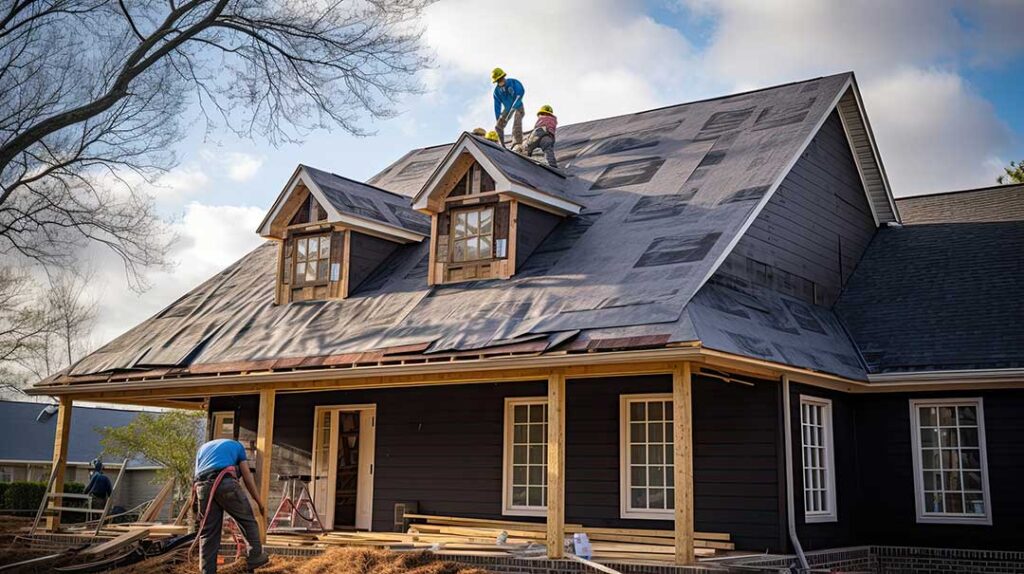
What is roof underlayment?
Roof underlayment is a protective layer installed between the roof deck and the outer roofing material. It helps limit water intrusion, shields the deck from weather during installation, and provides an additional barrier beneath shingles, metal panels, or other roof coverings.
The roof covering receives most of the attention, but underlayment is a key part of the roof assembly. If wind-driven rain, melting snow, or ice-dam runoff gets beneath the outer material, the underlayment is often the layer that helps keep moisture away from the wood deck and interior of the home.
In Ithaca, NY, this layer matters because roofs must handle repeated freeze-thaw cycles, wet snow, rain, summer heat, and occasional wind. Those conditions can expose weaknesses that may not appear during a short period of dry weather.
What does roof underlayment do?
Underlayment serves several purposes beyond simply covering the roof deck.
- It provides temporary weather protection before the finished roof covering is installed.
- It helps manage small amounts of water that get beneath shingles or panels.
- It reduces direct exposure of the roof deck to moisture.
- It can help protect against wind-driven rain and snow.
- It creates a smoother separation between the roof deck and the outer roofing material.
- Certain products add improved resistance near roof edges, valleys, penetrations, and other vulnerable areas.
Underlayment is not intended to make a roof permanently waterproof by itself. It works as part of a complete system that also includes the roof deck, flashing, drainage features, ventilation, and outer covering.
What are the main types of roof underlayment?
The two broad categories are asphalt-saturated felt and synthetic underlayment. A third product, self-adhering membrane, is commonly used in areas that need extra protection.
Asphalt-saturated felt
Often called roofing felt, this traditional material is made from a fibrous base saturated with asphalt. It has been used for decades and remains familiar in many roofing assemblies.
Felt can provide dependable basic protection when properly installed, but it may tear, wrinkle, or absorb moisture more readily than newer synthetic products. Long exposure before the roof covering is installed can also reduce its effectiveness.
Synthetic underlayment
Synthetic underlayment is made from woven or nonwoven polymer materials. It is generally lighter than felt, easier to handle, and more resistant to tearing and moisture absorption.
Some synthetic products are designed to remain exposed for a limited period during construction. That does not mean they should be treated as a finished roof. Exposure limits vary by product, and prolonged sunlight, wind, or foot traffic can still cause damage.
Self-adhering membrane
Self-adhering membranes use a bonded backing that sticks to the roof deck. They are commonly used in areas where water is more likely to collect or move laterally, such as eaves, valleys, wall intersections, and around roof penetrations.
These membranes can be especially useful in cold-weather regions because they may provide added protection in areas affected by ice dams. Correct installation still matters: the deck must be suitable, seams must be handled properly, and the material must be compatible with the rest of the roof system.
Is underlayment the same as an ice-and-water barrier?
No. An ice-and-water barrier is a specialized type of self-adhering membrane, while general underlayment may be felt or synthetic material.
The terms are sometimes used interchangeably in casual conversation, but they describe different roles. A roof may use standard underlayment across most of the deck and a more water-resistant membrane in selected areas.
Ice-and-water protection is commonly associated with roof edges and valleys, where melting snow can back up beneath shingles. It may also be used around chimneys, skylights, dormers, and other locations where water movement is more complicated.
The exact placement depends on the roof design, product instructions, and applicable building requirements. A membrane is not a substitute for proper flashing or adequate attic insulation and ventilation.
Where is underlayment most important?
Underlayment is valuable across the entire roof deck, but some locations deserve particular attention because they face greater moisture risk.
Eaves
The lower edges of a roof can be affected by ice dams. Snow melts higher on the roof, travels downward, and refreezes near a colder overhang. Water can then work beneath the roof covering.
Valleys

Roof valleys collect runoff from two roof planes. They carry more water than many other sections and require careful installation of both underlayment and flashing.
Roof penetrations
Plumbing vents, chimneys, skylights, dormers, and similar features interrupt the roof surface. Each interruption creates a potential pathway for water if the surrounding materials are not integrated correctly.
Wall and roof intersections
Where a sloped roof meets a vertical wall, water must be directed away through layered flashing and underlayment details. These areas can be difficult to inspect once the finished roof is installed.
Can roof underlayment prevent leaks?
Underlayment can reduce the chance and severity of leaks, but it cannot compensate for every roofing problem. Leaks may still occur because of damaged shingles, failed flashing, exposed fasteners, clogged drainage paths, poor ventilation, deteriorated roof decking, or installation errors.
A common misconception is that a roof with intact underlayment cannot leak. In reality, water may enter through a defect and travel along the deck or framing before becoming visible indoors. The location of an interior stain may not be directly below the exterior source.
Underlayment also ages. Heat, moisture, foot traffic, and repeated movement can affect its condition. If it has been exposed for an extended period, it may no longer perform as intended even if it appears mostly intact.
What should homeowners look for during a roof replacement?
A homeowner does not need to identify every roofing material, but several questions can clarify what is being installed.
Ask which type of underlayment is planned, where enhanced water protection will be used, and how the material will be secured. It is also reasonable to ask how the installation will address valleys, eaves, roof penetrations, and wall intersections.
The roof deck should be inspected before new underlayment is installed. Soft, swollen, stained, or deteriorated decking may need attention because underlayment cannot restore damaged wood.
It is also useful to understand how long the underlayment is designed to remain exposed. Weather delays are possible in any roofing project, particularly during wet or cold seasons, but exposure limits should not be ignored.
How does local weather affect underlayment?
Seasonal conditions in Ithaca can place repeated stress on roofing materials. Freeze-thaw cycles can move or loosen outer roof coverings. Snow and ice can create temporary water backup. Heavy rain tests drainage paths, while wind can lift or shift damaged roofing materials.
Attic conditions matter as well. Warm, poorly ventilated attic air can contribute to snowmelt and ice dams, while inadequate insulation may allow heat to escape through the roof assembly. Underlayment can help limit damage when water backs up, but it does not solve the underlying heat-loss or ventilation problem.
For older homes, the roof design may also include multiple layers of previous roofing, irregular decking, additions, or repaired sections. These conditions can affect how new underlayment is installed and where moisture risks are greatest.
When should underlayment be inspected?
Underlayment is usually hidden, so it is most readily evaluated during roof replacement, repair work that exposes the deck, or an inspection following a leak. Warning signs that justify closer evaluation include recurring ceiling stains, damp attic sheathing, musty odors, lifted shingles, visible roof-deck damage, and evidence of water around valleys or roof penetrations.
After a major storm or prolonged snow event, visible roof damage should be addressed promptly. Water entering the attic or living space can damage insulation, framing, ceilings, and electrical components even when the exterior problem looks small.
A sound roof depends on layers working together. Underlayment is one of the less visible layers, but its condition and installation can strongly influence how well the roof handles the wet, snowy, and changeable weather common to the region.
