
Which roofing materials are the most durable?
The most durable residential roofing materials are usually natural slate, high-quality metal roofing, clay or concrete tile, and well-made composite roofing designed to imitate slate or wood. Their actual service life depends on roof design, installation quality, ventilation, flashing, drainage, and exposure to weather.
For homes in Ithaca, durability also means handling repeated freezing and thawing, winter snow, ice formation, wind, wet leaves, and summer moisture. A material that performs well in a dry climate may require different detailing in this region.
No roofing material lasts indefinitely without maintenance. Even a long-lasting roof can develop leaks if flashing fails, fasteners loosen, or water becomes trapped beneath the covering.
How does natural slate compare with other roofing materials?
Natural slate is often considered the longest-lasting residential roofing material. A properly selected and installed slate roof can remain serviceable for many decades, and some slate roofs last a century or more.
Slate resists ultraviolet light, rot, insects, and ordinary moisture exposure. It also has a distinctive appearance that suits many older homes and traditional architectural styles. Its main disadvantages are weight, cost, and repair complexity.
A slate roof requires a structure capable of supporting the material. Some older homes may need structural review before slate is added or replaced. Slate can also crack if walked on improperly or struck by falling branches. The supporting components matter just as much as the slate itself: underlayment, flashing, fasteners, battens, and roof decking can fail before the stone does.
In a snowy climate, slate installation must account for valleys, eaves, penetrations, and areas where snow may slide. A durable slate roof is a complete roof assembly, not simply a collection of stone pieces.
Is metal roofing durable in winter weather?
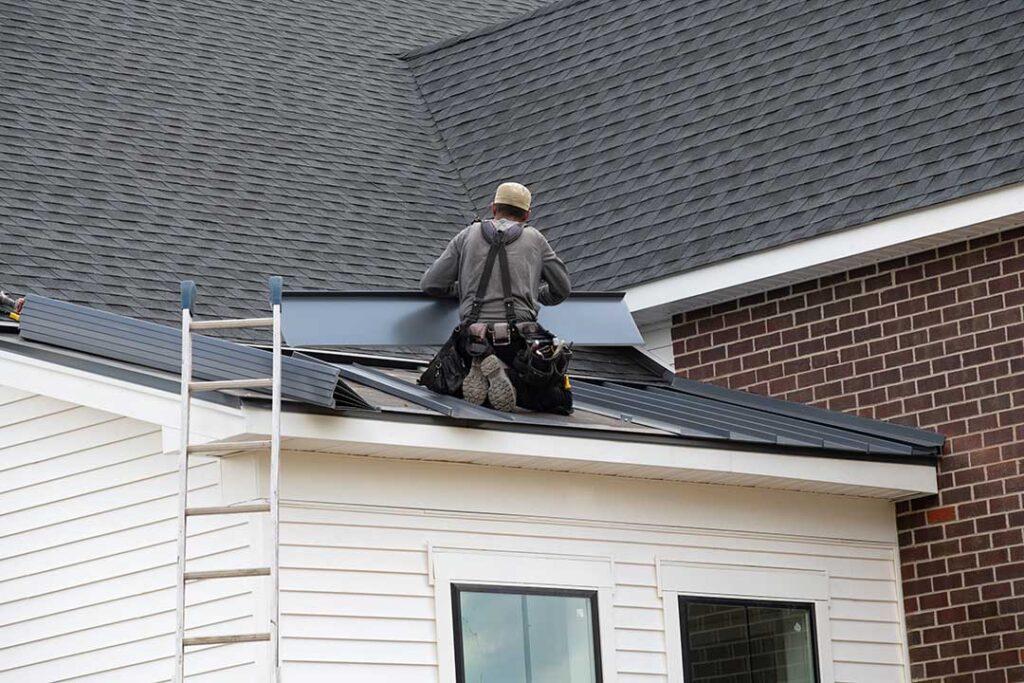
Metal roofing is among the most practical long-life choices for many homes. Standing-seam metal systems and properly installed metal shingles can last several decades, with service life varying according to the metal, coating, roof exposure, and installation details.
Metal resists rot, insects, and fire. It sheds snow readily on steeper slopes, although snow guards may be needed above entrances, walkways, lower roofs, or other areas where sliding snow could create a hazard. Metal can also tolerate freeze-thaw conditions well when its seams, fasteners, and flashing are correctly designed.
Potential concerns include denting from large hail or falling branches, expansion and contraction, noise during rain, and corrosion where dissimilar metals come into contact. Improperly installed exposed fasteners may loosen or allow water entry over time.
A metal roof should not be judged only by the panel material. The details around chimneys, skylights, valleys, wall intersections, and roof edges often determine whether the system remains watertight.
Are clay and concrete tiles suitable for this area?
Clay and concrete tiles can be highly durable, with many systems lasting several decades. They resist fire, insects, and sunlight, and they are less vulnerable to the surface aging commonly seen on asphalt shingles.
Their major limitation is weight. The roof framing must be designed or verified to support the tile system, especially when replacing a lighter roof covering. Individual tiles can also crack from impact, poor handling, or severe freeze-thaw exposure. Water can enter beneath the tiles if underlayment or flashing deteriorates, even when most visible tiles appear intact.
Clay tile generally has strong resistance to weathering, while concrete tile may change color or develop surface wear over time. Both materials require careful attention to slope, underlayment, ventilation, and drainage. On homes with complex roof shapes, valleys and penetrations may require more maintenance than the field of the roof.
Tile can work well where the structure and roof geometry are appropriate, but it is not automatically the most suitable choice simply because it has a long potential lifespan.
What about composite or synthetic roofing?
Composite roofing products are made from materials such as polymers, recycled content, fiberglass, or layered blends. Some are manufactured to resemble slate or wood shakes while weighing substantially less than natural stone or tile.
The better products can offer good resistance to impact, moisture, insects, and splitting. They may be useful where a homeowner wants a long-life appearance without adding the full weight of slate or tile. Their expected service life varies widely, so product specifications and installation requirements deserve close attention.
Composite materials are not all alike. Some are intended for ordinary residential service, while others are engineered for greater impact resistance or severe weather exposure. Color stability, fastener requirements, expansion behavior, and repairability should be evaluated as part of the roof system.
Because the long-term history of newer products may be shorter than that of slate or metal, published durability claims should be treated as estimates rather than guarantees.
Are asphalt shingles durable enough for Ithaca homes?
Architectural asphalt shingles are not usually the longest-lasting roofing material, but they remain a practical choice for many homes. Higher-quality shingles can provide dependable service for roughly two to three decades when installed over a sound roof deck with proper ventilation and flashing.
Their advantages include lower weight, broad compatibility with residential roof framing, simpler repairs, and availability in many colors and profiles. Their limitations include gradual loss of granules, curling or cracking, wind damage, and reduced performance when moisture remains trapped beneath them.
For local conditions, important features include:
- A shingle rating appropriate for the roof’s wind exposure
- Proper underlayment and ice-barrier detailing where required
- Adequate attic ventilation
- Correct installation around valleys, chimneys, walls, and roof penetrations
- Reliable drainage from gutters and roof slopes
- Protection from prolonged contact with wet leaves and debris
A premium asphalt shingle does not become a slate roof simply because its warranty period is longer. Product warranties also commonly depend on installation procedures, ventilation, maintenance, and other conditions.
What makes a roof material last longer?
Material selection is only one part of durability. The roof assembly and the building conditions beneath it can shorten or extend service life.
The most influential factors include:
- Roof slope: Steeper roofs generally shed rain and snow more effectively.
- Flashing: Valleys, chimneys, skylights, walls, and plumbing penetrations need durable water-shedding details.
- Ventilation: Excess heat and moisture in the attic can damage roof sheathing and accelerate aging.
- Drainage: Clogged gutters and poorly directed downspouts can keep roof edges wet and encourage ice-related problems.
- Fasteners: Corrosion-resistant fasteners and compatible metals reduce premature failure.
- Roof structure: Heavy coverings require adequate framing and sound decking.
- Maintenance: Branches, moss, leaves, and damaged flashing should not be ignored.
- Workmanship: Small installation errors can cause leaks long before the surface material reaches its expected life.
In Ithaca, recurring snow and ice make the roof edge especially important. Ice can form along colder eaves, while warmer upper roof areas shed meltwater toward those colder sections. Proper underlayment, insulation, ventilation, and drainage details help reduce the risk of water backing up beneath the roof covering.
Which durable roofing material is the best choice?
There is no single best material for every home. Slate generally offers the longest potential life but adds substantial weight and requires specialized detailing. Metal provides a strong balance of longevity, lower maintenance, and snow performance. Clay or concrete tile can last a long time where the structure can support it. Composite roofing can offer lighter-weight alternatives with varied durability. Asphalt remains the most broadly adaptable option, although its service life is usually shorter.
The right comparison should consider the existing roof structure, slope, snow and ice exposure, ventilation, flashing condition, maintenance expectations, and the difficulty of future repairs. A durable roof is not defined only by how long its visible covering may last; it is defined by how well the entire assembly manages water, weather, movement, and seasonal stress.
