
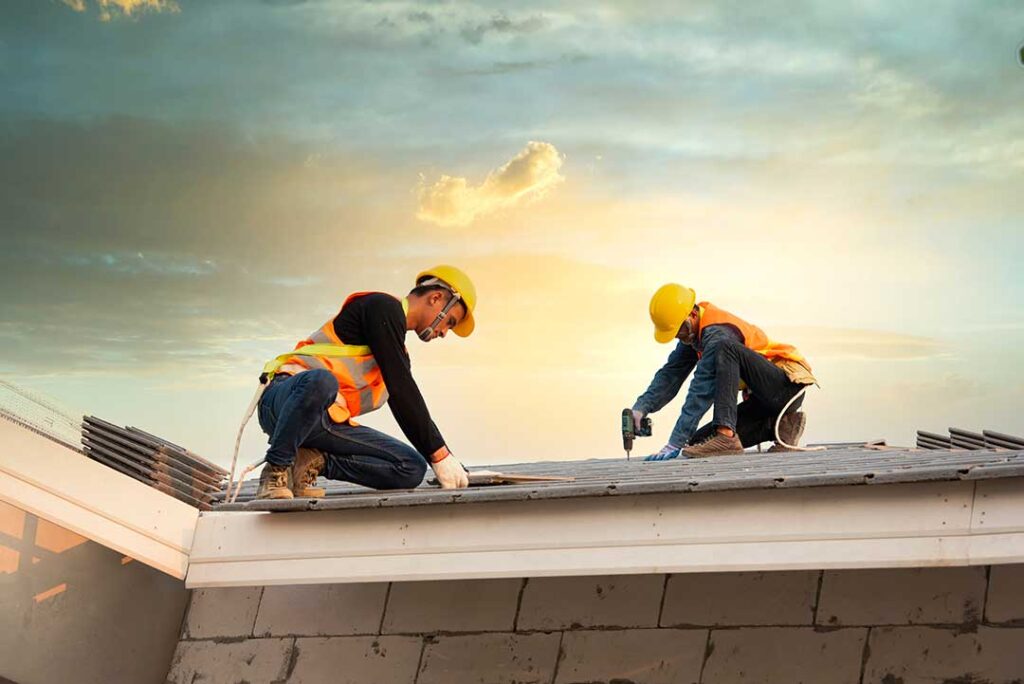
Is it safe for a homeowner to walk on the roof?
Roof access is not automatically safe, even for a one-story house. Sloped roofing, damp shingles, loose granules, hidden damage, and unprotected edges can create serious fall hazards. In Ithaca, NY, seasonal rain, snow, ice, and freeze-thaw conditions can make roof surfaces unpredictable for much of the year.
Before climbing, ask whether the task truly requires roof access. Many routine checks can be completed from the ground with binoculars, a camera pole, or a view from an upper-floor window. Gutter cleaning, chimney inspection, and repairs near the roof edge generally involve more risk than homeowners expect.
Avoid walking on the roof if:
- The surface is wet, icy, snow-covered, mossy, or visibly damaged.
- Wind is strong enough to affect balance or move a ladder.
- The roof is steep, fragile, unusually high, or difficult to reach.
- You are taking medication, feeling unwell, or have a condition that affects balance.
- You do not have properly rated fall-protection equipment and know how to use it.
A roof should never be treated like an ordinary walking surface. Even dry asphalt shingles can be slippery, and roofing materials may break or shift underfoot.
How should a ladder be set up for roof access?
A ladder needs a firm, level base and a stable upper support. Set an extension ladder at approximately a 75-degree angle, commonly described as placing the base about one foot away from the wall for every four feet of ladder height. The ladder should extend above the roof edge sufficiently to provide a secure handhold when stepping on or off, rather than requiring a sideways jump or awkward reach.
Inspect the ladder before use. Look for:
- Bent rails, cracked steps, loose fasteners, or damaged feet.
- Oil, mud, ice, paint, or other substances that could reduce traction.
- Missing locks, spreaders, braces, or other safety components.
- A duty rating that is too low for the user, clothing, tools, and materials.
Place the feet on solid ground, not on loose soil, snow, ice, wet leaves, boxes, bricks, or improvised supports. Do not rest the ladder against gutters, downspouts, or weak trim. These parts are not designed to support a climbing ladder or a person’s weight.
Maintain three points of contact while climbing: two hands and one foot, or two feet and one hand. Carry tools in a belt or hoist them after climbing. Holding materials while ascending can pull the body off balance.
What should homeowners avoid doing on a ladder?
Overreaching is one of the most common ladder mistakes. If the belt buckle moves beyond the ladder’s side rails, climb down and reposition the ladder. Do not lean, twist, bounce, or attempt to move the ladder while standing on it.
Use the correct ladder for the task. A short step ladder placed on a raised surface is unstable, and two ladders should never be tied together to gain height. Do not stand on the top cap or the highest step that the manufacturer marks as unsafe.
Keep the area below clear. Children, pets, visitors, and vehicles should not pass beneath a ladder. If the work area is near a walkway or driveway, another adult should help monitor the space and prevent accidental contact.
Power lines require special caution. Keep ladders, tools, and your body well away from overhead electrical conductors. A ladder does not need to touch a power line to create a dangerous electrical path.
Does a harness make roof work safe?
A harness alone does not prevent a fall. Safe fall protection requires a compatible system that includes an appropriate anchor, connecting equipment, clearance below the work area, and a plan for rescue if someone falls.
Roof anchors must be designed and installed for fall protection. A random chimney, vent, plumbing pipe, ridge cap, or exposed structural member may not be strong enough. Improperly placed anchors can also create a swing-fall hazard, in which a person falls outward and strikes a wall, roof edge, or nearby object.
For residential construction, OSHA generally requires fall protection for workers exposed to falls of six feet or more above a lower level, with specific rules and permitted alternatives depending on the work. Homeowners performing occasional maintenance may not have the training or equipment needed to apply those systems correctly.
If a task requires a harness, roof anchor, rope system, or work near an unprotected edge, it is usually beyond ordinary do-it-yourself maintenance. The safest choice may be to avoid entering the roof area rather than attempting to assemble an improvised system.
How do snow, ice, and Ithaca weather affect roof safety?
Snow and ice can turn a manageable roof into a high-risk surface. Snow may hide weak decking, skylights, roof edges, branches, and uneven areas. Ice can form beneath a thin layer of snow or along eaves where melting and refreezing occur.
After a storm, inspect from the ground first. Watch for:
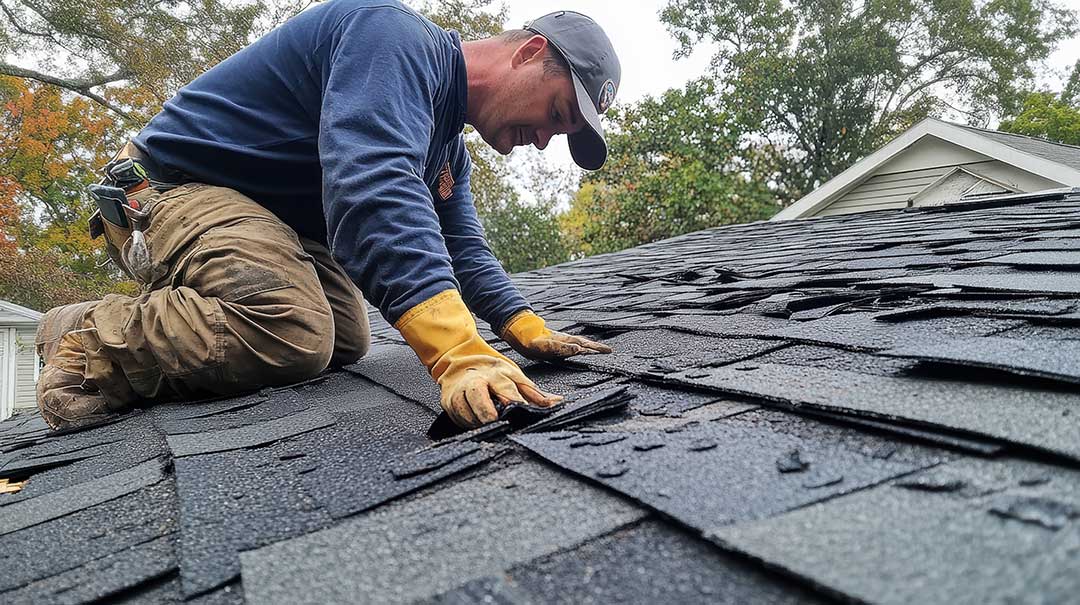
- Heavy snow collecting unevenly on one roof section.
- Sagging roof lines, bowed ceilings, or doors that suddenly stick.
- Ice buildup along eaves or around roof drainage paths.
- Large icicles over entrances, walkways, or parked vehicles.
- Snow sliding from a metal roof or steep roof plane.
Do not climb onto a snowy or icy roof to remove snow with household tools. Pulling or pushing snow from an elevated position can cause a slide, loss of balance, or damage to roofing materials. Snow and ice falling from a roof can also injure people below.
During summer, heat can create a different hazard. Dark roofing materials may become hot enough to cause burns, while strong sun, glare, and dehydration can affect judgment. Plan any ground-level inspection for cooler conditions and take breaks rather than working while overheated.
How can a roof be inspected without climbing?
Many warning signs are visible from the ground. Use binoculars to check for missing, lifted, curled, cracked, or heavily worn shingles. Look for damaged flashing around chimneys, skylights, and roof-wall intersections. Check whether gutters contain unusual amounts of shingle granules or whether water is overflowing during rain.
Inside the house, look in attics and upper-floor rooms for:
- Water stains or damp insulation.
- Daylight visible through the roof deck.
- Musty odors or signs of mold.
- Sagging ceiling areas.
- Rusted fasteners or wet wood near roof penetrations.
A camera mounted on an extension pole can provide a closer view without placing a person on the roof. Never lean out of an upper-floor window or over a porch edge to obtain a better angle.
When should roof work stop immediately?
Stop and move to a safe location if the ladder shifts, the roof surface becomes wet, wind increases, or a warning sign of structural damage appears. Leave the area if you hear cracking, see a sagging roof plane, encounter exposed wiring, or discover a skylight that is difficult to distinguish from the surrounding roof.
Roof damage after a storm can involve unstable materials that are not safe to touch. Keep people away from the area below until falling debris, electrical hazards, or structural concerns have been addressed.
Routine observation from the ground is often enough to identify a developing problem. Climbing should be reserved for situations where the access method, weather, surface condition, and fall-protection plan are all clearly suitable.
