
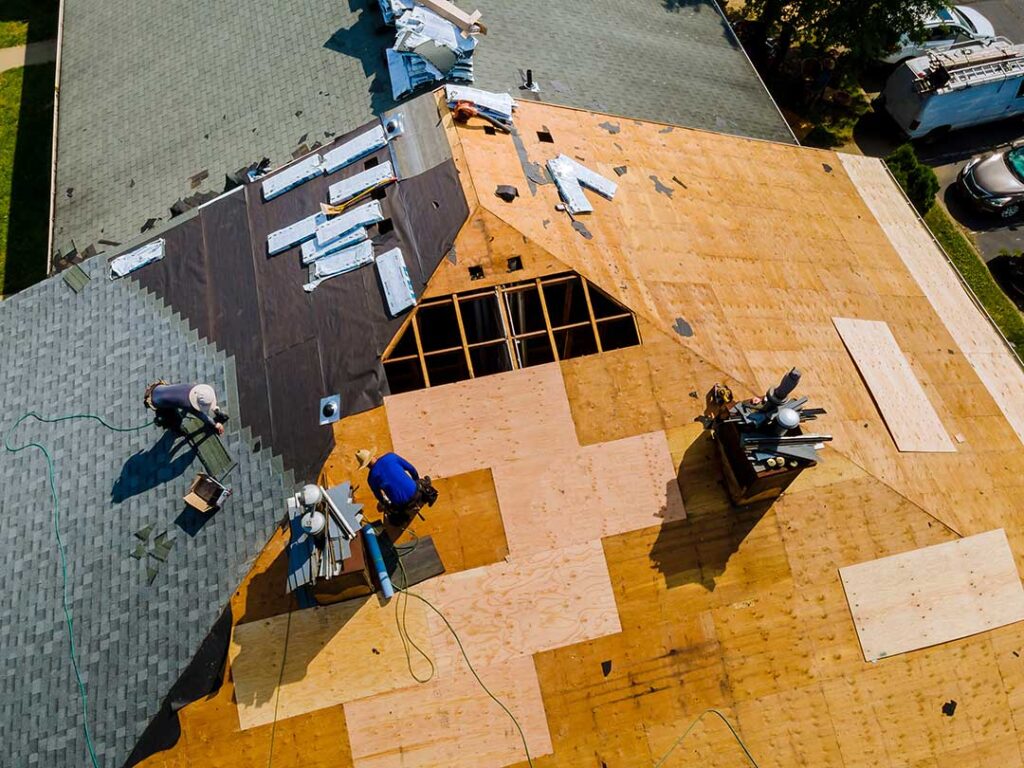
Roof cleaning is usually a maintenance task, not a cosmetic project. Removing leaves, moss, algae, and small branches can help protect roofing materials, gutters, and drainage paths, but the work becomes dangerous quickly when a roof is wet, steep, icy, or difficult to access.
For homes in Ithaca, NY, seasonal moisture, shade, falling leaves, and winter weather can all contribute to roof debris. Safe cleaning starts with deciding whether the roof can be reached from the ground or ladder without stepping onto the roof at all.
Is it safe to clean a roof yourself?
It may be safe to handle light debris from the ground or from a properly positioned ladder, but walking on a roof creates fall and surface-damage risks. Anyone who feels unsteady, lacks appropriate fall protection, or cannot clearly identify the roof’s condition should not climb onto it.
Avoid roof access when:
- The surface is wet, frosty, icy, or covered with snow
- The roof is steep, unusually high, or difficult to reach
- Shingles are brittle, curling, cracked, or loose
- Moss has made the surface slippery
- Power lines, tree limbs, or other obstacles are nearby
- Wind, rain, or poor visibility makes footing uncertain
- A ladder cannot rest on level, stable ground
A roof does not need to look severely damaged to be unsafe. Granules can loosen underfoot, flashing may shift, and hidden weak areas can give way. In many cases, cleaning from the ground and clearing gutters is safer than attempting a full roof wash.
What should be removed from a roof?
The safest cleaning method depends on what is present. Loose leaves, pine needles, small twigs, and light dirt can often be removed without harsh chemicals or aggressive scrubbing.
Moss, algae, and lichen require more caution. Moss can hold moisture against roofing materials and may lift shingle edges as it grows. Algae can create dark streaks, especially on shaded slopes. Lichen attaches more firmly and should not be scraped forcefully from shingles.
Do not pull established moss by hand. Removing it aggressively can tear the protective surface of asphalt shingles. A better approach is to loosen growth gradually with a product specifically labeled for the roofing material, then allow weather and rainfall to carry away dead material over time.
Which tools are safest?
Use tools that remove debris without cutting, scraping, or blasting the roof surface.
Useful equipment may include:
- A roof rake designed for the type of roof and used from the ground
- A soft-bristled brush for limited, reachable areas
- A garden hose with a gentle spray setting
- Work gloves and eye protection
- A sturdy extension ladder with slip-resistant feet
- A ladder stabilizer or stand-off device
- Non-slip footwear when climbing a ladder
- A bucket or debris bag for gutter waste
Avoid pressure washers, stiff wire brushes, metal scrapers, and leaf blowers used at close range. High-pressure water can force moisture beneath shingles, remove protective granules, and damage flashing or sealants. A blower can also send debris onto neighboring property, walkways, vehicles, or people below.
A roof rake should be pulled gently rather than dragged with force. Stop if the tool catches on shingle edges, vents, flashing, or roof-mounted equipment.
How should a ladder be used?
Many roof-cleaning injuries happen during ladder setup or while stepping between the ladder and roof. Set the ladder on firm, level ground and keep the base clear of mud, ice, leaves, and loose gravel.
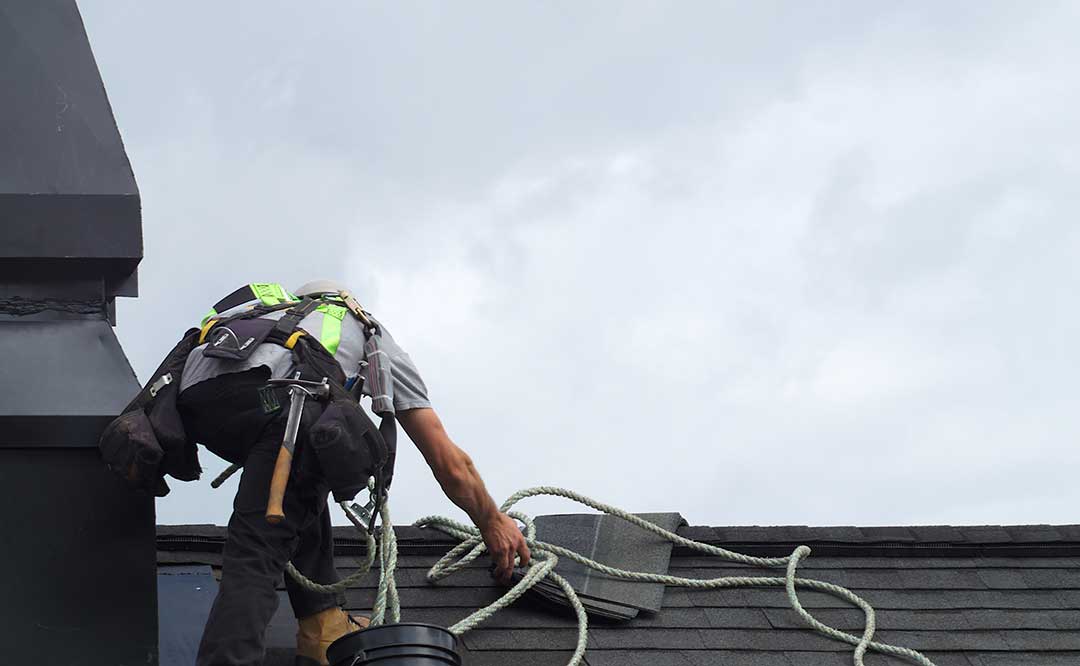
The ladder should extend above the roof edge enough to provide a secure handhold. Keep three points of contact while climbing: two hands and one foot, or two feet and one hand. Do not carry bulky tools while climbing. Use a tool belt, hoist line, or have another person pass equipment after the ladder is secure.
Never place a ladder against gutters alone. Gutters are not designed to support a ladder or a person’s full weight. Avoid leaning the ladder against fragile trim, skylights, vent pipes, or other components that could crack or shift.
A second person should be present whenever ladder work is being performed. That person can help stabilize the ladder, keep people away from the work area, and respond if conditions change.
How can moss and algae be treated without damaging shingles?
Moss and algae should be treated gently and according to the roofing material’s care instructions. A roof-safe cleaning solution may be applied with a low-pressure sprayer, but it should never be mixed with other cleaners.
Do not combine chlorine bleach, ammonia, acids, or household cleaning products. Chemical mixtures can create toxic fumes, damage roofing materials, and harm plants or soil below. Even a single cleaner can stain siding, corrode metal, or injure shrubs if runoff is not controlled.
Before applying any treatment:
- Protect or rinse nearby plants with clean water
- Close windows and doors near the work area
- Keep children and pets away
- Prevent runoff from entering ponds, gardens, or storm drains
- Test a small, inconspicuous area first
- Follow the product label for dilution, contact time, and rinsing
Never scrub algae or moss aggressively. The goal is to reduce growth without removing the roof’s protective coating.
What should be done with gutters and downspouts?
Roof cleaning is incomplete if gutters and downspouts remain blocked. Leaves and moss that wash from the roof can collect at gutter outlets, causing water to spill over the edge or back up beneath roof components.
Clean gutters from a stable ladder rather than standing on the roof. Remove compacted debris by hand while wearing gloves, then flush the gutter with a gentle stream of water. Check that each downspout carries water away from the foundation and does not discharge onto a walkway, basement stairwell, or area where winter ice could form.
In Ithaca, fall leaf buildup and freeze-thaw cycles can make gutter maintenance especially important. Water trapped in clogged gutters can freeze, expand, and add weight to the system. Repeated overflow may also contribute to wet fascia, stained siding, and basement moisture.
What common cleaning methods should be avoided?
Several popular shortcuts can cause more harm than the original roof growth.
Pressure washing is one of the most damaging options for many asphalt-shingle roofs. The force can strip granules, expose the underlying mat, and shorten the roof’s service life. Scraping moss with a shovel or garden hoe can tear shingles and disturb flashing. Walking back and forth across the roof can create damage that is not visible until the next heavy rain.
Avoid cleaning during hot, sunny conditions if a chemical solution may dry before the label allows. Also avoid working before rain if runoff cannot be controlled. Wet roofs become slippery, and cleaning agents may spread onto plants, siding, or paved areas.
When should roof cleaning stop?
Stop immediately if shingles move, crack, or shed an unusual amount of granules; if flashing lifts; or if the roof feels soft beneath a foot or tool. A strong chemical odor, uncontrolled runoff, nearby electrical hazard, or sudden weather change is also a reason to end the task.
Some conditions require specialized safety equipment or inspection rather than ordinary cleaning. These include major moss coverage, structural sagging, suspected leaks, damaged roofing, chimney-area problems, skylights, and roofs with limited access. A qualified roofing professional is appropriate when the risk cannot be controlled with ordinary ladder and ground-level methods.
After cleaning, inspect the ground for fallen shingle granules, damaged plants, chemical residue, and loose debris. Check the attic or upper ceilings after the next rainfall for signs of leakage, such as damp insulation, dark stains, or a musty odor. Safe roof maintenance is not measured by how clean the roof looks, but by whether the roof, home, people, and surrounding property remain protected.
