

Hanging lights along a roofline can make a home look welcoming, but the work involves fall, electrical, weather, and roof-damage risks. In Ithaca, NY, cold temperatures, wet surfaces, wind, snow, and freeze-thaw conditions make timing and installation methods especially important.
The safest approach is to decorate from stable ground or a properly positioned ladder whenever possible. Avoid walking on the roof unless the surface is dry, the slope is manageable, and appropriate fall-protection equipment and experience are available.
Is it safe to walk on a roof to hang lights?
Often, no. A roof that appears dry from the ground may have dew, frost, algae, loose granules, or damp shingles that become slippery underfoot. Asphalt shingles can also be damaged by repeated foot traffic, particularly in cold weather when they are less flexible.
Do not climb onto the roof if it has:
- Snow, ice, frost, or rain on the surface
- A steep pitch or fragile roofing material
- Loose, curling, cracked, or missing shingles
- Nearby overhead electrical lines
- A high edge without suitable fall protection
- Strong wind or poor visibility
For many one-story homes, lights can be installed from the ground with an extension pole or from a securely placed ladder. If the design requires extensive roof access, the risk may outweigh the decorative benefit.
What should be checked before hanging roofline lights?
Inspect the roof edge, gutters, fascia, and light strings before starting. Look for loose gutters, damaged shingles, exposed fasteners, deteriorated trim, and areas where water may already be entering the building.
Light strings should be intended for outdoor use and should not have:
- Frayed or exposed wires
- Cracked sockets
- Loose connections
- Missing or damaged bulbs
- Brittle insulation
- Signs of overheating or melting
Replace damaged strings rather than wrapping or taping over the problem. Outdoor lighting should be connected to a ground-fault circuit interrupter, commonly called a GFCI, because moisture can increase the risk of electric shock.
The outdoor receptacle should have a weather-resistant cover that can protect the connection while a cord is plugged in. Keep plug connections off the ground and away from locations where melting snow or roof runoff can collect.
What is the safest way to attach lights to a roofline?
Use removable clips designed for outdoor light strings. Depending on the roof design, clips may attach to gutters, fascia, eaves, or approved edges without puncturing the roof.
Avoid attaching lights with:
- Nails or screws driven through shingles
- Staples that can cut or crush insulation
- Tacks or sharp metal fasteners
- Adhesives that may strip paint or damage siding
- Clips that pinch the wire tightly
- Objects placed inside gutters
A roof penetration can create a path for water, even if the opening appears small. Fasteners can also interfere with flashing, underlayment, or the edge of the roofing system.
Place clips at regular intervals so the cord does not sag heavily between attachment points. Leave enough slack for normal movement, but do not allow strings to hang where they can scrape against shingles, gutters, tree branches, or sharp trim.
How should a ladder be used for this work?
Set the ladder on firm, level ground away from snow piles, mud, wet leaves, and uneven landscaping. Never place a ladder on boxes, buckets, loose boards, or other materials to gain height.
For an extension ladder:
- Follow the manufacturer’s setup instructions.
- Use a roughly one-to-four climbing angle: the base moves out about one foot for every four feet of ladder height.
- Secure the ladder so it cannot slide or shift.
- Extend the rails above the roof edge if the ladder is being used for roof access.
- Keep the area below clear of children, pets, and passing people.
- Face the ladder and maintain three points of contact while climbing.
- Use a rope or tool belt to raise light strings instead of carrying them in your hands.
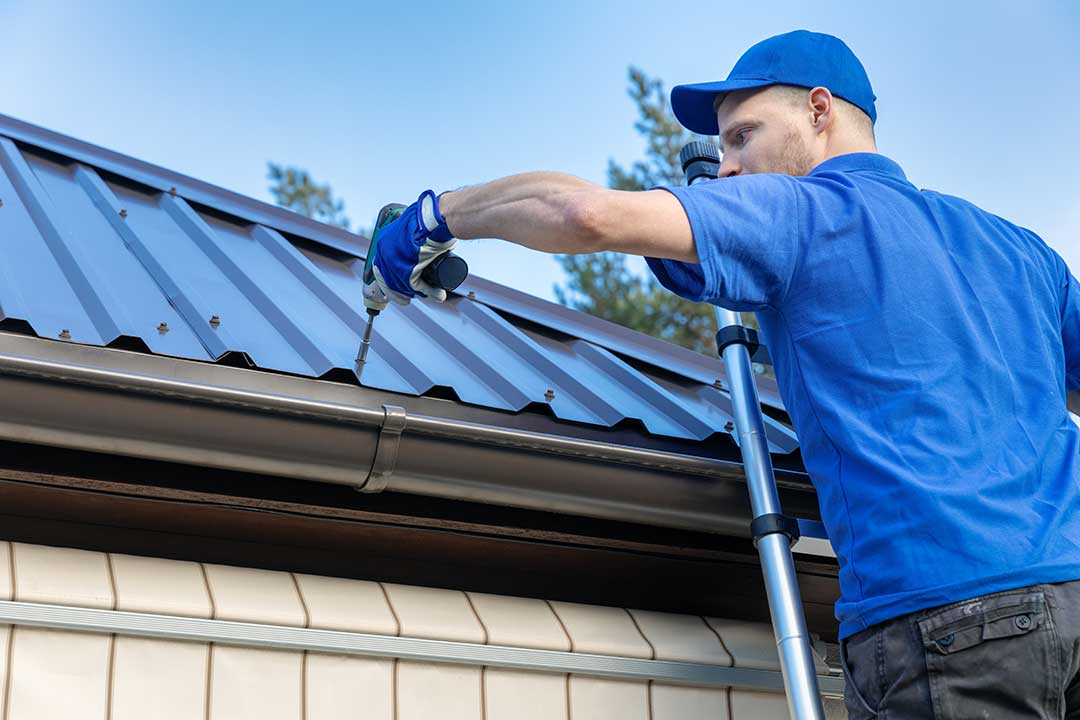
Do not stand on the top step of a stepladder or on the highest usable rungs of an extension ladder. Avoid leaning sideways to reach the next section. Climb down and reposition the ladder instead.
A nonconductive ladder is the safer choice around electrical equipment, but no ladder should be used near overhead power lines. Look carefully above and around the work area before moving or extending it.
What weather is too risky?
Wet, icy, snowy, or windy conditions are poor choices for roofline lighting. Even light wind can move a ladder, pull a string from its clips, or make it difficult to maintain balance while handling long sections of cord.
In the local winter climate, a warm afternoon may leave the roof wet from melting snow while shaded areas remain icy. Freeze-thaw cycles can also loosen clips and create tension in gutters or trim.
Wait for a dry, calm period with good daylight. If temperatures are near freezing, inspect the surface closely rather than relying on the appearance of the roof from the ground. Do not climb onto a roof after a snowfall until all walking surfaces are completely clear and dry.
How can electrical hazards be reduced?
Plan the layout before plugging anything in. Use outdoor-rated extension cords that are suitable for the load and long enough to avoid tight connections or daisy chains.
Keep these precautions in mind:
- Follow the light manufacturer’s limits for connected sections.
- Do not overload an extension cord or receptacle.
- Keep cords away from walkways, doors, driveways, and snow-removal paths.
- Do not run cords through windows or doors where they can be crushed.
- Protect plug connections from rain and melting snow without enclosing them in a way that traps moisture.
- Turn lights off when leaving the home or going to sleep unless the system is specifically designed for safe automatic operation.
- Unplug lights before adjusting, replacing, or removing them.
Timers can reduce the amount of time lights operate, but they do not replace inspection. Check the system after freezing rain, heavy snow, or strong wind.
Can lights damage gutters or shingles?
They can if the installation adds weight, creates abrasion, blocks drainage, or places pressure on weak components. Do not hang heavy decorations from gutters unless the gutter system and attachment method are designed to support them.
Light cords should not obstruct downspouts or sit in places where ice can build up. Ice and snow sliding from a roof can pull down strings, bend gutters, or send decorations toward people below.
After installation, inspect the roof edge from the ground. Look for sagging sections, displaced clips, pinched wires, and cords rubbing against metal or rough surfaces. Make adjustments before the weather worsens.
When should roof lights be removed?
Remove temporary lights after the decorating period rather than leaving them exposed indefinitely. Prolonged ultraviolet light, moisture, freezing temperatures, and repeated snow loading can degrade insulation and connections.
Choose a dry day for removal. Do not pull on the cord to release clips, and do not yank strings from frozen gutters or trim. If clips or wires are frozen in place, allow them to thaw naturally.
Any roof damage noticed during installation or removal—such as lifted shingles, separated flashing, loose gutters, or water staining inside the home—should be treated as a separate maintenance concern. Avoid climbing onto the roof to investigate during unsafe conditions.
