
Regular roof maintenance helps prevent minor defects from becoming leaks, structural damage, or premature roof replacement. In Ithaca, NY, seasonal snow, rain, wind, ice, and repeated freeze-thaw cycles make routine inspection especially useful for protecting a home.
A roof does not need to look severely damaged before it requires attention. Small problems around flashing, gutters, shingles, vents, and roof edges can allow moisture into areas that are difficult to see from inside the living space.
What does regular roof maintenance include?
Regular maintenance is a planned check of the roof system and the areas that control how water moves away from the home. It generally includes:
- Looking for missing, cracked, curled, or loose shingles
- Checking metal flashing around chimneys, skylights, vents, and roof valleys
- Clearing leaves, twigs, and other debris from roof surfaces and drainage areas
- Inspecting gutters, downspouts, and extensions for blockage or separation
- Looking for exposed fasteners, damaged sealants, and open seams
- Checking attic areas for damp insulation, stains, mold-like growth, or daylight
- Examining soffits, fascia, and roof edges for deterioration
- Reviewing areas where tree limbs, ladders, or storms may have caused impact damage
Maintenance does not necessarily mean repairing every cosmetic imperfection. The purpose is to identify conditions that could affect water shedding, ventilation, insulation, or the roof’s ability to withstand seasonal weather.
How does maintenance help prevent leaks?
Most roof leaks begin at a weak point rather than in the middle of an otherwise intact shingle field. Common trouble spots include valleys, penetrations, roof edges, flashing joints, and locations where roofing materials meet walls.
A routine inspection can find early warning signs such as a lifted shingle, a cracked pipe boot, or deteriorated flashing before water reaches the attic or ceiling. Addressing these issues early can reduce the chance of wet insulation, stained ceilings, damaged framing, and interior mold growth.
Leaks can also travel. Water entering near one roof feature may move along rafters, sheathing, or insulation before becoming visible inside the home. That means the location of an interior stain is not always the same as the location of the roof defect.
Why is roof maintenance especially useful in Ithaca?
The local climate places repeated demands on roofing materials. Typical conditions include substantial winter snowfall, freezing temperatures, spring rain, summer storms, and temperature swings that move materials through expansion and contraction.
Snow and ice can expose weaknesses around roof edges and drainage systems. During a thaw, melting snow may collect behind ice at the eaves. If the water cannot drain properly, it may work beneath roofing materials and enter the roof assembly.
Freeze-thaw cycles can also widen small cracks in flashing, masonry, sealants, and other components. A defect that appears minor during a dry inspection may become a source of water intrusion after several rounds of freezing and thawing.
Homes beneath mature trees may face additional concerns, including falling branches, accumulated leaves, shaded areas that dry slowly, and debris entering gutters. These conditions do not automatically mean a roof will fail, but they can increase the value of seasonal checks.
Can maintenance extend the life of a roof?
Regular maintenance may help a roof reach its expected service life by reducing prolonged exposure to moisture and preventing small defects from spreading. It cannot stop normal aging, material wear, or damage from severe weather, but it can help avoid unnecessary deterioration.
For example, a small area of damaged flashing may allow water to reach roof decking. Over time, the decking can soften, fasteners may lose holding power, and nearby materials may become affected. Correcting the original problem early is usually less disruptive than addressing the larger area later.
Maintenance is most useful when it is paired with accurate records. Keeping notes about inspections, repairs, storm damage, and the approximate age of the roof can help identify recurring problems and support better decisions about future work.
What should homeowners look for after a storm?
A ground-level inspection after strong wind, heavy rain, or a major snow event can reveal visible warning signs. Look for:
- Shingles or metal pieces in the yard
- New roof debris near downspouts
- Sagging gutters or separated sections
- Fallen branches resting on the roof
- Fresh ceiling stains or damp attic insulation
- Water pooling near the foundation
- Sudden drafts or daylight visible in the attic
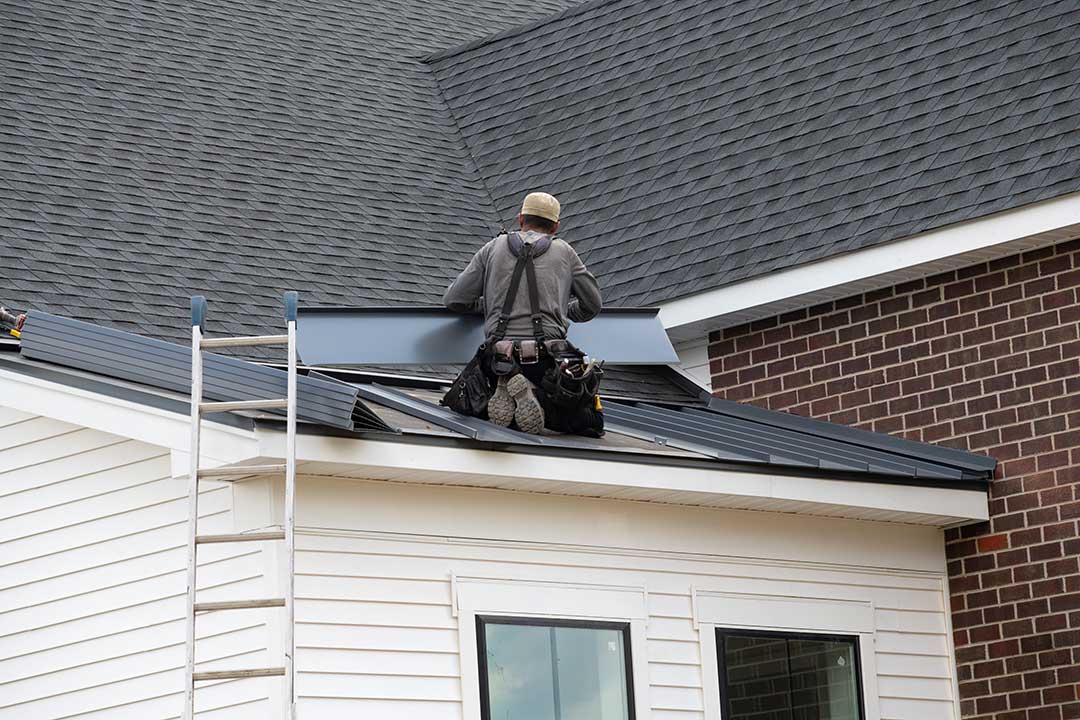
A roof should not be climbed during wet, icy, or windy conditions. Walking on shingles can cause damage, and steep or snow-covered surfaces create a serious fall hazard. If a storm has caused a fallen tree, exposed electrical wiring, major structural damage, or an unstable roof surface, staying clear of the area is the safest choice.
How do gutters and attic ventilation affect roof performance?
Gutters and downspouts are part of the roof’s water-management system. When they are blocked or disconnected, water may spill over roof edges, soak fascia boards, collect near walls, or saturate soil around the foundation.
Downspouts should discharge water far enough away from the building to prevent repeated pooling near the foundation. Extensions that are crushed, detached, or aimed toward the house can undermine otherwise sound gutter maintenance.
Attic ventilation and air sealing also matter. Warm, moist air leaking into a cold attic can contribute to condensation and uneven snow melting. Properly balanced intake and exhaust ventilation, combined with adequate insulation and sealed ceiling penetrations, can help reduce moisture problems and the conditions that contribute to ice dams.
Ventilation is not a substitute for repairing roof defects. It works as part of a larger system that includes insulation, air control, drainage, and sound roofing materials.
How often should a roof be checked?
A practical schedule is to inspect the roof and drainage system at least twice a year: once in spring and again in fall. Spring checks can reveal damage from snow, ice, and winter winds. Fall checks help identify blocked gutters, loose materials, and conditions that may become more serious during winter.
Additional checks may be appropriate after:
- High winds or severe thunderstorms
- Heavy snowfall or prolonged ice accumulation
- Nearby tree damage
- Interior signs of moisture
- Changes to attic temperature or humidity
- Roofing work, solar installation, chimney work, or other alterations near the roof
The age and design of the roof also affect inspection needs. A low-slope roof, complex roof with several valleys, or home surrounded by trees may require closer observation than a simple, steeply pitched roof with clear drainage paths.
Which maintenance tasks are safe to do personally?
Some tasks can be handled safely from the ground, such as observing missing shingles, checking whether downspouts discharge properly, and looking for ceiling stains or attic moisture. Gutter cleaning may be possible for people who can work safely from stable, properly positioned equipment and favorable weather conditions.
Roof walking, snow removal, steep-ladder work, and repairs near electrical lines carry greater risk. These tasks may require specialized equipment and knowledge, particularly during icy conditions or after storm damage. Safety should take priority over completing a routine inspection immediately.
Regular roof maintenance is best understood as prevention rather than a promise that problems will never occur. For local households, a few planned checks each year can improve drainage, reveal developing damage, reduce avoidable moisture exposure, and provide a clearer picture of the roof’s condition before the next demanding season.
