
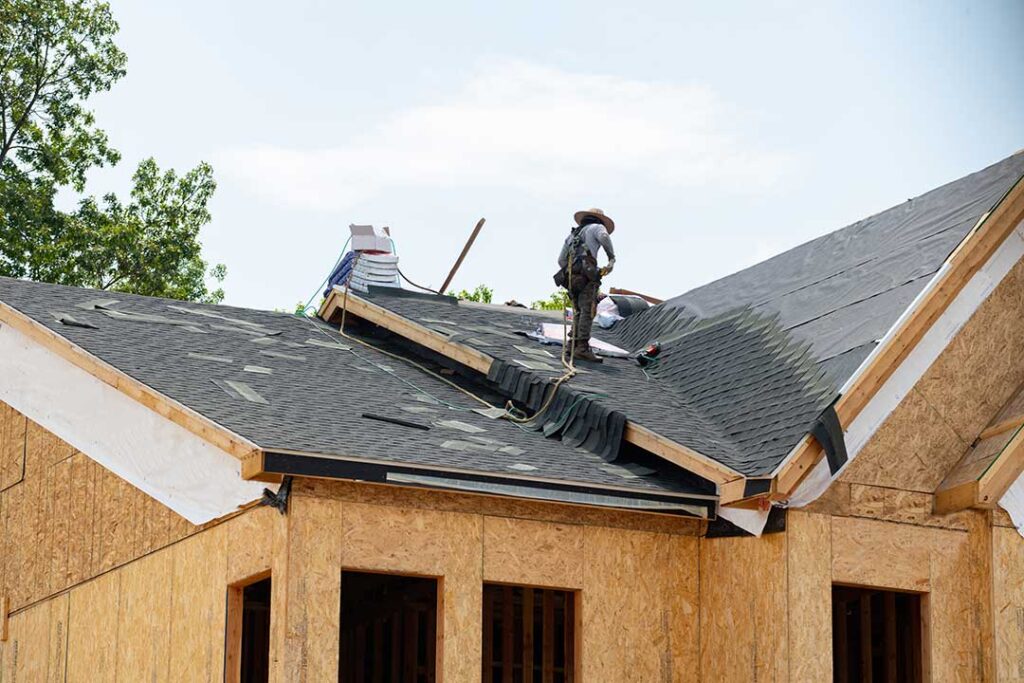
What does a roof fire rating mean?
A roof fire rating describes how well a roof assembly resists ignition, flame spread, and fire traveling across its surface when exposed to fire conditions. In Ithaca, NY, the rating applies to more than the visible shingles or panels; it may include the roof covering, underlayment, deck, and installation method as a tested assembly.
Roof fire ratings are usually identified as Class A, Class B, or Class C. The classes measure performance under different levels of fire exposure:
- Class A: Effective against severe fire exposure
- Class B: Effective against moderate fire exposure
- Class C: Effective against light fire exposure
A higher classification generally indicates stronger resistance to external fire spread. It does not mean a roof is fireproof or that a home cannot burn.
Is Class A always required?
Not every roof is automatically required to have a Class A rating. The applicable requirement depends on the building type, construction details, distance from property lines, and the version of the New York State code governing the project.
For many residential roof replacements, the product documentation and local permit review determine whether a specific classification is required. The current New York State code framework is based on updated national model codes with state-specific amendments. Requirements may differ between a detached house, townhouse, accessory structure, and larger or more closely spaced buildings.
Roof edges near lot lines can receive additional attention because flames from one structure can more easily affect another. A roof assembly may also have different requirements where buildings are close together or where the roof is part of a larger multi-unit structure.
A product described as “fire resistant” should not be assumed to satisfy a particular code classification. The packaging, product label, listing, or manufacturer documentation should identify the tested classification.
What is the difference between a roof covering and a roof assembly?
A roof covering is the exterior material, such as asphalt shingles, metal panels, slate, tile, or another approved roofing product.
A roof assembly includes the combination of materials and installation details beneath and around that covering. It may involve:
- The roof deck
- Underlayment
- Shingles, panels, tiles, or other covering
- Fasteners
- Flashing details
- Ventilation components
- Insulation or additional layers
This distinction matters because a Class A product may not create a Class A roof assembly in every installation. The tested result can depend on the deck, underlayment, slope, attachment method, and other components.
For example, replacing one type of shingle with another may change the tested assembly. Installing a roof covering over an existing layer may also affect how the roof performs during a fire.
Which roofing materials commonly receive higher fire classifications?
Many commonly used roofing materials can be part of Class A assemblies when properly tested and installed. These may include fiberglass asphalt shingles, metal roofing, slate, clay tile, concrete tile, and certain built-up or membrane systems.
The material alone is not enough to determine the rating. Asphalt shingles, for instance, can have different classifications depending on their construction and the complete tested assembly. A metal roof can also have different performance characteristics depending on the panel design, substrate, underlayment, and installation.
Natural wood shingles and shakes require particular caution. Some wood products are untreated and may have limited fire performance, while others receive fire-retardant treatment and are tested for a specified classification. Treatment does not eliminate all fire risk, and the required installation details still apply.
How are roof fire ratings tested?
Roof assemblies are commonly evaluated using recognized fire-exposure tests, including standards associated with ASTM E108 or UL 790. These tests examine how a roof responds to external fire exposure, including flame spread across the surface and the potential for fire to penetrate the assembly.
The classification is not based only on whether the roof eventually burns. Testing also considers how the fire behaves, how far it spreads, whether burning material falls from the roof, and whether the fire penetrates into the structure.
A rating label is therefore more useful than a general claim such as “fire resistant.” When reviewing a roofing product, look for a specific classification and confirmation that the tested assembly matches the intended installation.
Does a fire-rated roof protect against every kind of fire?
No. Roof classification generally addresses external fire exposure, such as burning embers, flames, or radiant heat reaching the roof surface. It does not guarantee protection from every fire source.
A house may still be vulnerable to:
- Fire entering through a damaged roof or attic opening
- Embers entering through vents
- Chimney or flue problems
- Electrical faults in attic spaces
- Fire spreading through walls, eaves, or adjoining structures
- Combustible materials stored against the building
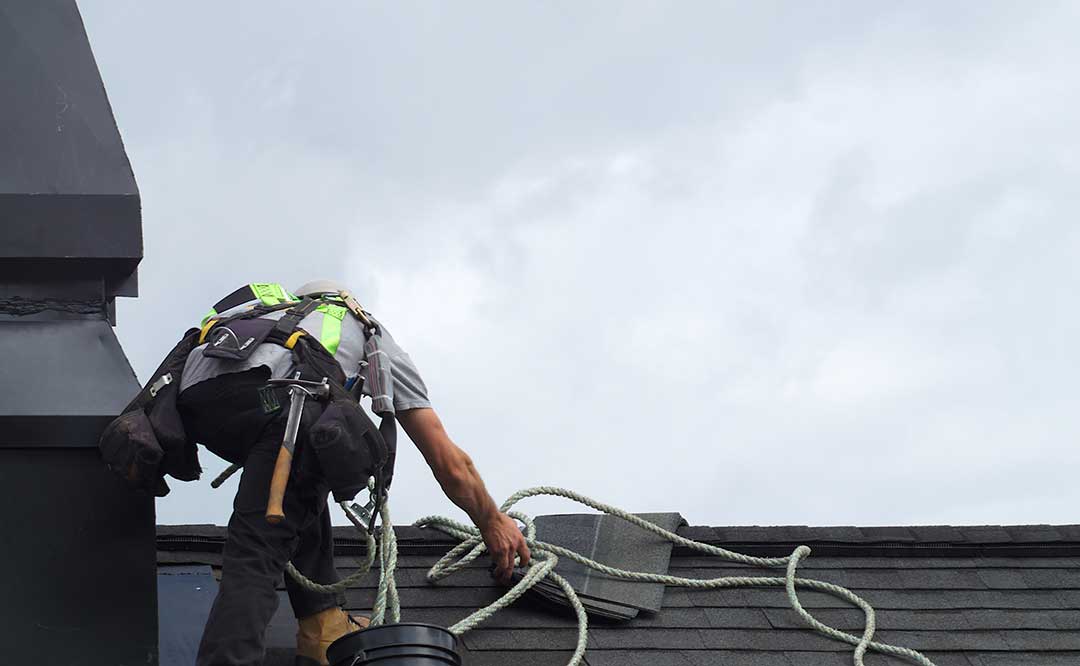
Roof fire performance is one part of overall fire safety. Enclosed soffits, properly maintained chimneys, attic wiring, smoke alarms, and clear areas around the structure also affect risk.
Why does this matter in Ithaca?
Local conditions create several practical reasons to understand the complete roof assembly. Heavy snow, freeze-thaw cycles, ice buildup, and wind can damage shingles, flashing, vents, and underlayment over time. A roof that has lost material or developed gaps may not perform like the original tested assembly.
Older homes may also contain multiple roof layers, wood shingles, plank decking, or alterations made before current code requirements applied. Historic construction does not automatically mean unsafe, but existing materials can make the fire classification less obvious.
Dense neighborhoods and closely spaced homes make roof-to-roof fire spread a meaningful consideration. Fire safety also becomes more complicated where additions, porches, garages, or accessory structures connect to the main roof.
Does reroofing over existing shingles change the fire rating?
It can. Adding a new roof covering over an existing layer may be allowed in some situations, but the result must still comply with applicable code requirements and the product’s installation instructions.
Older wood shingle or shake roofs deserve special attention. Covering them can create a concealed combustible space if the existing material is not handled correctly. In some circumstances, the code requires an approved separating layer rather than simply placing new shingles over the old roof.
Multiple roof layers can also conceal damaged decking, trapped moisture, poor ventilation, or inadequate fastening. These conditions may affect both fire performance and general roof durability.
How can a homeowner verify a roof’s fire classification?
Start with the product label, installation instructions, and documentation provided for the roofing system. Look for:
- The stated Class A, B, or C classification
- The testing standard used
- The required underlayment or deck type
- Approved installation methods
- Limitations involving slope, exposure, or roof layering
For a permitted roof replacement, the building department’s review can clarify which code provisions apply. Questions are especially appropriate when a home has an unusual roof assembly, closely spaced structures, wood shakes, solar equipment, or an older roof beneath the new covering.
The most reliable answer comes from matching the exact product and installation details to the tested assembly—not from relying on the appearance of the roofing material alone.
Does solar equipment affect roof fire safety?
Rooftop photovoltaic equipment must be installed as part of a listed and approved system. Panels, mounting hardware, wiring, and the roof beneath them can affect access, fire spread, and firefighter operations.
Solar equipment does not automatically reduce a roof’s fire classification. The roof covering and the photovoltaic system have separate performance and installation requirements, so both should be evaluated together during a reroofing or solar project.
A fire rating is therefore best understood as a documented property of a complete roof system. For local homes, the key questions are whether the assembly is properly identified, whether it matches the installation, and whether it meets the current requirements for the building and property.
