
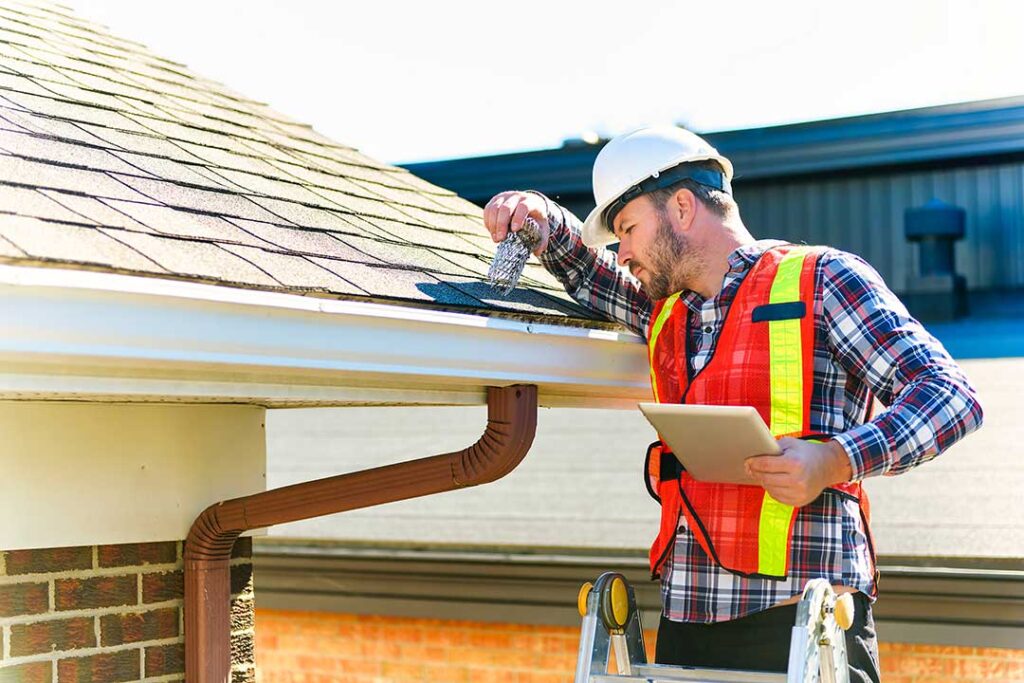
Roof stains are usually signs of moisture, biological growth, aging materials, or runoff from nearby roof components. A dark mark may be harmless surface discoloration, but it can also point to a leak that is slowly damaging roof decking, insulation, ceilings, or wall framing.
The safest approach is to identify the stain’s pattern and location, check for interior moisture, and avoid cleaning methods that can damage shingles or create a fall hazard.
What do roof stains look like?
Roof stains vary in color and shape, and those differences can provide useful clues.
- Black or dark gray streaks: Often caused by algae-related discoloration on asphalt shingles. These streaks commonly follow the direction of water flow and may spread gradually across the roof.
- Green patches or fuzzy growth: Usually associated with moss, especially where the roof remains shaded and damp.
- Brown or rust-colored marks: May come from exposed metal, corroding fasteners, chimney components, leaves, or water carrying organic material across the roof.
- Yellow or tan interior stains: Commonly indicate water intrusion through the roof or around a roof penetration.
- White or chalky deposits: Can result from mineral residue, deteriorating masonry, or runoff from certain roof materials.
Color alone does not confirm the cause. A dark streak on the roof surface is different from a brown ring on a ceiling, even though both may be called roof stains.
Are black streaks on shingles a sign of a leak?
Usually, black streaks on asphalt shingles are caused by algae rather than an active leak. The discoloration often appears on slopes that receive less direct sunlight and stay damp longer after rain, snow, or morning dew.
Algae can make a roof look worn without immediately reducing its water-shedding ability. However, heavy growth may retain moisture, obscure damaged shingles, and contribute to surface deterioration over time. A roof with black streaks should still be checked for cracked shingles, exposed underlayment, damaged flashing, and clogged drainage paths.
A ceiling stain, damp attic insulation, or musty odor is more concerning than surface streaking. Those signs suggest that water may be entering the building rather than simply affecting the appearance of the shingles.
Why are roof stains common in Ithaca?
The local climate creates several conditions that encourage staining and organic growth. Ithaca has wet periods throughout the year, winter snow and ice, frequent freeze-thaw cycles, and many properties with mature trees. Roof sections shaded by trees can dry slowly, while leaves and small branches may collect in valleys, behind chimneys, or near roof edges.
Moisture can also remain on roofs with limited sunlight or restricted airflow. North-facing slopes and roof areas beneath overhanging branches are especially likely to develop algae or moss.
Older homes may have a combination of roof additions, enclosed porches, masonry chimneys, and varied roof pitches. These details create more seams and drainage transitions where water can collect or flashing can age.
How can you tell whether a stain means a roof leak?
A stain is more likely to indicate a leak when it is paired with changes inside the home. Check the attic and upper floors after heavy rain or during a period of snowmelt.
Warning signs include:
- Damp roof decking or insulation
- Water marks that grow after precipitation
- Peeling paint or bubbling drywall
- Soft spots on ceilings or walls
- A musty odor in the attic
- Dripping near chimneys, skylights, vents, or roof-wall intersections
- Rusted nails or darkened wood around roof penetrations
- Ice-dam-related staining near exterior walls
Water does not always appear directly below the point where it enters. It may travel along rafters, roof decking, insulation, or framing before reaching a ceiling. For that reason, the location of an interior stain is not always the location of the roof defect.
Can roof stains be cleaned safely?
Some surface staining can be reduced, but roof cleaning requires caution. Asphalt shingles can be damaged by pressure washing, stiff brushing, scraping, or harsh chemical use. These methods may remove protective granules, loosen shingles, or force water beneath the roofing material.
Cleaning should not be attempted from a ladder or roof surface when conditions are wet, icy, steep, or unstable. Moss can make shingles and roof planes particularly slippery. Nearby electrical wiring, tree branches, and snow-covered surfaces add additional hazards.
If a stain is limited to a small, accessible area, it may be possible to address it with a roofing-safe cleaning method that does not involve pressure. Product directions should be followed carefully, and runoff should be kept away from sensitive plants, painted surfaces, and drainage areas. Mixing cleaning chemicals can create dangerous fumes or harmful reactions.
Cleaning also does not repair damaged flashing, leaking pipe boots, missing shingles, or deteriorated roof decking. If the cause is structural or moisture-related, removing the stain only hides the symptom temporarily.
What should never be used on stained shingles?
Pressure washers are generally unsuitable for asphalt shingles because the force can strip away granules and damage the shingle surface. Scrapers, wire brushes, and aggressive power tools can cause similar problems.
Bleach or other strong cleaners may discolor roofing, harm landscaping, corrode metal components, or damage nearby siding. Even a product labeled for exterior cleaning may not be appropriate for every roofing material.
Moss should not be pulled off forcefully. Roots and attached material can lift shingle edges, allowing water to enter. The goal is to control the growth without tearing the roofing surface.
How can future staining be reduced?
Prevention begins with controlling moisture and debris. Trim branches that constantly shade the roof or drop leaves onto it, while avoiding unnecessary cutting that could damage the tree or create unstable limbs.
Keep gutters and downspouts clear so water can leave the roof efficiently. Pay particular attention to valleys, roof edges, and areas below roof-wall transitions. Leaves should be removed carefully because wet organic debris can hold moisture against shingles and metal flashing.
Adequate attic ventilation and insulation can also help reduce condensation and uneven roof temperatures. In winter, warm air leaking into the attic may contribute to snowmelt and ice buildup at the eaves. Those conditions can lead to water intrusion even when the shingles themselves appear intact.
Metal strips installed near roof ridges are sometimes used to discourage moss and algae growth as rainwater moves over the roof. Their suitability depends on the roofing material, roof design, and local drainage conditions.
When does a roof stain require prompt attention?
Prompt evaluation is warranted when staining is accompanied by active dripping, wet insulation, sagging ceilings, exposed electrical components, or rapidly expanding interior marks. Water near electrical fixtures should be treated as a safety concern.
Roof access is also unsafe during snow, ice, strong wind, or wet conditions. After a major storm, an inspection from the ground may reveal missing shingles, displaced flashing, fallen branches, or blocked drainage without requiring anyone to climb onto the roof.
A stain that remains unchanged for years may be cosmetic, but it should not automatically be ignored. Roof leaks can be intermittent, appearing only during wind-driven rain, rapid snowmelt, or repeated freeze-thaw cycles. Documenting the stain with dated photographs can help determine whether it is growing or changing.
Should a stained roof be replaced?
A roof stain by itself is not a reason to replace the entire roof. Replacement decisions should consider the roof’s age, remaining shingle granules, brittleness, curling, missing sections, repeated leaks, damaged decking, and the extent of moss or algae growth.
A relatively sound roof may only need localized maintenance or repair. A roof with widespread deterioration, recurring moisture damage, and failing drainage details may need more extensive work.
The key distinction is between appearance and performance. Surface discoloration can often be managed, but persistent water entry, structural damage, and unsafe roofing conditions require a more careful response than cleaning alone.
