
What kinds of wind damage affect roofs?
Severe winds can damage a roof by lifting shingles, loosening flashing, breaking tree limbs, and allowing water to enter beneath otherwise intact roofing materials. In Ithaca, NY, wind damage can occur during thunderstorms, winter storms, spring weather systems, and periods when saturated ground makes trees more likely to fall.
Wind does not need to remove an entire section of roofing to create a problem. A single lifted shingle, opened seam, or displaced piece of flashing can allow rain or melting snow into the roof assembly. Damage may remain hidden until staining, damp insulation, mold growth, or ceiling deterioration appears indoors.
Common forms of wind-related roof damage include:
- Missing or partially detached shingles
- Shingles with lifted, curled, creased, or broken edges
- Exposed underlayment or roof decking
- Loose ridge caps along the roof peak
- Damaged chimney, vent, or skylight flashing
- Bent gutters, downspouts, or metal edging
- Fallen branches that puncture or scrape roofing
- Water intrusion around roof penetrations
Why are some roofs more vulnerable than others?
Roof vulnerability depends on more than wind speed. The roof’s age, installation quality, condition, shape, materials, and surrounding landscape all affect how it responds to a storm.
Older shingles may have lost flexibility and sealant strength. As asphalt roofing ages, the adhesive strips that help hold shingle courses together can become less effective. Repeated freezing and thawing can also make materials more brittle, especially after several seasons of exposure.
Roof edges and corners typically experience stronger wind pressure than the central field of the roof. Shingles near eaves, rakes, and roof peaks may loosen first. A roof with inadequate edge fastening or deteriorated drip edging may be more likely to suffer progressive damage once wind gets beneath the materials.
Roof geometry matters as well. Complex roofs with multiple valleys, dormers, intersecting slopes, and additions have more seams and transitions where wind-driven rain can enter. Low-slope sections may also hold water longer after a storm, increasing the chance that a small opening becomes a leak.
Can wind damage happen without missing shingles?
Yes. A roof can sustain meaningful wind damage even when shingles appear to be in place.
Wind may lift a shingle and then allow it to settle back down. The shingle may look normal from the ground while its seal has broken or its fasteners have loosened. Creases, abrasions, cracked tabs, and displaced edges may be visible only from a closer inspection.
Flashing can also shift without obvious shingle loss. Flashing is used around chimneys, vent pipes, skylights, walls, and roof intersections. If it bends or separates, rain can enter through the joint and travel along the roof deck before appearing inside the home.
A careful inspection after severe weather should consider both visible damage and areas where water could be entering. The first interior signs may include:
- Brown or yellow ceiling stains
- Damp attic insulation
- Musty odors
- Peeling paint or bubbling drywall
- Drips near exterior walls or ceiling fixtures
- Moisture around chimneys, vents, or skylights
How does wind-driven rain affect a roof?
Wind-driven rain can enter places ordinary rainfall cannot reach. Strong gusts may push water beneath shingle edges, through damaged flashing, behind siding, or into openings around vents and chimneys.
This risk is greater when rain falls at an angle. Roofs that appear dry during a brief visual check may still have wet underlayment or decking. Water can also travel horizontally along rafters, trusses, or roof boards, causing an interior stain some distance from the actual entry point.
In the local climate, a wind event may be followed by cold temperatures. Moisture that enters beneath roofing materials can freeze, expand, and place additional stress on seams and fasteners. Later thawing may produce a leak days after the original storm, making it difficult to identify the weather event responsible.
What should residents check after a severe windstorm?
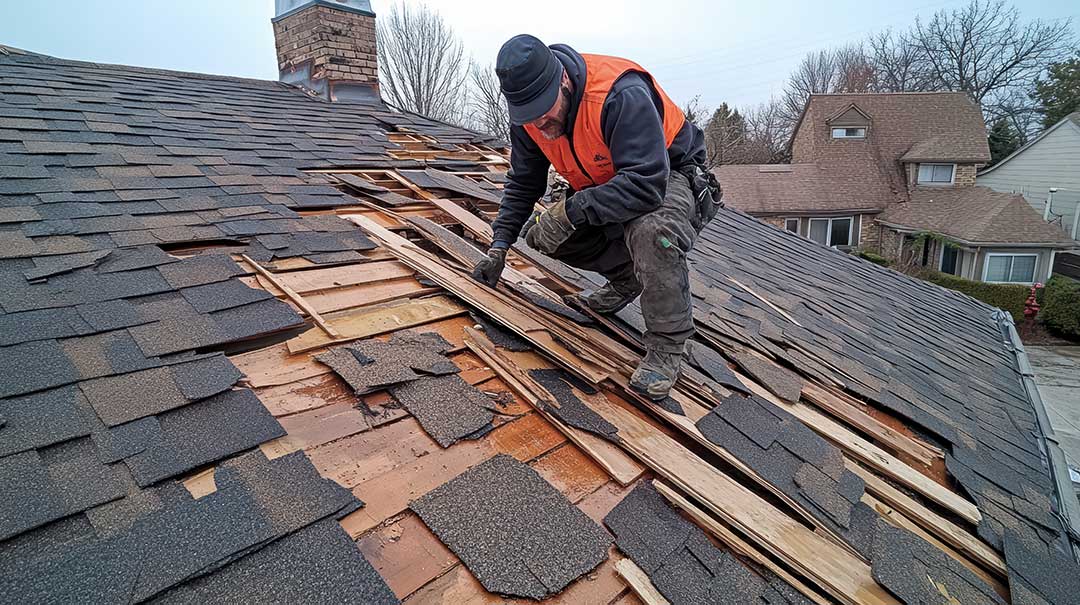
Begin with a ground-level inspection rather than climbing onto the roof. Look for missing materials, shingles on the ground, exposed dark underlayment, hanging metal, damaged vents, fallen branches, and unusual changes along the roofline.
From inside the home, inspect attic spaces and upper-floor ceilings when it is safe to do so. Use a flashlight to look for wet insulation, darkened roof decking, daylight entering through the roof, or water marks around penetrations.
Do not walk on a roof that is wet, icy, visibly damaged, or covered with debris. Roof surfaces become especially hazardous after rain, freezing temperatures, and tree impacts. Stay clear of sagging areas, downed electrical wires, and large unstable branches.
Temporary measures can sometimes limit additional water entry, but improvised repairs may damage shingles or create a fall hazard. If the roof has a large opening, structural movement, or water entering near electrical wiring, immediate safety precautions are more important than a detailed inspection.
How quickly should wind damage be addressed?
Visible openings and active leaks should be addressed as soon as conditions are safe. Delaying repairs can allow water to reach insulation, framing, ceilings, wall cavities, and electrical components.
A small missing shingle does not always mean the entire roof needs replacement. The appropriate response depends on the extent of damage, the roof’s age, the condition of adjacent materials, and whether the underlayment or decking has been affected.
Storm damage can also be concealed beneath branches or snow. If a tree has struck the roof, the impact may have damaged roof decking or framing even when the shingles do not appear widely disturbed. A sagging roofline, cracked interior finishes, or doors that suddenly stick may indicate movement in the structure.
Does insurance inspection change what should be done?
An insurance inspection and a roofing inspection serve different purposes. Insurance documentation focuses on whether storm-related damage may be covered under a policy. A roofing inspection focuses on the condition, cause, and extent of damage.
Photographs can help document conditions before debris is moved, if taking them does not require entering an unsafe area. Useful records may include:
- The date and approximate time of the storm
- Photos of fallen branches or exterior debris
- Ground-level photos of affected roof areas
- Interior photos of stains or active leaks
- Notes about when water was first observed
- Temporary steps taken to limit further damage
Coverage varies by policy, deductible, exclusions, maintenance history, and the cause of the loss. Wind damage and tree damage may be treated differently, so policy language should be reviewed carefully rather than relying on general assumptions.
How can wind-related roof damage be reduced?
No roof can be made completely immune to severe weather, but routine maintenance can reduce avoidable vulnerabilities. Keep roof surfaces, gutters, valleys, and drainage paths clear of accumulated debris. Watch for aging sealant, loose flashing, deteriorated vent boots, and shingles that are already brittle or curling.
Trees near a home should be monitored for dead limbs, leaning trunks, root disturbance, and branches that overhang the roof. Seasonal pruning can reduce the amount of material that may fall during a storm, although tree work near power lines or unstable trees presents its own hazards.
During winter, avoid placing heavy equipment or walking on the roof to remove ordinary snow unless the structure has been evaluated and the work can be done safely. Unnecessary foot traffic can damage cold, brittle shingles and may create more problems than it prevents.
A roof that is inspected periodically is easier to maintain before a severe storm occurs. After unusually strong winds, checking both the exterior and attic can reveal small failures before they become larger water and structural problems.
