
Are roof stains always a sign of a serious problem?
No. A roof stain may come from algae, moss, dirt, rust, chimney residue, or a leak. The appearance, location, and behavior of the stain provide useful clues, but a stain should not be ignored because some problems cause damage before water begins dripping indoors.
In Ithaca, NY, roofs regularly face moisture from rain, snow, shaded conditions, and seasonal temperature changes. Those conditions can leave roofing materials damp for long periods, especially on north-facing slopes or beneath overhanging trees.
A stain that appears only on the surface may be cosmetic. A stain that spreads, feels damp, or appears on ceilings and walls may indicate water entering the building.
What do different roof stains look like?
The color and texture of a stain can help narrow down its likely cause.
- Black or dark green streaks: These are commonly associated with algae growth. They often begin as narrow vertical lines and may become more noticeable on light-colored shingles.
- Green, thick, or fuzzy patches: Moss tends to grow where moisture remains trapped. It may lift the edges of shingles or spread around roof features that receive little sunlight.
- Brown or yellow ceiling stains: These usually suggest water has entered through the roof, flashing, a vent, or another opening. The stain may remain after the area dries.
- Orange or reddish marks: Rust from metal flashing, fasteners, vents, or nearby surfaces may wash across roofing materials.
- Gray or muddy discoloration: Dirt, decomposing leaves, airborne particles, or runoff from trees can collect on damp roofing.
- White or chalky deposits: These may come from mineral residue, deteriorating materials, or deposits left after repeated wetting and drying.
Color alone cannot confirm the source. A roof may have more than one type of staining at the same time.
Why do roofs in the area develop algae and moss?
Algae and moss grow where moisture, shade, and organic material remain on the roof. Trees near a home can slow drying, drop leaves and needles, and create a sheltered surface. Roof sections facing away from direct sunlight are often more vulnerable.
Snow can also contribute to prolonged dampness. A roof may remain cold and wet after precipitation, particularly when daytime temperatures rise only slightly. Repeated freeze-thaw cycles can loosen debris and encourage water to move beneath lifted roofing edges.
Moss is more concerning than ordinary discoloration because it can physically affect shingles. Its root-like structures may work beneath shingle edges, while the moss itself holds moisture against the roofing surface. Algae usually causes less direct structural harm, but heavy growth can make it harder to see the condition of the shingles.
How can you tell whether a stain is caused by a leak?
Look for location, timing, and changes in the stain.
A ceiling or wall stain is more likely to be leak-related if it:
- Appears after rain or snowmelt
- Grows larger over time
- Feels soft, damp, or swollen
- Has peeling paint, bubbling finishes, or damaged plaster
- Is near a chimney, vent, skylight, roof valley, or exterior wall
- Produces a musty odor
- Reappears after the area has dried
Water does not always enter directly above the visible indoor stain. It may travel along rafters, roof decking, insulation, or framing before reaching a ceiling. For that reason, matching an indoor stain to a roof stain by position alone can be misleading.
If water is actively entering the home, protect furniture and flooring, move electronics away from the area, and place a container beneath the leak if it can be done safely. Avoid climbing onto a wet or snow-covered roof.
Can roof stains be cleaned safely?
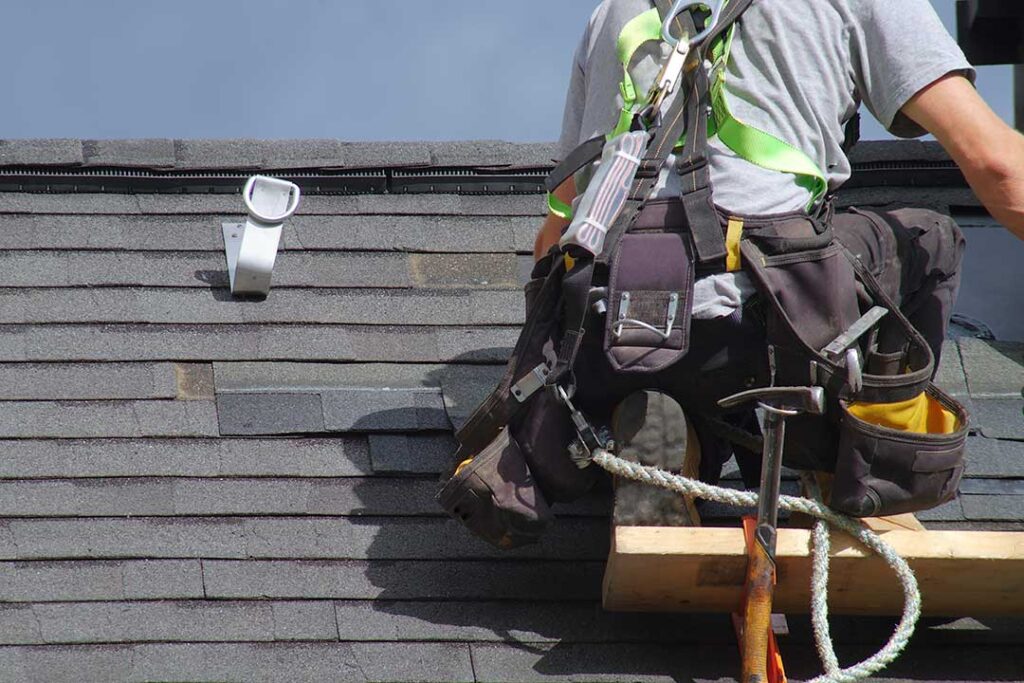
Some stains can be cleaned, but roof cleaning carries risks and should not be treated like washing a driveway. Walking on shingles can cause granule loss, cracking, or edge damage. High-pressure washing may strip protective surface material and force water beneath the shingles.
A safer approach is to first identify the roofing material and the type of growth. Asphalt shingles, wood roofing, metal panels, and membrane roofs do not respond to the same cleaning methods. Harsh chemicals can damage plants, siding, gutters, or roofing components if runoff is not controlled.
Never mix cleaning chemicals. Avoid climbing when the roof is steep, icy, wet, or difficult to access. In winter conditions, snow and ice removal from a roof can create serious fall and structural hazards. A stain that requires close inspection is not worth risking personal safety.
Cleaning also does not solve an underlying moisture problem. If moss returns quickly, the roof may remain shaded, debris may be collecting, or water may not be draining properly.
What should be checked before treating a stain?
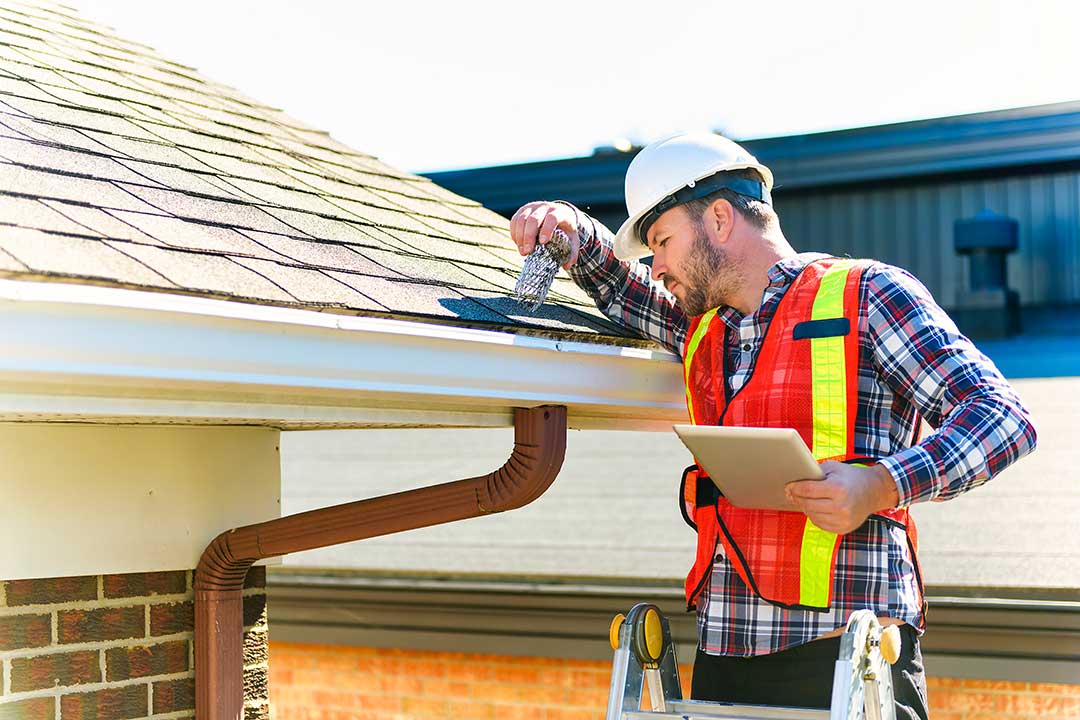
Start with a ground-level inspection using binoculars if needed. Look for:
- Missing, cracked, curled, or displaced shingles
- Dark areas that remain wet after surrounding roofing dries
- Moss growing beneath shingle edges
- Damaged flashing around chimneys, vents, and roof intersections
- Clogged or overflowing gutters
- Tree branches touching the roof
- Debris trapped in valleys or behind roof features
- Sagging areas or uneven roof lines
Inside the attic, check for damp insulation, darkened wood, water marks, or daylight visible through the roof deck. Inspecting after rainfall can reveal active moisture more clearly, but attics may be hot, cramped, or unsafe to enter.
Some stains come from condensation rather than an exterior leak. Poor attic ventilation, warm humid air, and inadequate insulation can create moisture on the underside of the roof deck. Bathroom or kitchen exhaust that terminates in the attic can also contribute to dampness and staining.
Should stained shingles be replaced?
Not necessarily. Surface discoloration alone does not automatically mean the shingles have failed. Replacement becomes more likely when staining is accompanied by loss of granules, brittleness, cracking, exposed underlayment, repeated leaks, or widespread deterioration.
Moss that has lifted shingles may require more than cleaning. If water has reached the roof deck or framing, drying and repairing the affected materials matters as much as correcting the visible stain.
Older roofs deserve closer attention because a small repair may interact with brittle surrounding shingles. Seasonal weather can make this more noticeable: materials may become less flexible in cold conditions, while summer heat can soften or age them further.
How can future staining be reduced?
Prevention begins with keeping the roof as dry and clear as practical.
Trim branches that heavily shade the roof or drop large amounts of debris, while avoiding unnecessary pruning that could damage trees or create new hazards. Keep gutters and downspouts clear so water does not back up beneath roof edges. Check that downspouts discharge away from the foundation and do not create persistent splashback.
After major storms, look from the ground for displaced materials and accumulated debris. Do not use a roof rake, ladder, or other tool in a way that could damage roofing or create a fall risk.
Interior moisture control also helps. Use bathroom exhaust during bathing and for a period afterward, make sure exhaust ducts lead outdoors, and watch for recurring attic condensation during cold weather.
A stain that stays unchanged may be cosmetic. A stain that spreads, returns after drying, or appears with damaged roofing or damp interior materials deserves prompt attention, particularly before another season of heavy rain, snow, and freeze-thaw conditions.
